
Foulbrood vs Chalkbrood
Foulbrood vs Chalkbrood – Key Differences for UK Beekeepers
Last updated: 15 August 2026
Foulbrood and chalkbrood can both affect honey bee brood, but they are very different problems. Foulbrood is a serious disease concern that requires caution and may need bee inspector advice, while chalkbrood is a fungal brood condition that is often linked with stress, damp, poor ventilation, weak colony strength or queen and genetic factors.
The difficulty for many beekeepers is that both problems can create patchy brood, dead larvae and a colony that looks unhealthy. A beginner may open a hive, see abnormal brood and immediately worry about the worst possible diagnosis. That caution is understandable, but the signs need to be looked at carefully before jumping to conclusions.
This guide explains the practical differences between foulbrood warning signs and chalkbrood signs. It is not a diagnosis, but it should help you decide when a problem looks more like a common brood condition and when it is serious enough to stop moving equipment and seek experienced or official advice.
The Main Difference Between Foulbrood and Chalkbrood
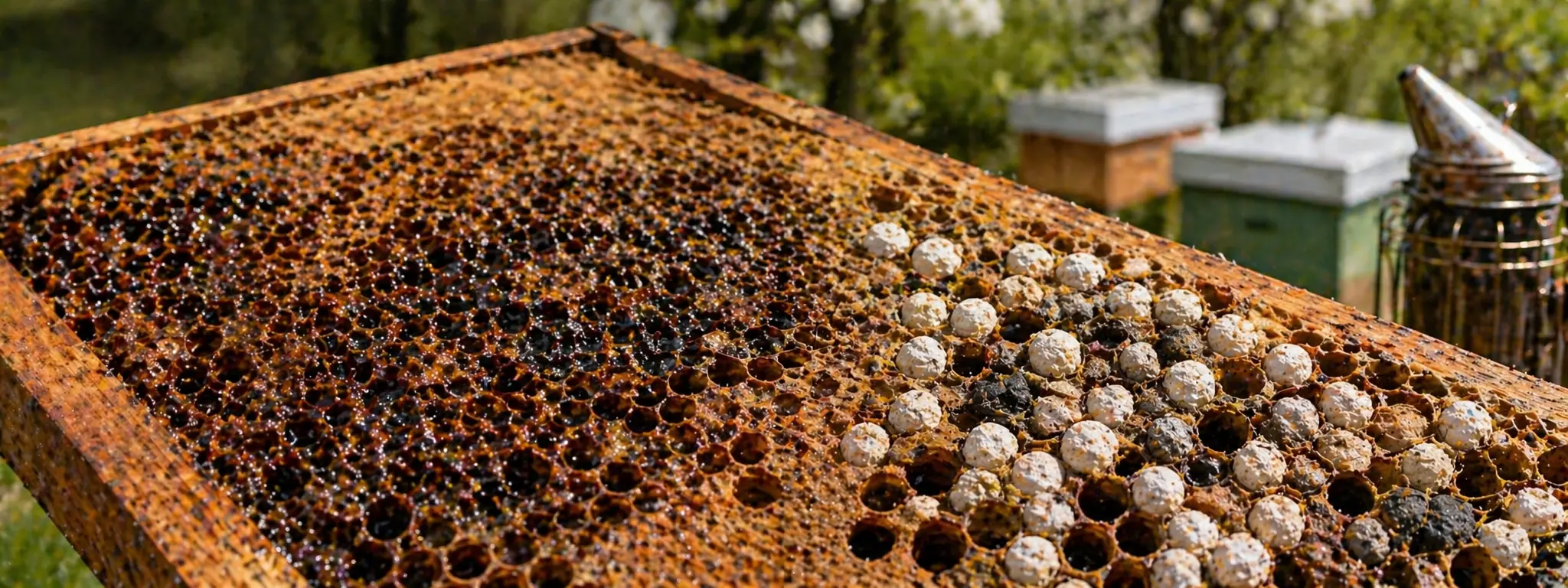
The simplest way to think about the difference is that foulbrood usually involves infected, decaying brood within the cells, while chalkbrood usually produces hard, chalk-like brood mummies that may be seen in cells, on the floorboard or outside the hive entrance. Foulbrood signs often make the brood nest look wet, sunken, irregular or decayed. Chalkbrood is more often recognised by dry, hardened larvae that have become white, grey or black.
Foulbrood concerns should be treated with far more caution because of the potential seriousness and the risk of spreading disease through contaminated comb, bees, honey, tools or equipment. If foulbrood is a realistic possibility, avoid swapping frames, combining colonies or moving supers until the situation has been properly assessed.
Chalkbrood can still weaken a colony and should not be ignored, but the usual management approach is different. It often involves improving colony strength, reducing stress, replacing a poor queen if the problem persists, improving ventilation and avoiding conditions that leave brood chilled or poorly covered by bees.
Signs That Are More Concerning for Foulbrood
Foulbrood should be considered when the brood nest shows abnormal, decaying or suspicious-looking larvae, especially if the colony is also weakening. Warning signs may include sunken cappings, perforated cappings, greasy-looking cells, larvae that appear melted or discoloured, or brood that has an unpleasant smell. The brood pattern may look patchy, but the key concern is not patchiness alone; it is patchiness combined with abnormal dead brood that does not look like normal development or simple chilled brood.
Some affected larvae may appear as if they have collapsed into the cell rather than drying into a hard mummy. The colour may look wrong, the texture may appear wet or sticky, and the remains may be difficult for worker bees to remove. These signs should be treated carefully because they can be confused with other brood problems by inexperienced beekeepers.
If the signs look suspicious, do not keep opening and manipulating the colony unnecessarily. Avoid shaking bees, moving brood, lending tools or transferring comb to another hive. Make notes, take clear photographs if it is safe to do so, and compare the signs with the dedicated American Foulbrood and European Foulbrood guides before deciding on your next step.
Where foulbrood remains possible, it is better to seek advice early. The When to Call a Bee Inspector page explains when a concern should be escalated, especially if several colonies are affected, if the brood signs are unusual, or if you are not confident that the issue is chalkbrood or another common brood problem.
Signs That Are More Consistent with Chalkbrood
Chalkbrood is usually easier to recognise once you know what you are looking for. Instead of wet, melted or ropy brood remains, chalkbrood commonly produces hard mummified larvae. These mummies may be white at first and can later turn grey or black. They may be found inside open brood cells, on the floorboard, on the inspection tray or outside the entrance where worker bees have removed them.
A small amount of chalkbrood may appear during periods of stress, poor weather or colony weakness. It can be more noticeable in spring or during unsettled conditions when the colony struggles to keep all brood warm and well covered. Damp hives, poor ventilation, weak colonies and susceptible queen lines can all make chalkbrood more likely to show up.
Chalkbrood does not usually produce the same type of melted, sunken brood appearance that would raise stronger foulbrood concerns. The dead brood tends to dry out and harden, which is why it is often described as chalky. However, if you are seeing mixed signs, such as both chalky mummies and suspicious wet or decaying brood, do not assume everything is chalkbrood without checking further.
Management usually focuses on strengthening the colony and reducing stress. This may involve ensuring the colony has enough bees to cover brood, avoiding unnecessary disturbance during cold weather, improving ventilation, replacing old comb and considering queen replacement if the problem is persistent. For more detail, see the dedicated Chalkbrood in Bees guide.
What to Avoid If You Are Not Sure
When you are unsure whether a brood problem is foulbrood, chalkbrood or something else, the safest approach is to pause and avoid spreading material between colonies. Do not move brood frames from the affected hive into another colony, even if you are trying to help a weak hive. Do not combine colonies, lend equipment or reuse suspect comb elsewhere until you are more confident about what you are dealing with.
Avoid treating the colony based on guesswork. Some brood problems are linked to disease, while others are linked to queen performance, stress, nutrition, varroa pressure or chilling. Applying the wrong response can waste time and may make the situation more confusing. Good observation is often more useful than rushing into action.
It is also worth cleaning tools and gloves after inspecting a colony with suspicious brood. Even when the problem turns out not to be foulbrood, good hygiene is a sensible habit. The Hive Hygiene guide explains practical steps that reduce the risk of carrying disease material between hives.
If you use records, write down the date, colony name, brood appearance, smell, amount of affected brood, colony strength and any recent stress factors such as poor weather, queen issues, feeding, moving apiaries or varroa treatment. These details make it easier to spot whether the problem is improving, spreading or getting worse.
When to Seek Bee Inspector or Experienced Advice
Seek advice if the brood appears melted, sunken, greasy, ropy, badly discoloured or unusually smelly. You should also seek advice if several colonies show similar symptoms, if the colony is declining rapidly, or if you cannot confidently separate chalkbrood from a more serious brood disease concern.
New beekeepers should not feel embarrassed about asking for help. Brood disease identification takes practice, and photographs do not always capture texture, smell or the way larvae sit in the cells. A mentor, local association contact or bee inspector may be able to help you decide whether the signs are consistent with chalkbrood or whether the colony needs closer official attention.
If you are worried, the safest approach is to keep the affected hive separate, avoid moving equipment and get advice before making major management decisions. Acting cautiously protects your own colonies and reduces the risk to nearby apiaries.