
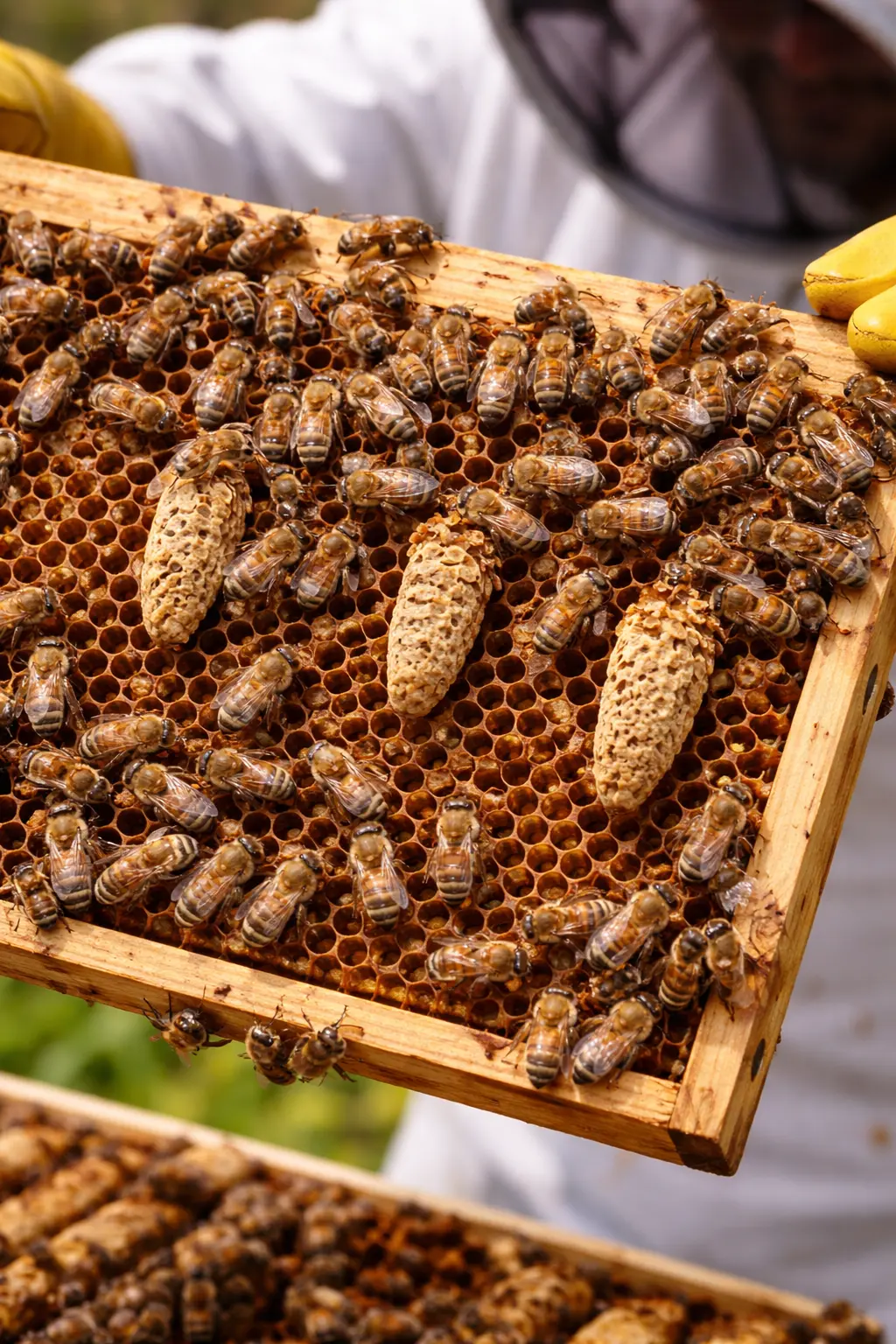
Swarm & Queen Management (UK)
Swarm & Queen Management (UK)
Last updated: 15 August 2026
Swarming and queen problems are where many beekeepers lose confidence. One inspection shows queen cups, the next shows sealed queen cells, then suddenly there are fewer bees, no eggs, or a queen that cannot be found. What matters most at that point is not panic, but understanding what stage the colony is in and choosing the right response.
This section brings together the main BeezKnees guides on queen cells, capped queen cells, swarm control, hive splits, virgin queen timing, supersedure, failing queen signs, drone-laying queens, laying workers and common queen-related problems. Use it as a starting point if you are trying to work out what is happening in the hive, what to do next, or which guide you need first.
It also links swarm decisions back to the wider beekeeping year: inspection timing, brood development, colony build-up and the seasonal changes in the colony. If you understand when queens develop, how colonies build pressure in spring and what you should see during a normal inspection, swarm management becomes much easier to judge calmly.
Find the Right Guide for Your Situation
Queen Cells & Swarm Decisions
Use these guides if you have found queen cups or queen cells and need to work out whether the colony is preparing to swarm, replacing a queen, or responding to queen loss. If timing is your main concern, the queen timeline is one of the most useful pages in this section.
After a Swarm or Split
These pages help you understand what happens after a colony has already swarmed or after you have split a hive for swarm control.
Queen Problems & Brood Diagnosis
Use these if you cannot find the queen, there are no eggs, brood looks wrong, or you are unsure whether the colony is queenless, superseding, dealing with a failing queen or showing laying-worker signs.
Virgin Queen Timing
If the colony is between queens and you are waiting for eggs to appear again, this guide explains the normal timeline and when to start checking more closely.
How To Use This Section
If you are not sure where to begin, think about the question you are trying to answer.
"I found queen cells"
Start with the Queen Cells Guide, then move to What To Do If You Find Queen Cells.
"The colony has already swarmed"
Go to How Long After Swarming Before Eggs Appear? and then When Will a Virgin Queen Start Laying?.
"I split the hive — what now?"
Use What to Check After a Hive Split to judge whether the split is progressing normally.
"I can't find the queen"
Read Missing Queen: What To Check, then use Queenless Colony: What To Do if there are no eggs or young larvae. If queen cells are present, compare with Queenless Colony or Supersedure? and Supersedure Explained.
Why These Pages Work Best Together
Most queen-related hive issues are not isolated. A colony that appears queenless may actually be in supersedure. A hive with no eggs after swarming may simply be waiting on a virgin queen to mate. A split that feels quiet may be progressing perfectly normally. This is why these guides are designed to work together rather than as stand-alone pages. It also helps to understand the queen's role within the wider colony through Honeybee Facts and the physical clues described in Honeybee Anatomy.
Used properly, they help you move from "something looks wrong" to a more useful question: what stage is this colony actually in, and what does that mean for my next inspection, my timing, and my next management decision?
Explore HiveTag Queen Records
Queen Cell Types and What They Usually Mean
Not all queen cells point to the same problem or the same decision. Some are nothing more than queen cups, while others are clearly active charged queen cells or fully capped queen cells. The position, stage and number of cells all help tell you whether the colony is preparing to swarm, replacing a queen or reacting to queen loss.
If you are trying to work out what kind of cells you are seeing, start with the Queen Cells Guide. Then compare what you see with pages on emergency queen cells and supersedure queen cells so you can judge whether the colony is swarming, superseding or queenless.
Queen Cups
Learn when cups are harmless, when they matter, and when they may be the first warning sign of swarm preparation.
Charged Queen Cells
See what charged cells mean in practice and why they usually require calm but timely action.
Capped Queen Cells
Understand why sealed cells often mean your timing window is narrowing quickly during swarm season.
Emergency Queen Cells
Useful when a colony has lost its queen and is trying to recover from queen failure or sudden loss.
Supersedure Queen Cells
Learn how these differ from swarm cells and why they are often linked to quiet queen replacement.
Supersedure Action
Read this if you are unsure whether to leave supersedure cells alone or intervene.
Supersedure Explained
Understand quiet queen replacement, how supersedure differs from swarming, and why removing these cells can leave the colony worse off.
Queen and Brood Problem Guides
Not every queen issue is a swarm issue. Sometimes the problem is a missing queen, a queen that is present but failing, drone brood where worker brood should be, or a colony that has been queenless long enough for workers to start laying. These pages help you separate normal queen replacement from problems that need quicker action.
If you cannot see the queen, begin with Missing Queen: What To Check. If there are no eggs or young larvae, move on to Queenless Colony: What To Do. If the brood pattern is poor but eggs are still present, compare Queen Failing Signs, Drone-Laying Queen, Laying Workers and Brood Problems in Bees.
Missing Queen: What To Check
Use this before assuming a colony is queenless. Eggs, larvae, queen cells and timing often tell you more than seeing the queen.
Queen Failing Signs
Recognise poor laying, patchy brood, weak build-up and supersedure clues that may point towards a failing queen.
Drone-Laying Queen
Understand drone brood in worker cells, poor mating, failing queens and how to compare this with laying workers.
Laying Workers
Learn what multiple eggs, scattered egg placement and drone-only brood can mean in a long-term queenless colony.
Supersedure Explained
Understand natural queen replacement, when to leave cells alone, and how to avoid confusing supersedure with swarming.
Brood Problems in Bees
Use this wider brood guide when the issue may be disease, varroa, chilled brood, drone brood or a queen problem.
Swarm Control Methods and Split Guides
Once queen cells appear, the next question is usually what action to take. Some beekeepers want to focus on swarm prevention before cells are even started, while others need a practical method once the colony is already committed. In that situation, it helps to understand the difference between general decision-making, an artificial swarm, a basic hive split, or comparing different split methods.
If you are still deciding whether queen cells are part of true swarm preparation, read Queen Cells & Swarm Control. If the colony has already gone and you are waiting to see what happens next, read After Swarm – Eggs. If you are dealing with the public, collecting bees, or trying to understand your responsibilities, also see Swarm Responsibilities (UK).
Swarm Prevention
Reduce the chances of swarming by managing colony build-up, space, timing and inspections properly.
Queen Cells & Swarm Control
Understand how queen cell findings connect directly to the action you should take next.
Artificial Swarm
A practical method for beekeepers who need a straightforward way to manage a colony preparing to swarm.
Split a Hive
Learn how splitting can help with swarm control, increase colonies or manage queen-related decisions.
Split Methods
Compare common vertical and horizontal split approaches and decide which suits your colony and setup.
After a Split
Use this guide to check whether your split is progressing normally and when to look again for eggs, queen status and colony balance.
Swarm Responsibilities (UK)
Important if you are collecting swarms, giving advice to others, or handling swarms around homes and public spaces.
Popular Topics in This Section
Queen Cell Timeline
Understand the day-by-day development of queen cells and why timing matters so much in swarm season.
What To Do If You Find Queen Cells
A practical decision guide for swarm cells, supersedure cells and emergency queen cells.
When Will a Virgin Queen Start Laying?
Learn what is normal after swarming, splitting or queen replacement, and when to start checking for eggs.
Queenless Colony or Supersedure?
One of the most important diagnosis guides when a colony has no eggs or seems to be between queens.
Missing Queen: What To Check
A calm checklist for when you cannot find the queen but need to avoid unnecessary intervention.
Supersedure Explained
Useful when queen cells are present but the colony may be replacing a failing queen rather than preparing to swarm.
What to Read Next from This Swarm & Queen Hub
Use this UK swarm and queen management hub as your starting point for understanding queen cells, swarm timing, splits and queen-related hive problems. A sensible next step is to begin with the Queen Cells Guide, then move into What To Do If You Find Queen Cells, Capped Queen Cells and Supersedure Explained. If the issue is queen status rather than swarm control, use Missing Queen: What To Check, Queenless Colony: What To Do, Queen Failing Signs, Drone-Laying Queen and Laying Workers. To strengthen the wider picture, keep returning to Year in the Apiary, improve your inspection routine through Step-by-Step Inspections, and use Queen Cell Timeline and Virgin Queen Timeline whenever the main question is timing.