
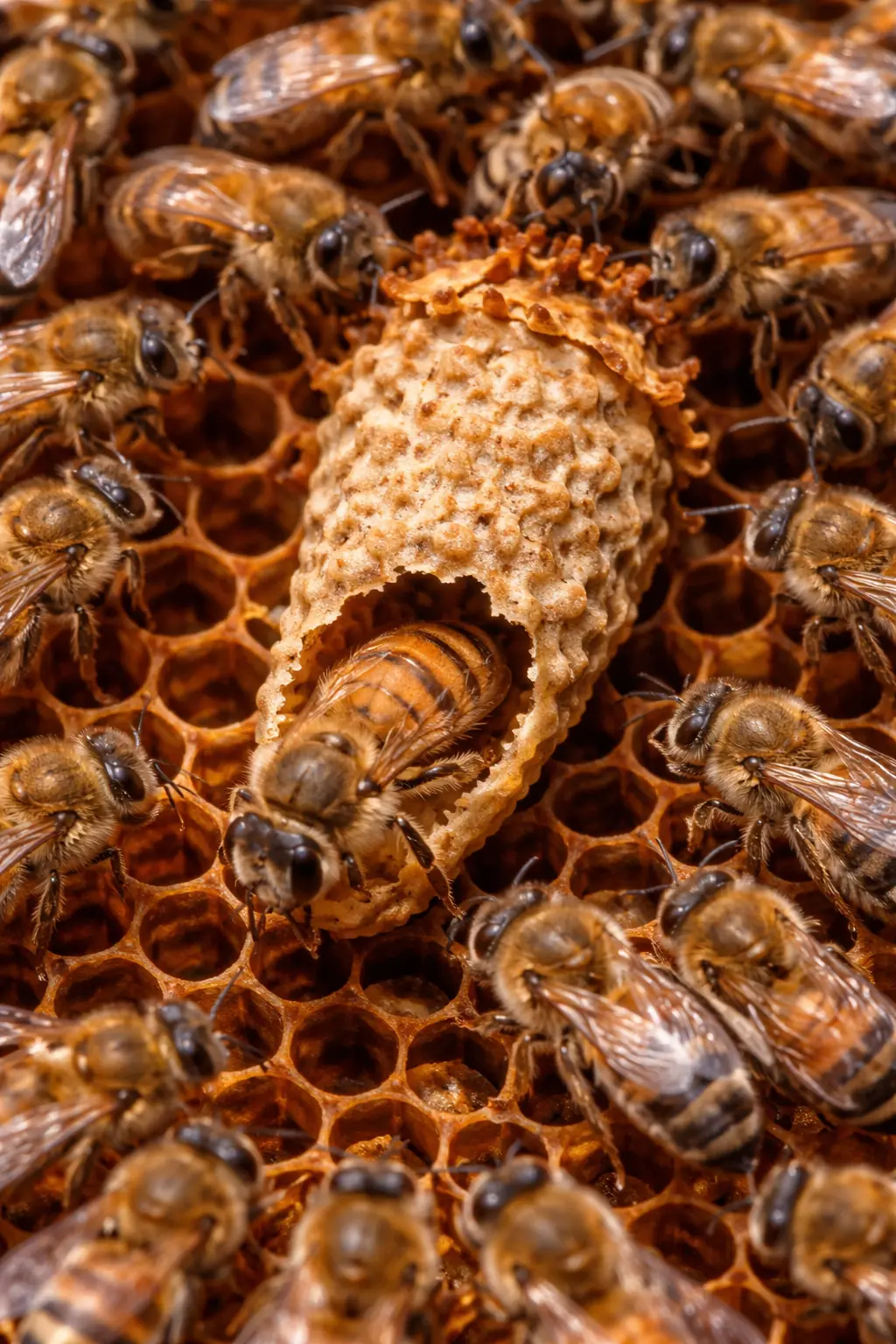
Swarm Eggs (UK)
How Long After Swarming Before Eggs Appear? (UK)
Last updated: 15 August 2026
One of the most common questions after a swarm is: "When will I see eggs again?" After a colony swarms, it can suddenly feel empty, quiet and uncertain. The original queen has left with the swarm, and what remains must raise and establish a new queen before normal brood rearing resumes.
The short answer is that it usually takes around 2–3 weeks after swarming before you will see fresh eggs again. However, this can vary depending on weather, mating success and the condition of the colony.
This page is the practical post-swarm follow-on from Queen Cell Timeline, Charged Queen Cells, Capped Queen Cells and Virgin Queen Timeline. This guide explains what is happening during that period, what is normal, and when you should begin to take action.
After a Swarm – Timeline at a Glance
If you are trying to work out where your colony is within the wider queen-replacement process, compare this page with Queen Cell Timeline and Virgin Queen Timeline.
Days 0–7
- Virgin queen emerges
- No eggs present
- Colony may feel quiet
Days 7–14
- Mating flights begin
- Weather dependent
- Still no eggs
Days 14–21+
- Queen starts laying
- First eggs appear
- Brood cycle resumes
What Happens Immediately After a Swarm
When a colony swarms, the original laying queen leaves with a large portion of the bees. What remains in the hive is usually a developing queen inside a cell, or several queen cells at different stages. Within a few days, a virgin queen will emerge. If you are unsure how long that development took before the swarm, use the Queen Cell Timeline to place the colony more accurately.
At this stage, there are no eggs in the hive, and there will not be any until the new queen has matured and successfully mated. This gap is completely normal, but it can be unsettling if you are expecting to see brood straight away.
The Virgin Queen Phase
Once the new queen emerges, she is not ready to lay immediately. She needs time to mature physically before she can fly. This usually takes several days, during which she remains inside the hive. This is why a post-swarm colony can look quiet without actually being in trouble.
After this, she will begin mating flights. These are short flights where she mates with drones in the air. This stage is highly dependent on weather conditions. Cold, wet, or windy weather can delay mating significantly, which in turn delays the appearance of eggs. For the broader version of this same stage, see Virgin Queen Timeline.
This is why timing is not exact. While many colonies follow a typical pattern, some may take longer, especially in poor weather.
When Eggs Should Appear
After swarming, eggs may begin to appear around two to three weeks after the original swarm occurred. The first eggs may be scattered or inconsistent at first. This is normal as the queen begins laying. Over time, the brood pattern should become more regular as she settles into full production.
If you want to understand how this fits into the full queen development process, see the Queen Cell Timeline.
What Is Normal — and What Isn't
A gap with no eggs for a couple of weeks after swarming is completely normal. During this time, the colony is not failing — it is transitioning. The bees will often appear calmer, and activity may seem reduced compared to before the swarm. This often worries newer beekeepers, but in many cases the colony is simply between queens rather than truly queenless.
However, if several weeks pass with no sign of eggs or brood, you may need to investigate further. This could indicate that the queen has failed to mate, has been lost, or that something else has gone wrong. At that point, Queenless Colony or Supersedure? becomes a useful next check.
- Up to 2 weeks → normal
- 2–3 weeks → still normal
- 3+ weeks → start checking more carefully
What To Do During This Period
The most important thing is not to interfere unnecessarily. Opening the hive too often during this period can disrupt the new queen, especially during mating flights. The colony often needs more patience than action at this stage.
Instead, monitor calmly and give the colony time. Avoid the temptation to "fix" something that may not be broken. Patience at this stage is often the best approach.
If you are unsure or concerned, the Missed a Swarm – What To Do Next, What To Do If You Can't Find the Queen and Virgin Queen Timeline pages provide guidance on next steps.
When You Should Take Action
If around three to four weeks have passed since swarming and there are still no eggs, it may be time to take a closer look. At this point, you should check carefully for signs of a queen, including polished cells, behaviour, and any late signs of laying. This is also the point where you should begin separating a normal delay from a genuine queen problem.
If there is still no evidence of a functioning queen, you may need to consider intervention, such as introducing a new queen or combining the colony with another. Before doing that, it helps to compare Queenless Colony or Supersedure? and What To Do If You Can't Find the Queen.
However, timing matters. Acting too early can interrupt a process that is still progressing normally, while acting too late can weaken the colony further.
Common Mistakes
The most common mistake is assuming something is wrong too early. Many beekeepers expect eggs to appear within days of swarming, which is not how the process works. Another mistake is inspecting too frequently, which can disrupt the new queen at a critical stage. A third is forgetting that bad weather can stretch an otherwise normal process.
Some beekeepers also panic and introduce a new queen too soon, only to find that the colony already had a viable queen developing. This can create additional problems.
How Long After Swarming Before Eggs Appear? FAQ
Usually around 2–3 weeks, depending on weather and mating success.
Yes. A period with no eggs is completely normal while the new queen develops and mates.
At that point, check more carefully for signs of a queen and consider whether intervention may be needed.
No. Try to minimise disturbance while the new queen is maturing and mating.
Summary
After a swarm, patience is one of the most important skills a beekeeper can have. Understanding the timeline helps you avoid unnecessary worry and allows the colony the time it needs to recover and rebuild. This page works best alongside Queen Cell Timeline, Virgin Queen Timeline, Missed a Swarm – What To Do Next and Queenless Colony or Supersedure?.