
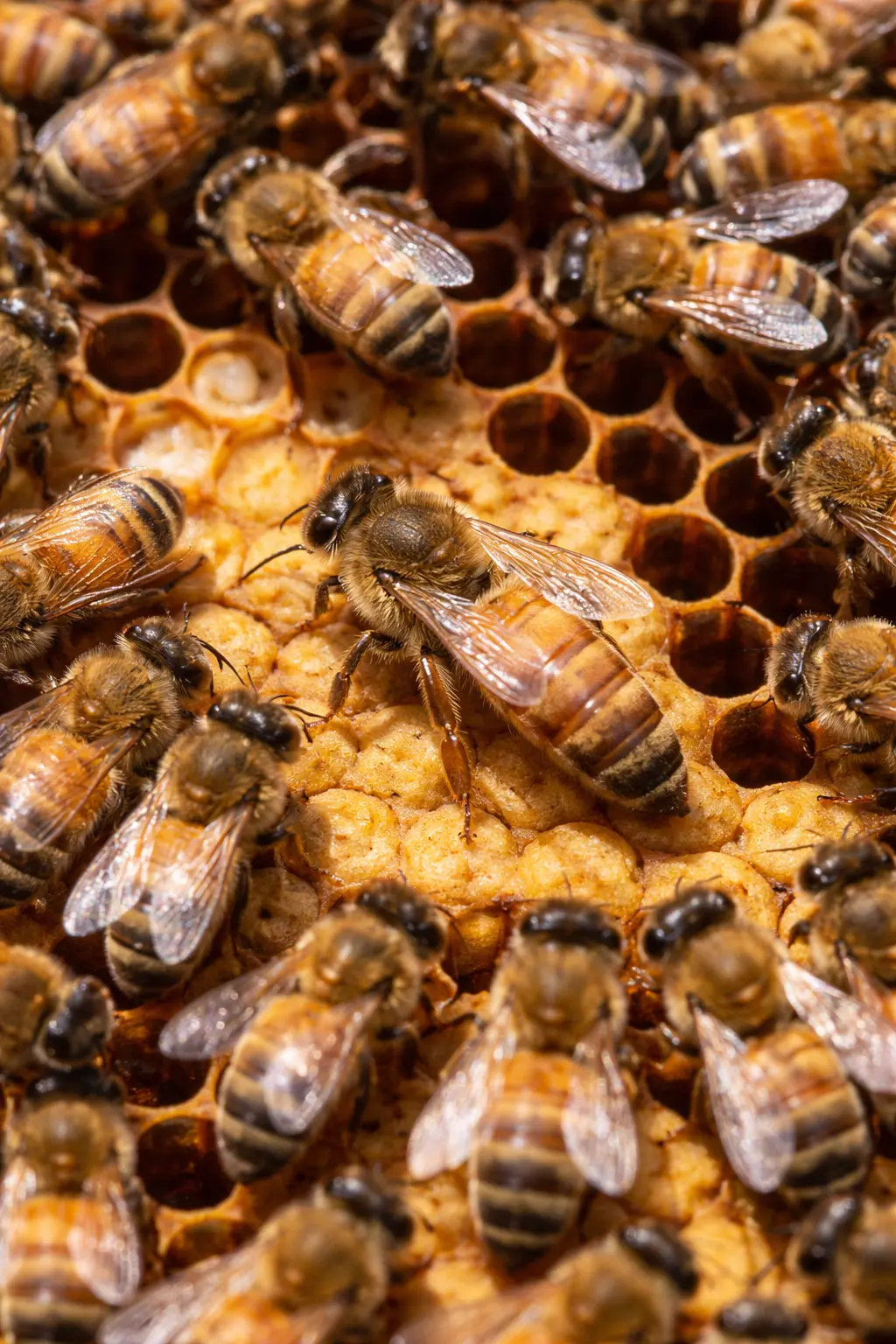
Virgin Queen Timeline (UK)
When Will a Virgin Queen Start Laying? (UK)
Last updated: 15 August 2026
After a swarm, split, or queen replacement, one of the most common questions is:
"When will I see eggs again?"
The answer depends on weather, mating success, and timing — but in most UK conditions, it typically takes 2 to 3 weeks from emergence for a virgin queen to begin laying.
This page is the natural follow-on from Queen Cell Timeline and the later queen-cell stages covered in Charged Queen Cells and Capped Queen Cells. If you are checking a colony after swarming, a split, or queen replacement, it also helps to understand the wider timeline and warning signs. Related guides on post-swarm eggs, queen cell timing, split follow-up, missed swarms and queenless diagnosis are linked throughout this page.
Virgin Queen Timeline – At a Glance
This is the stage after queen-cell emergence, so if you are still working out how you got here, compare this page with Queen Cell Timeline, Charged Queen Cells and Capped Queen Cells.
Day 0
- Virgin queen emerges
- Very active and mobile
Day 5–10
- Mating flights begin
- Weather dependent
Day 10–21
- Egg laying starts
- Colony stabilises
Full Timeline Explained
Day 0 – Emergence
The virgin queen emerges from her cell around day 16 from the original egg. If you are counting forward from queen-cell discovery, use the Queen Cell Timeline to place this stage accurately.
- She is fast and difficult to spot
- She may run across frames quickly
- No laying yet
Days 1–5 – Maturation
The queen strengthens and prepares for mating.
- Remains inside the hive
- Builds strength for flight
- May destroy rival queen cells
Days 5–10 – Mating Flights
The queen leaves the hive to mate with drones. This is one of the reasons a colony can look worrying for a while even when the process is still progressing normally.
- Requires warm, calm weather
- May take several flights
- Can be delayed by poor conditions
Days 10–21 – Egg Laying Begins
Once successfully mated, the queen begins laying eggs. This is the point where uncertainty usually starts to ease, because you are moving from waiting for a queen to proving that she is established.
- Starts slowly at first
- Builds up to a strong laying pattern
- Colony begins to recover
Why It Sometimes Takes Longer
Not all queens follow the "perfect" timeline.
Common delays:
- Cold or wet UK weather
- Lack of available drones
- Multiple failed mating flights
- Weak colony conditions
It is not unusual for this process to take up to 3–4 weeks in poor conditions. That is why many colonies that seem "late" are not necessarily failing — they may simply still be inside a realistic mating window.
What the Hive Looks Like During This Time
This period can feel worrying — but it is often completely normal. It is also the stage where many beekeepers mistake a colony-in-transition for a permanently queenless colony.
You may notice:
- No eggs present
- Brood gradually reducing
- Colony quieter than usual
This is a transition phase — especially after swarming or splitting. If the colony recently cast or swarmed, also compare How Long After Swarming Before Eggs Appear?, because that page focuses specifically on the post-swarm version of this same question.
When to Start Worrying
There is a point where waiting becomes a problem.
Be cautious if:
- No eggs after 3+ weeks
- No queen seen or signs of her
- No queen cells present
- Colony becoming agitated
- Multiple eggs per cell or signs of laying workers
This may indicate:
- Failed mating
- Lost queen
- Queen eaten or not returned
See Queenless Colony or Supersedure?. If you are struggling to assess the queen's presence more generally, also use What To Do If You Can't Find the Queen.
What You Should Do (Step-by-Step)
Week 1–2 after emergence
- Do nothing
- Avoid disturbing the hive
- Remember that this is often still within the normal mating window
Week 2–3
- Check for eggs
- Look for signs of laying pattern
- Read the colony calmly rather than assuming failure from one inspection
After 3 weeks
- Investigate further if no eggs
- Consider next steps if needed
- Use Queenless Colony or Supersedure? if the picture is unclear
After a Swarm vs After a Split
After a swarm:
- The timeline may already be partly underway, depending on queen cell stage
- Eggs may return sooner than expected if emergence happened before you noticed the swarm
After a split:
- Timeline starts from scratch
- Takes full 2–3 weeks (or more)
See How to Split a Hive to Prevent Swarming and What to Check After a Hive Split. If the colony swarmed naturally rather than being split by you, also compare How Long After Swarming Before Eggs Appear?.
Signs a Queen Has Started Laying
- Single eggs per cell
- Consistent pattern
- New larvae appearing
This confirms success — and the colony is back on track. Once you reach this stage, the focus moves away from queen absence and back toward normal brood assessment and colony management.
Common Mistakes
- Checking too early
- Opening hive repeatedly
- Assuming failure too soon
- Adding another queen too early
- Forgetting whether the colony came from a swarm, split or supersedure situation
Virgin Queen Laying Timeline – FAQ
Usually 2–3 weeks, depending on weather and mating success.
This can still be normal — give it more time before acting.
Yes — poor UK weather is one of the main causes of delay.
Not immediately — wait at least 3 weeks before deciding.
Summary
This stage requires patience. Understanding the timeline helps you avoid unnecessary intervention and gives your colony the best chance to recover naturally. This page works best when linked with Queen Cell Timeline, How Long After Swarming Before Eggs Appear?, What to Check After a Hive Split and Queenless Colony or Supersedure?.