
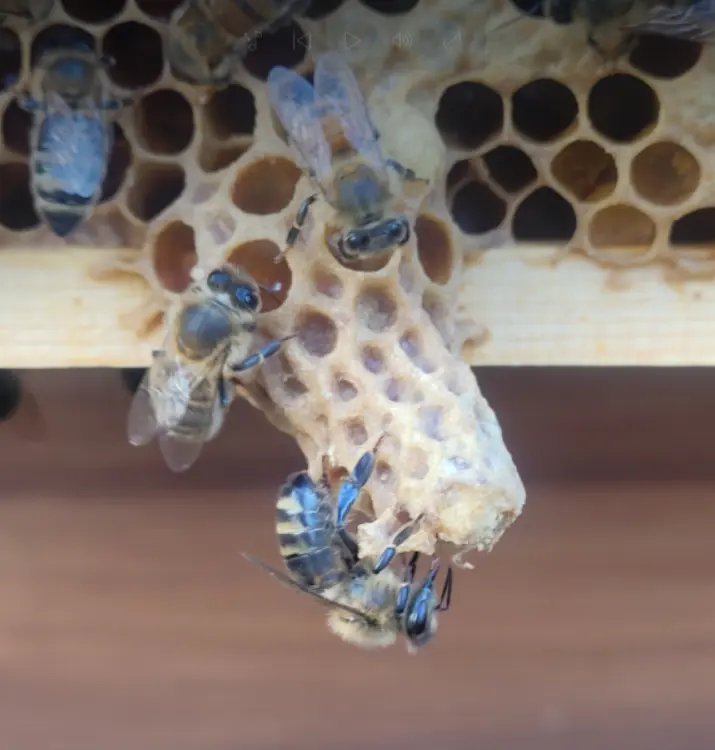
Queen Cell Timeline (UK)
Queen Cell Timeline (UK)
Last updated: 15 August 2026
Understanding the queen cell timeline is one of the most important skills in beekeeping. It tells you not just what is happening inside the hive, but also how urgent your next decision needs to be.
When you find a queen cell, you are looking at a process that has already started days earlier. By knowing the timeline, you can judge whether you have time to act, or whether you are already late.
This guide supports both the Queen Cell Guide and What To Do If You Find Queen Cells pages. It also forms part of the wider Swarm & Queen Management hub, where you can compare queen cell types, swarm control methods and follow-up timing after swarming or splitting. It also works well alongside the Beekeeper's Rule Calculator, which helps map these biological timings against inspections, swarm risk and colony planning.
Why the Timeline Matters
Queen development follows a fixed biological schedule. Unlike many aspects of beekeeping, this timeline does not change much — whether you are in South Wales, England or Scotland.
This means once you identify the stage of a queen cell, you can estimate how long remains before emergence, and how close the colony may be to swarming. That makes the timeline one of the most useful supporting tools for step-by-step inspections and spring swarm decisions.
Queen Development Timeline (Day by Day)
The full development from egg to emerging queen takes around 16 days. What you see during inspection depends on when the cell was started and how far it has progressed. If you want to compare these timings against a known inspection date, nectar flow or breeding target, use the Beekeeper's Rule Calculator.
Day 0–3: Egg Stage
What's happening: The queen lays an egg in a prepared cell. At this stage, there is nothing obvious to see other than a cup or small cell. Most beekeepers will miss this stage entirely.
Day 4–5: Larva Begins
What's happening: The egg hatches into a larva. Workers begin feeding it royal jelly, and the cell starts to extend. This is the start of a true queen cell.
Day 6–8: Charged Queen Cell
What's happening: This is the stage most beekeepers recognise. The larva is clearly visible in royal jelly, and the cell takes on its distinctive elongated, peanut-like shape. This is often the key stage for deciding whether the colony is preparing to swarm or simply beginning queen replacement.
For detailed identification at this stage, see Charged Queen Cells – What To Do.
Day 8–9: Cell is Capped
What's happening: The cell is sealed. This is a critical point in swarm timing. In swarm conditions, the colony may already be very close to swarming or may have already issued a prime swarm.
For understanding what capped cells mean, see Capped Queen Cells – What To Do.
Day 10–15: Pupal Stage
What's happening: The queen develops inside the sealed cell. From the outside, there is little change, but internally the transformation is significant.
Day 16: Virgin Queen Emerges
What's happening: The new queen emerges from the cell. At this point, your opportunity to intervene has largely passed, and the colony is now entering the mating phase.
What the Timeline Means for Swarming
The most important practical use of the timeline is understanding swarm timing. In the UK, this is especially important through April, May and June, when colonies can move very quickly from build-up to swarm preparation.
In a typical swarm scenario, the prime swarm often leaves around the time queen cells are capped. This means if you discover capped queen cells during an inspection, you may already be late. For the wider decision-making around this stage, see Queen Cells & Swarm Control and What To Do If You Find Queen Cells.
- Uncapped = time to plan
- Charged = act soon
- Capped = act immediately (or you may already be too late)
This is why regular inspections during spring are so important. Missing even a few days can make a big difference, especially if you are deciding between an artificial swarm, a split, or another method of swarm control.
How to Use This Timeline in Practice
When you find a queen cell, your first job is not to act — it is to understand what you are looking at.
Ask yourself:
- Is the cell empty, charged, or capped?
- How many cells are present?
- Where are they located on the frame?
- What is the condition of the colony?
Only once you understand these factors should you decide on your next step. This is why the timeline works best alongside the wider Swarm & Queen hub and a calm inspection routine.
For guidance on actions, refer to the What To Do If You Find Queen Cells page, the Queen Cell Guide, or practical method pages such as Artificial Swarm for Beginners, How to Split a Hive to Prevent Swarming and Split Methods.
Explore HiveTag Queen Records
Common Misunderstandings
- The timeline starts when the egg is laid — not when you first notice the cell
- Different cells in the same hive may be at different stages
- Weather can affect mating, but not development timing
These small misunderstandings can lead to poor decisions, especially when dealing with swarm control.
How This Timeline Fits into the Beekeeping Year
The queen cell timeline is easiest to use when you place it inside the wider beekeeping season. A charged or capped cell means something different in a rapidly expanding spring colony than it does in a quieter supersedure situation later on. For month-by-month context, see Year in the Apiary and especially the pages for April, May and June.
Queen Cells Timeline FAQ
Approximately 16 days from when the egg is laid.
Usually around 7 to 8 days after the cell is capped.
Not always, but in swarm conditions this is often when the prime swarm leaves.
It becomes more difficult. Action may still work, but timing is critical and the colony may already have swarmed.
Summary
This timeline is one of the most powerful tools in beekeeping. Combined with observation and experience, it allows you to move from reacting to problems, to anticipating them. Once a virgin queen has emerged, the next useful pages are Virgin Queen Timeline and How Long After Swarming Before Eggs Appear?. If you want to map these dates against a known inspection or planning target, the Beekeeper's Rule Calculator is the best companion tool.