
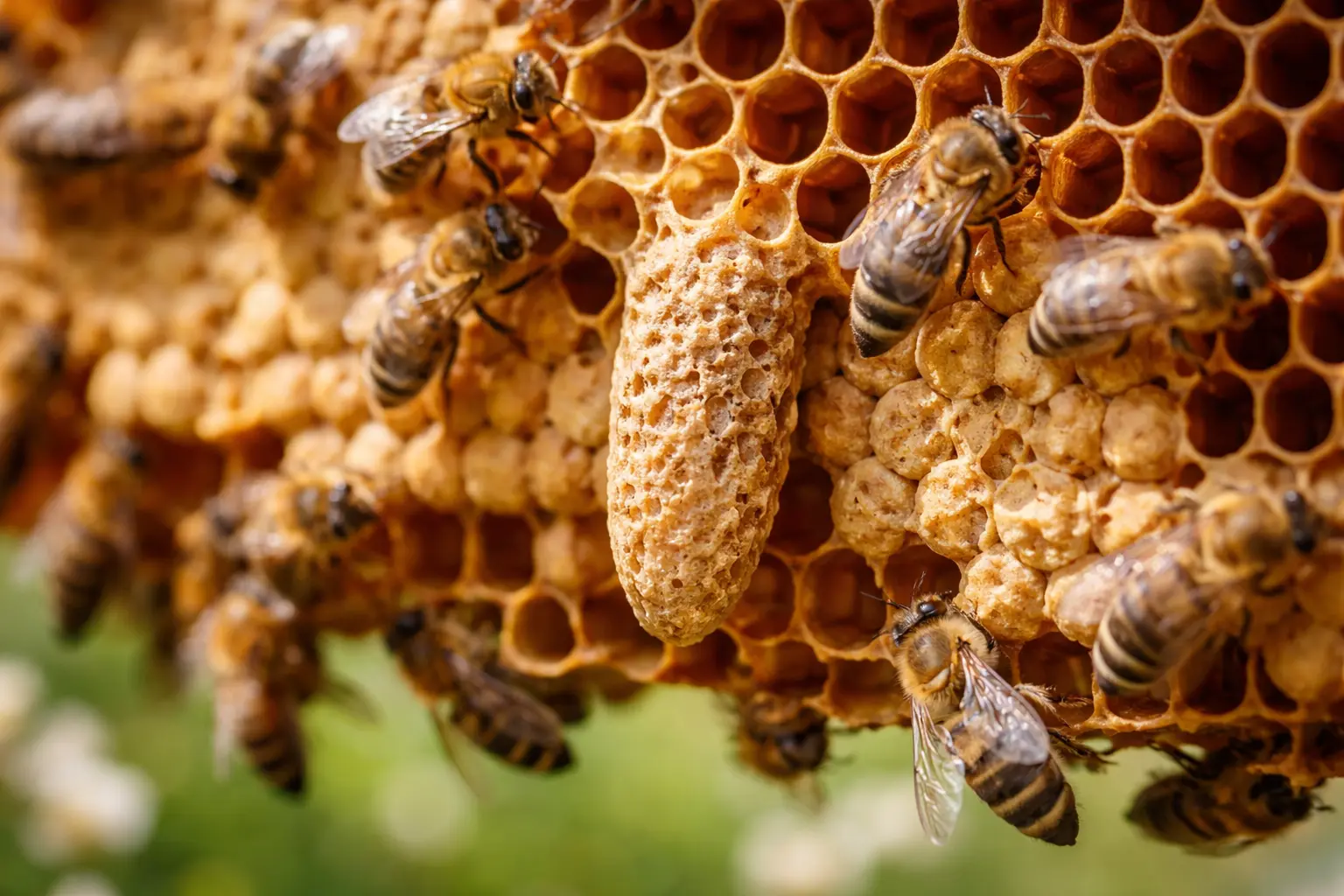
Capped Queen Cells
Capped Queen Cells: What To Do (UK)
Last updated: 15 August 2026
Finding capped queen cells during an inspection can feel like a turning point. Once a queen cell is sealed, the process is already well underway, so timing matters and your next steps need to be deliberate rather than reactive.
This guide explains what capped queen cells mean, what to do next, how close you may be to swarming, and what practical options you have as a UK beekeeper. If you are unsure how to identify queen cells in the first place, start with the Queen Cell Guide before using this page. This page also sits within the wider Swarm & Queen Management hub, which connects queen cell stages, swarm control methods and follow-up timing.
Capped Queen Cells at a Glance
If you are comparing stages, this page is best read after Charged Queen Cells and alongside the Queen Cell Timeline.
What It Means
- The queen cell has been sealed
- Development is now well advanced
- The colony is committed to raising a new queen
Key Risk
- Swarm may be imminent or already gone
- Very limited time to act
- Easy to make rushed decisions
Your Priority
- Understand the colony situation
- Confirm queen evidence
- Choose a clear plan, not a quick fix
What a Capped Queen Cell Means
When a queen cell is capped, the larva inside has been fully fed and is now entering the pupal stage. At this point, the colony has already invested heavily in raising a new queen, and the process cannot be reversed in a meaningful way. If you want the earlier decision-stage version of this page, compare it with Charged Queen Cells.
In swarm situations, capped queen cells are often a sign that the colony is very close to swarming or may already have done so. In supersedure or emergency situations, the capped stage simply means the replacement process is progressing. To compare those possibilities, see Queen Cells & Swarm Control, Supersedure Queen Cells and Emergency Queen Cells.
How Close Are You to Swarming?
If the cells are swarm cells, timing becomes critical. Colonies often swarm shortly before or around the time queen cells are capped. This means that by the time you see sealed cells, you may already be very close to losing the prime swarm — or it may have already left.
This is why regular inspections during swarm season matter so much. A colony can move from "no cells" to "capped cells" within a week, especially in strong spring conditions. In many cases, the real management window was at the charged-cell stage rather than here.
If you are unsure whether what you are seeing is swarm-related, refer to the Queen Cells and Swarm Control page to interpret the wider situation. For exact development timing, keep the Queen Cell Timeline closely linked to this page.
First Checks to Make
Before taking any action, slow down and confirm what you are actually dealing with. The biggest mistake at this stage is reacting too quickly without understanding the colony's condition.
- Are there eggs or very young larvae present?
- Is the queen still present?
- How many cells are there, and where are they?
- Is the colony strong and congested?
These answers will help you decide whether you are dealing with swarm preparation, supersedure or an emergency situation. If the queen is not obvious, also compare Can't Find Queen and Queenless or Supersedure?.
What To Do If They Are Swarm Cells
If the cells are clearly part of swarm preparation, doing nothing will often result in the colony swarming. At the capped stage, simply removing cells is rarely effective and often leads to repeated swarm attempts. This is the stage where clarity of plan matters more than speed alone.
The usual approach is to carry out a swarm control method that you understand and can apply confidently. This might involve splitting the colony or simulating a swarm to relieve pressure and retain your bees. If you need the wider decision context first, compare this page with What To Do If You Find Queen Cells and Queen Cells & Swarm Control.
If you are unsure how to do this, the Artificial Swarm for Beginners, How to Split a Hive to Prevent Swarming and Split Methods guides walk through practical methods.
What To Do If They Are Supersedure Cells
If the colony appears calm, with only one or two cells and a failing queen, the situation may be supersedure rather than swarming. In many cases, the best option is simply to allow the colony to replace the queen naturally.
Interfering at this stage can disrupt a process that the colony is managing effectively. Unless there is a clear reason to intervene, patience is often the better option.
You can read more about this in the Supersedure Cells – Should You Leave Them? guide, and compare it with Supersedure Queen Cells if you want a clearer diagnosis first.
What To Do If They Are Emergency Cells
If there are no eggs and the colony appears queenless, the cells may be emergency queen cells. In this situation, removing them without an alternative plan can leave the colony unable to recover.
Unless you are introducing a new queen or combining colonies, the safest option is often to let the colony continue raising a replacement.
See Emergency Queen Cells Explained for a deeper explanation of this scenario, especially if you are weighing up whether the colony is queenless or simply between queens.
What Happens Next?
Once capped, a queen will typically emerge around day 16 (see Queen Cell Timeline) from when the egg was laid. After emergence, she must mature, mate and begin laying. This process takes time, and during this period the colony may appear to have no queen at all.
This is where many beekeepers become concerned and intervene too early. Understanding the timeline helps avoid unnecessary disruption.
For a full breakdown, see the Queen Cell Timeline. After emergence, the next useful guides are often Virgin Queen Timeline and How Long After Swarming Before Eggs Appear?.
Common Mistakes
The most common mistake is reacting too quickly. Cutting out capped cells without a clear plan often makes things worse rather than better. Another mistake is assuming all capped cells mean swarming, when in reality the colony may be replacing or recovering its queen. A third mistake is forgetting that the best intervention point may already have passed, so the next decision must match the colony's current stage rather than the stage you hoped it was at.
Finally, repeated inspections at this stage can damage cells or disrupt the colony. Once you have made your decision, it is often best to step back and allow the process to unfold.
Capped Queen Cells FAQ
Not always, but if the cells are swarm cells, it often means swarming is very close or has already happened.
Not automatically. Removing them without a plan can lead to repeated swarming or leave the colony queenless.
A queen typically emerges around day 16 from when the egg was laid, meaning roughly 7–8 days after capping.
Focus on eggs and young larvae rather than the queen herself. See What To Do If You Can't Find the Queen.
Finding capped queen cells means you are at a key decision point. Take a moment to understand the situation fully, choose a clear plan, and avoid reacting on instinct. Calm decisions at this stage make a big difference to the outcome. This page works best when linked closely with Charged Queen Cells, Queen Cell Timeline, What To Do If You Find Queen Cells and the post-emergence pages that follow.