
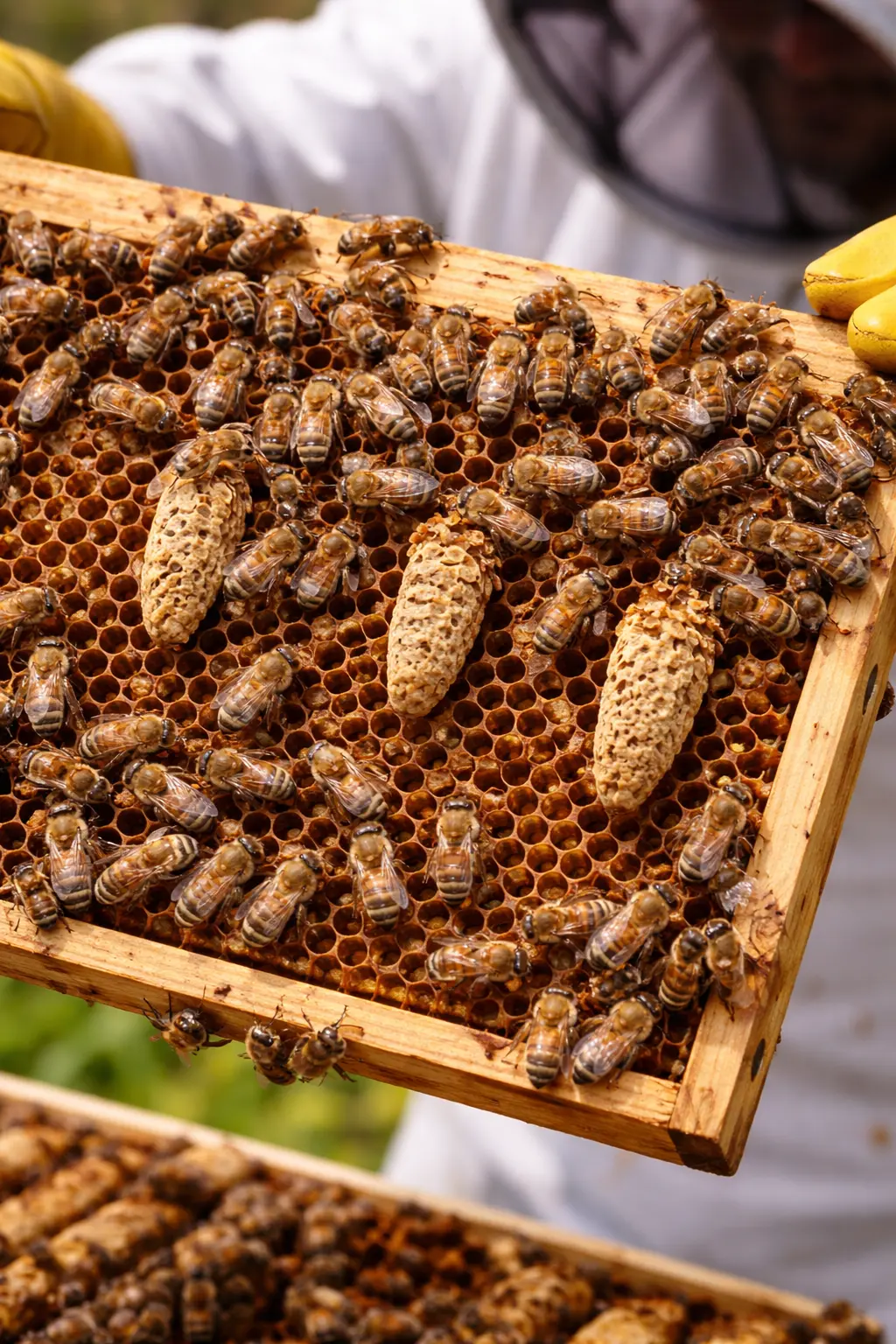
Queen Cells and Swarm Control (UK)
Queen Cells and Swarm Control (UK Guide)
Last updated: 15 August 2026
Finding queen cells in your hive is one of the most important moments in beekeeping. It's the point where observation turns into decision-making, and where your actions can either prevent a swarm or make things worse.
This guide explains how queen cells relate to swarming, how to interpret what you're seeing, and how to choose the right swarm control approach. If you are still learning the basics, start with the Queen Cell Guide. This page also forms part of the wider Swarm & Queen Management hub, which links together queen cell diagnosis, swarm control methods and follow-up timing. It works especially well alongside What To Do If You Find Queen Cells, the Queen Cell Timeline, and the Beekeeper's Rule Calculator if you want to map queen cell timing against real inspection dates.
Queen Cells & Swarm Control – At a Glance
If you are not yet sure whether the cells you found are swarm, supersedure or emergency cells, check the Queen Cells Guide first, then return here to choose the right control method.
What Queen Cells Mean
- Colony is preparing a new queen
- Often linked to swarming
- But not always the same reason
Your Role
- Identify the type of cells
- Understand the colony situation
- Choose a controlled response
Main Goal
- Prevent swarming if needed
- Maintain colony strength
- Avoid unnecessary disruption
Why Queen Cells Trigger Swarm Decisions
Queen cells are the colony's way of preparing for a new queen. In spring and early summer, this is often linked to swarming — the colony's natural method of reproduction.
When the colony becomes crowded and strong, workers begin raising new queens. The old queen then leaves with part of the colony. This is why identifying whether cells are charged or capped matters so much for timing. If you want the full development clock behind those stages, use the Queen Cell Timeline.
However, not all queen cells mean swarming. Some indicate Supersedure Queen Cells, and others are emergency responses. If that distinction is still unclear, go back to the Queen Cells Guide before deciding on swarm control.
Step 1 – Identify the Type of Queen Cells
Before taking any action, you need to understand what type of queen cells you are looking at.
- Swarm cells – usually multiple, often along frame edges
- Supersedure cells – often 1–2, on the face of the comb
- Emergency cells – scattered, built from worker cells
If you're unsure, refer to the Queen Cell Guide for identification, then compare Queen Cups, Charged Queen Cells, Capped Queen Cells, Supersedure Queen Cells and Emergency Queen Cells. Once you know what type of cells you are dealing with, return here to choose the correct swarm-control response.
Step 2 – Assess the Colony Situation
Queen cells on their own don't tell the full story. You need to consider the condition of the colony:
- Is the colony very strong and crowded?
- Is there plenty of brood and food?
- Is the queen still present and laying?
- Are bees backfilling the brood nest?
A strong, congested colony with multiple queen cells is often preparing to swarm. This is especially true in the main spring build-up covered in Year in the Apiary, particularly April, May and June.
A smaller colony with 1–2 cells may be replacing a failing queen. In that case, compare this page with Supersedure Queen Cells and Supersedure Action before intervening.
Step 3 – Choose Your Swarm Control Approach
Once you understand the situation, you can decide how to respond. If you are still at the stage of deciding whether action is needed at all, compare this page with What To Do If You Find Queen Cells.
Option 1 – Do Nothing (Monitor)
This is sometimes appropriate for supersedure. The colony replaces its queen naturally.
See Supersedure Cells – Should You Leave Them? and Queenless or Supersedure?.
Option 2 – Split the Hive
Splitting reduces congestion and removes swarm pressure. It is one of the clearest ways to turn swarm preparation into a controlled management decision.
See How to Split a Hive to Prevent Swarming and Split Methods.
Option 3 – Artificial Swarm
This mimics natural swarming but keeps control in your hands. It is often one of the most practical methods for beekeepers who want a straightforward response to a colony already preparing to swarm.
See Artificial Swarm for Beginners.
Option 4 – Reduce Queen Cells
In some cases, reducing to 1–2 cells helps prevent casts.
This should be done carefully and only when you understand the situation. If you are still deciding, also compare What To Do If You Find Queen Cells.
Understanding Timing – The Critical Factor
Timing is everything with queen cells. Once cells are capped, the process is already well advanced.
- Charged cells = preparation phase
- Capped cells = swarm may be imminent
- Emerging cells = process already underway
Use the Queen Cell Timeline to understand how quickly things can progress. If cells are already capped, compare that with Capped Queen Cells. If the colony has already moved beyond the cell stage, the next useful page is often Virgin Queen Timeline. If you want to map likely dates against a real inspection plan, the Beekeeper's Rule Calculator and Step-by-Step Inspections also fit naturally here.
Common Mistakes in Swarm Control
Many swarm control failures come from misunderstanding queen cells rather than missing them.
- Destroying all queen cells without a plan
- Ignoring early signs of congestion
- Acting too late (after capping)
- Over-inspecting and disrupting the colony
If you've already missed the swarm stage, see Missed a Swarm – What To Do Next and How Long After Swarming Before Eggs Appear?. If you are unsure whether the colony has actually swarmed or is simply between queens, also compare Queenless or Supersedure?.
Queen Cells Are Not the Problem
It's easy to think queen cells are something to remove or control — but they are actually a signal.
They tell you the colony is strong, active, and responding to its environment.
Your job is not to fight that — but to guide it.
Queen Cells and Swarm Control – FAQ
No. They can also indicate supersedure or emergency queen replacement.
Not usually. This often delays swarming rather than preventing it.
It depends on your colony and experience. Splits and artificial swarms are the most common approaches.
As early as possible, ideally before cells are capped.
Summary
Queen cells are one of the most important signals in a hive. Learning how to read them — and respond calmly — is a key step in becoming a confident beekeeper. Use this page alongside the Queen Cells Guide, What To Do If You Find Queen Cells, Queen Cell Timeline and the wider Swarm & Queen Management hub.