
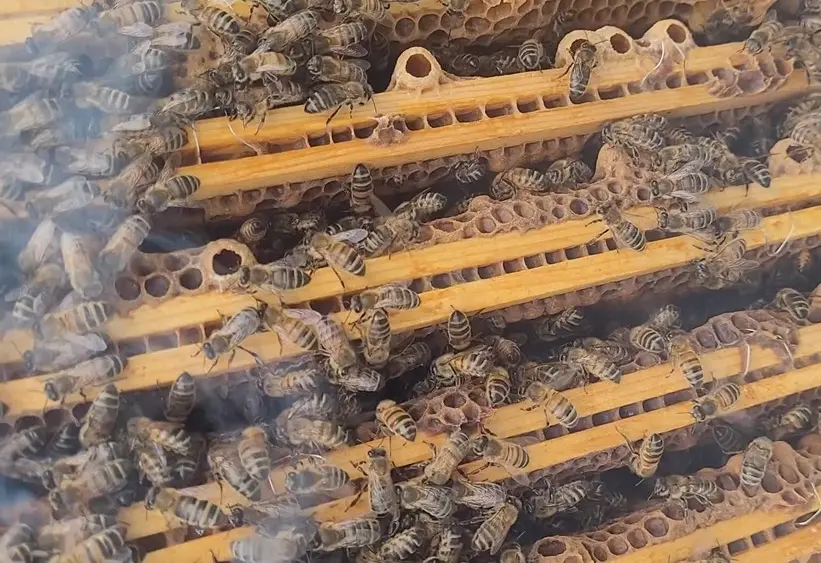
Empty Queen Cups (UK)
Empty Queen Cups: What They Mean (UK)
Last updated: 15 August 2026
Finding queen cups during an inspection can be worrying, especially for newer beekeepers. They are often the first sign people associate with swarming, and it is easy to assume that something is about to happen. In reality, empty queen cups are usually completely normal and do not, on their own, mean the colony is preparing to swarm.
This guide explains what queen cups are, why bees build them, and how to tell the difference between harmless cups and cups that require action. If you are unsure about identifying different stages of queen cells, use this alongside the Queen Cell Guide.
Queen Cups at a Glance
What They Are
- Small, acorn-shaped wax structures
- Often found on brood frames
- Usually empty
What They Mean
- Part of normal colony behaviour
- Not a swarm signal on their own
- Only important if they become charged
Your Priority
- Check if they are empty
- Monitor over time
- Avoid unnecessary action
What Are Queen Cups?
Queen cups are small, cup-shaped structures built by bees, usually on the edges or face of brood frames. They look like the beginning of a queen cell but are not yet in use. In many colonies, you will find a few cups present for long periods without them ever being developed further.
Bees appear to build queen cups as part of their normal behaviour, almost as if they are keeping the option open to raise a new queen if needed. Think of them as a starting point, not a commitment.
Why Bees Build Queen Cups
There is no single reason why bees build queen cups, but they are commonly present in healthy colonies throughout the season. Some beekeepers describe them as "standby structures" that allow the colony to respond quickly if it needs to raise a new queen.
You may notice that cups appear, disappear, and reappear between inspections. This is normal. Bees will often build and remove them without ever using them.
This is why finding a few empty cups is not something to worry about. It becomes meaningful only if the colony begins to use them.
When Queen Cups Become Important
A queen cup becomes significant when it is "charged" — meaning a larva is present and the bees are feeding it royal jelly. At that point, the colony has started raising a new queen.
This is the moment where your focus should shift. An empty cup requires no action, but a charged cell does. Understanding this transition is one of the most important skills in reading a hive. The next useful pages at that point are Charged Queen Cells – What To Do and What To Do If You Find Queen Cells.
If you are unsure what a charged cell looks like, see Charged Queen Cells – What To Do.
Where You'll Usually Find Them
Queen cups are often found along the lower edges of brood frames, but they can also appear on the face of comb or in other areas of the brood nest. Their position alone does not tell you much — it is their contents that matter. If you are trying to judge whether the colony is showing early swarm intent, compare this page with Queen Cells & Swarm Control.
Because they can be small and easy to miss, it is worth getting into the habit of scanning frame edges during inspections. Over time, you will begin to recognise what is normal for your colonies.
What To Do If You Find Queen Cups
In most cases, the correct response is simply to note their presence and move on. There is no need to remove them, and doing so does not prevent swarming or influence the colony in any meaningful way.
The key is to check whether they are empty. If they are dry and contain no larva, they are just cups. If you are unsure, take a closer look or revisit them at your next inspection. A calm inspection routine from Step-by-Step Inspections is useful here, because small changes are easy to miss if inspections become rushed.
- Empty = no action
- Charged = investigate further
- Capped = act deliberately
If you later find that cups have become charged, refer to the Charged Queen Cells – What To Do, Capped Queen Cells – What To Do and Queen Cell Timeline guides.
Common Mistakes
The most common mistake is assuming that queen cups mean the colony is about to swarm. This often leads to unnecessary interference, including removing cups or carrying out swarm control too early.
Another mistake is not checking them properly. A quick glance may miss a larva, and the difference between empty and charged is crucial. If the colony story is unclear, compare what you are seeing with Queen Cells Guide before deciding what it means.
Finally, some beekeepers try to remove all cups as a preventative measure. This does not stop the colony from building more and does not address the underlying conditions that lead to swarming.
Queen Cups FAQ
No. Empty queen cups are very common and do not, on their own, indicate swarming.
There is usually no need. Bees will build and remove them naturally as part of normal behaviour.
Look for a larva inside the cup, usually surrounded by milky royal jelly.
Commonly along the lower edges of brood frames, but they can appear anywhere in the brood nest.
Summary
Queen cups are often the first thing beekeepers notice when learning to read a hive. Understanding that they are usually harmless is an important step towards making calm, informed decisions during inspections.