
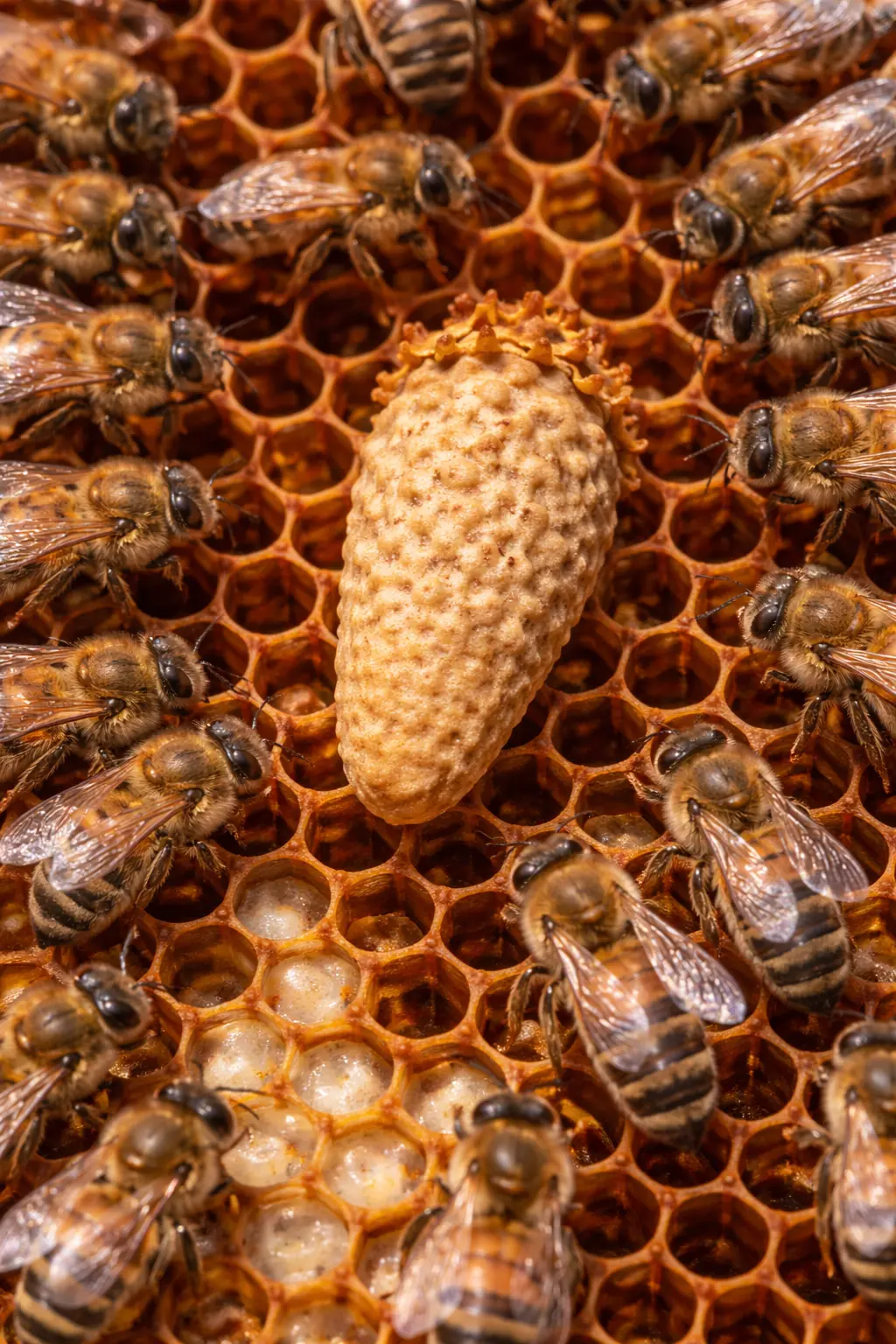
Supersedure Queen Cells (UK)
Supersedure Queen Cells (UK)
Last updated: 15 August 2026
Not all queen cells mean swarming. One of the most common misunderstandings in beekeeping is confusing swarm cells with supersedure cells.
Supersedure is the colony's way of quietly replacing a failing or ageing queen. Unlike swarming, it is usually a controlled and stable process, and in many cases, the best action is simply to leave the colony alone.
This guide helps you recognise supersedure, understand what "normal" looks like during queen replacement, and avoid unnecessary intervention. It sits within the wider Swarm & Queen Management hub, where you can compare supersedure with swarm cells, emergency queen cells and queenless colony situations.
If you are unsure whether the colony is quietly replacing a queen or has actually lost one, compare this page with Queenless or Supersedure?. If you already know it is supersedure and want the practical "leave it or intervene?" answer, go straight to Supersedure Action.
Supersedure Queen Cells – At a Glance
What It Usually Means
- The colony is replacing its queen
- This is usually not swarm preparation
- The process is often calm and controlled
Common Clues
- Often one or two cells
- Often on the face of the comb
- Old queen may still be present
Usual Approach
- Do not panic
- Do not destroy the cells
- Monitor with minimal disturbance
What Is Supersedure?
Supersedure occurs when a colony decides its current queen is no longer performing well. This may be due to age, poor laying pattern, or reduced pheromone strength.
Instead of swarming, the colony raises a new queen to replace her, often while the old queen is still present. That is why supersedure usually needs to be read differently from swarm-related queen cells, where the colony is preparing to reproduce rather than simply improve queen quality. In supersedure, the colony is usually trying to stay together, not divide.
How to Identify Supersedure Queen Cells
The key to identifying supersedure is context. There is no single "perfect" indicator, but a combination of clues builds the picture. Number, location, colony behaviour, queen performance and timing all matter together.
Supersedure cells tend to look similar to swarm cells, but their location and number are often different.
- One or two queen cells only
- Located on the face or middle of the frame
- Colony otherwise calm and stable
- Queen still present but underperforming
If you need help identifying stages, refer to the Queen Cell Guide. If you are still unsure whether the colony is replacing a queen quietly or responding to a more serious problem, also compare Queenless or Supersedure? and Emergency Queen Cells.
Why Colonies Supersede Queens
Bees are very sensitive to queen performance. Even before a beekeeper notices a problem, the colony may already be reacting.
Common reasons include:
- Ageing queen (typically 2+ years)
- Poor brood pattern
- Reduced pheromone output
- Injury or damage to the queen
In many cases, the colony is simply correcting a problem before it becomes serious.
Supersedure vs Swarm Cells
This is one of the most important distinctions in queen cell management. Swarm cells usually belong to a strong colony preparing to divide. Supersedure cells usually belong to a colony trying to improve queen quality without swarming.
- One or two cells
- Cells on the face of the comb
- Calm colony
- Queen may still be present
- Patchy or weakening brood pattern
- Multiple queen cells
- Often along lower edges of brood frames
- Strong, crowded colony
- Brood nest may be backfilled
- Swarm timing becomes more urgent
There are exceptions, which is why the whole colony story matters. For the wider decision picture, compare Queen Cells & Swarm Control.
What Should You Do?
This is where many beekeepers go wrong. The instinct is to intervene, but supersedure is often best left alone. In many cases, the bees are already solving the problem for you.
If the colony is calm and the situation fits a supersedure pattern, the safest approach is usually to monitor rather than act. The main goal is not to interrupt a replacement process that is already underway.
- Avoid destroying supersedure cells
- Confirm presence of eggs or young brood
- Limit disturbance during queen replacement
- Allow the colony to complete the process
For broader decision-making, see What To Do If You Find Queen Cells. If you want the more specific "leave them or intervene?" version for this exact scenario, go straight to Supersedure Action.
When You Should Be More Cautious
Not every colony with a small number of queen cells is automatically in a healthy supersedure process. You should look more carefully if the pattern stops fitting the usual quiet-replacement story.
- There are no eggs or very young larvae for an extended period
- The colony feels noisy, unsettled or disorganised
- You cannot tell whether the queen is still present
- The queen cells look more like emergency cells than supersedure cells
- The colony has recently swarmed or may already be queenless
In those cases, compare what you are seeing with Queenless or Supersedure? and What To Do If You Can't Find the Queen.
What Happens Next?
Once the new queen emerges, she will need time to mature, mate and begin laying. During this period, the colony may appear quieter than usual, and there may be a temporary gap before fresh eggs appear again.
This is normal and not automatically a sign of failure, provided the timing still makes sense.
In some cases, both the old and new queen may be present temporarily, though this is not always observed.
The full timeline is explained in the Queen Cell Timeline. Once a virgin is expected, the next useful page is often Virgin Queen Timeline, because a successful supersedure can still leave a temporary gap before new eggs appear.
Common Mistakes
- Destroying supersedure cells unnecessarily
- Assuming all queen cells mean swarming
- Repeated inspections during queen replacement
- Assuming the colony is queenless too early
- Interfering without understanding colony condition
Over-management can cause more harm than the original issue the bees were trying to fix.
Supersedure Queen Cells FAQ
No. Supersedure is usually a replacement process, not swarm preparation, although the wider colony condition should always be considered.
Generally no. Removing them can leave the colony without a functioning queen and may interrupt a replacement process the bees are managing successfully.
Often one or two, sometimes a few more depending on conditions.
Yes. In some cases, the old queen remains until the new one is ready.
Supersedure is one of the clearest examples of bees managing their own colony health. Understanding it allows you to step back when needed — and that is just as important as knowing when to act. In practical beekeeping, recognising when not to interfere can save a colony a lot of unnecessary disruption.