
Supersedure Action (UK)
Supersedure Cells: Should You Leave Them? (UK)
Last updated: 15 August 2026
Finding supersedure queen cells often raises an immediate question:
Should I leave them… or remove them?
In most cases, the answer is simple: leave them alone. The important part is making sure the colony is actually undergoing supersedure and not doing something else.
This guide explains when to leave supersedure cells alone, when to be cautious, and what mistakes to avoid. If you are not fully sure what type of cells you are seeing, start with the Queen Cell Guide. This page forms part of the wider Swarm & Queen Management hub, where you can compare supersedure with swarm cells, emergency cells and queenless colony situations.
Supersedure Cells – At a Glance
Typical Signs
- 1–2 queen cells
- On the face of the comb
- Colony calm and organised
What It Means
- Colony replacing its queen
- Not usually swarm-related
- Natural, controlled process
Best Approach
- Usually leave them in place
- Avoid cutting them out
- Monitor with minimal disturbance
What Are Supersedure Cells?
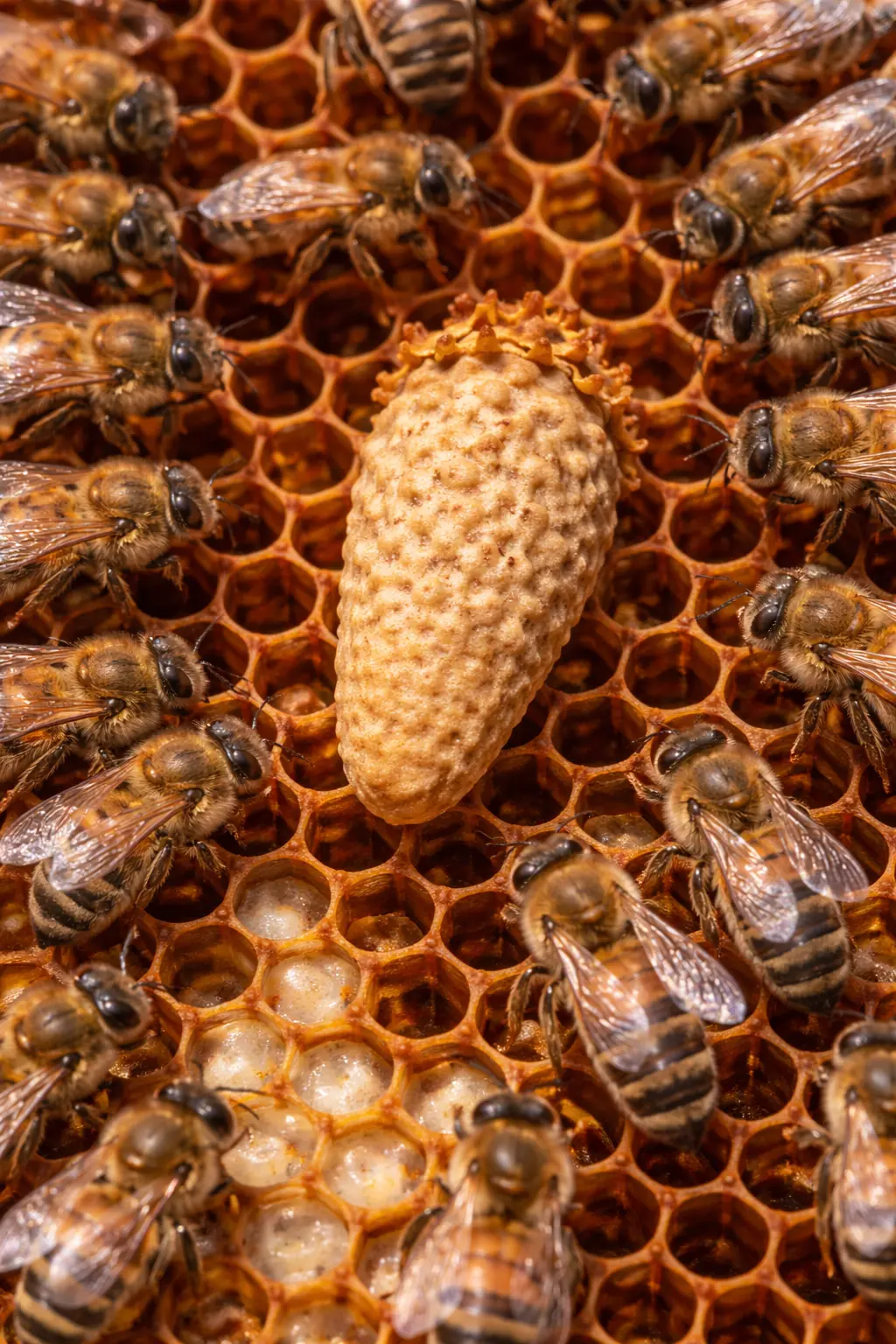
Supersedure cells are queen cells built by a colony to replace an existing queen. This usually happens when the queen is aging, underperforming, or producing a poor brood pattern.
Unlike swarming, this is not about reproduction — it's about queen replacement and colony continuity.
The colony is quietly replacing a queen it considers below standard.
For identification, see Supersedure Queen Cells Explained. If you are still weighing up whether the colony is quietly replacing the queen or reacting to a more serious problem, also compare Queenless or Supersedure? and Emergency Queen Cells.
Should You Leave Supersedure Cells?
In most cases:
The colony is usually responding to a genuine queen-quality problem. In many cases, it has already assessed the queen's performance before the beekeeper has fully noticed the issue.
Interfering often causes more harm than good. The main exception is when the situation is not true supersedure at all, but instead a queenless situation, an emergency queen response, or a colony that is actually preparing to swarm.
Why Leaving Them Is Usually Best
When a colony initiates supersedure, it is typically a controlled and stable process.
- The old queen may still be present and laying
- The new queen develops alongside her
- The transition is gradual and low-risk
This means the colony avoids the disruption associated with swarming or sudden queen loss.
When You Should Not Just Leave Them Without Thinking
Although leaving supersedure cells is usually correct, you should pause and reassess if the situation stops fitting the normal supersedure pattern.
- Multiple queen cells appearing, especially in a strong crowded colony
- No eggs or very young larvae present for longer than expected
- Colony appears weak, noisy or disorganised
- Queen cells look more like emergency or swarm cells than quiet replacement cells
- You are no longer confident the old queen is present or that the colony is progressing normally
In these cases, you may not be dealing with true supersedure at all.
See Queenless Colony or Supersedure? to help diagnose the situation. If the colony is strong, crowded and showing multiple queen cells, also compare Queen Cells & Swarm Control.
Leave Them or Intervene? A Simple Rule of Thumb
- There are one or two cells
- The colony is calm
- The queen seems old or underperforming
- The pattern fits quiet replacement rather than swarming
- There are several cells
- The colony is crowded or swarmy
- There are no eggs and no clear queen evidence
- The colony feels queenless, unsettled or abnormal
The important point is that "leave them" is the default only when the colony really does fit a supersedure pattern.
What Happens If You Remove Them?
Removing supersedure cells can create exactly the sort of problem the colony was trying to avoid:
- The colony may be left with a failing queen
- It may attempt emergency queen rearing
- You may delay or weaken the colony
In some cases, repeatedly removing supersedure cells can leave the colony stuck with a failing queen or eventually make it queenless.
What to Expect After Supersedure
If you leave the cells, the colony will follow a natural process:
- New queen develops
- Old queen may disappear
- Virgin queen mates and begins laying
There may be a short gap in egg laying during the transition, and that does not automatically mean the process has failed.
For timing, see When Will a Virgin Queen Start Laying?. For the earlier queen development stages that happen before emergence, also use the Queen Cell Timeline.
How Supersedure Differs from Swarming
This is where confusion often happens, and it is one of the biggest causes of unnecessary intervention.
- Supersedure = quiet replacement, often with one or two cells and a calm colony
- Swarming = colony reproduction, often with multiple cells and a strong crowded colony
If you misread supersedure as swarming, you may take unnecessary action. If you misread swarming as supersedure, you may leave the colony too long and lose a swarm. That is why the wider colony picture matters so much.
See Queen Cells and Swarm Control for the wider picture. If you want the broader action-based version, also compare What To Do If You Find Queen Cells.
Common Mistakes
- Cutting out supersedure cells "just in case"
- Assuming all queen cells mean swarming
- Assuming the colony is queenless too early
- Opening the hive too frequently during transition
- Intervening before understanding the situation
Supersedure Cells FAQ
In most cases, yes — unless there are signs the colony is actually queenless, responding to an emergency, or preparing to swarm.
Usually one or two. More than that does not automatically rule out supersedure, but it should make you look more carefully at the whole colony picture.
Sometimes temporarily, but she is usually replaced during the process.
There may be a short pause in brood production during the changeover, but the colony often recovers well once the new queen is established.
Supersedure is one of the most natural and efficient processes in a beehive. In most cases, the best thing a beekeeper can do is recognise it, understand why it is happening, and allow the colony to complete the change with as little disruption as possible.