
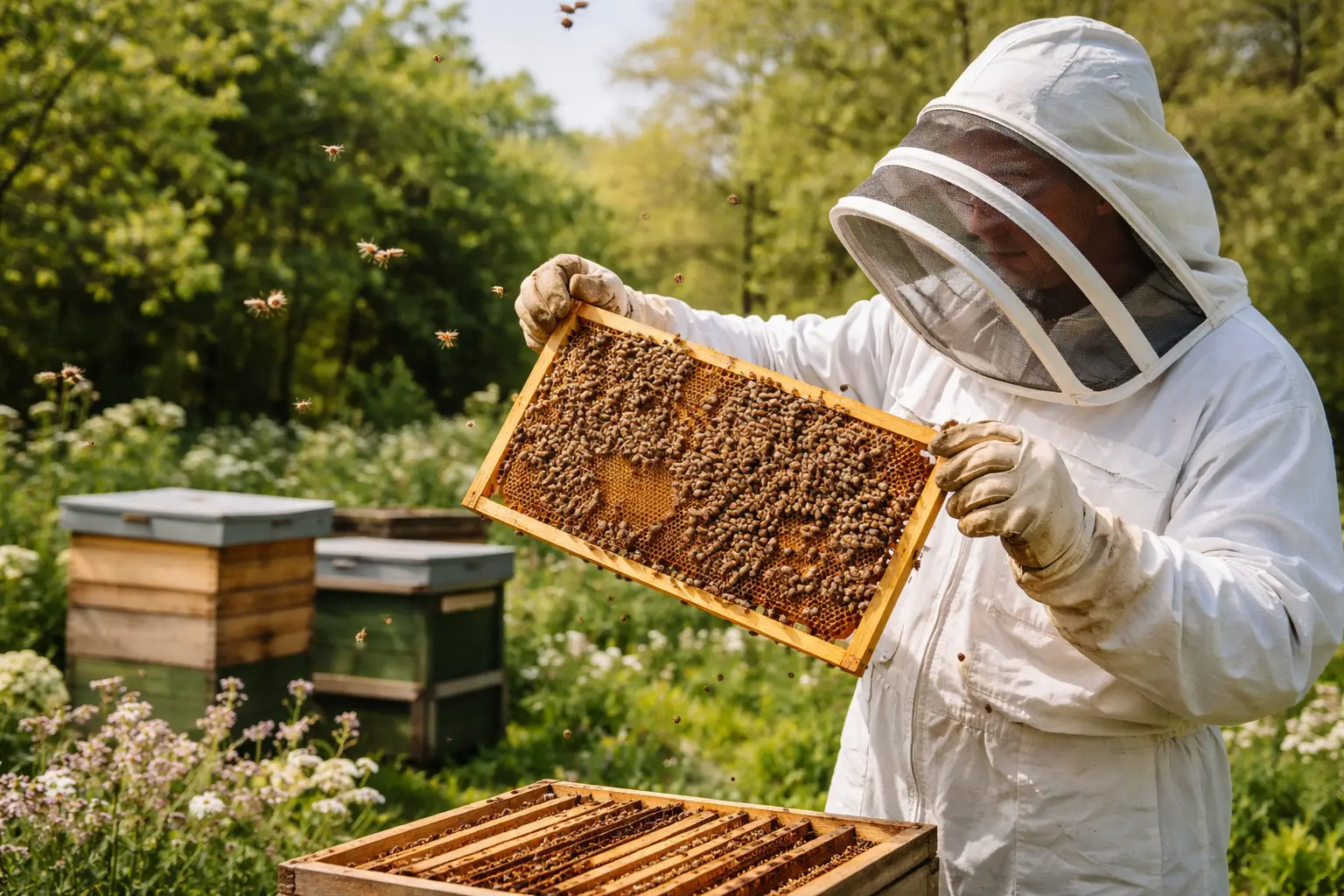
Artificial Swarm
Artificial Swarm for Beginners (UK)
Last updated: 15 August 2026
An artificial swarm is one of the most useful and reliable swarm control methods in UK beekeeping. It helps you prevent swarming, keep your bees in the apiary and manage queen cells in a controlled, practical way.
If you have found queen cells and suspect a colony is preparing to swarm, this method helps you take control of the situation. It may sound complicated at first, but once you understand the logic behind it, it becomes a practical and repeatable part of hive management.
This guide builds on the What To Do If You Find Queen Cells page and shows you how to act when a colony is preparing to swarm.
Artificial Swarm – At a Glance
What It Does
- Mimics a natural swarm
- Reduces swarm pressure
- Keeps your bees in your apiary
When to Use It
- Strong colony in spring
- Multiple queen cells present
- Signs of congestion or backfilling
Main Idea
- Move the queen away
- Leave brood + queen cells behind
- Split flying bees from nurse bees
Understanding the Idea Behind an Artificial Swarm
Before going step-by-step, it helps to understand what you're trying to achieve. In a natural swarm, the old queen leaves the hive with a large portion of the flying bees, leaving the remaining colony to raise a new queen.
An artificial swarm copies this process, but in a controlled way. You separate the queen from the main brood nest and force the colony to behave as though it has already swarmed. This removes the trigger to swarm naturally.
When Should You Perform an Artificial Swarm?
Timing is critical. The best moment is when the colony is clearly preparing to swarm but has not yet done so. This is usually when you find multiple queen cells, charged or capped.
In the UK, this typically happens between April and June depending on weather and forage conditions.
- Strong colony covering most frames
- Multiple queen cells present
- Brood nest congested or backfilled
Before You Start
Before carrying out an artificial swarm, make sure you have everything ready. Stopping halfway through to find spare equipment or decide where boxes should go will make the job harder and increase the risk of mistakes.
- Spare brood box
- Spare floor and roof
- Enough frames and foundation or drawn comb
- A clear plan for where each hive will stand
- Smoker, hive tool and full protective kit ready
- Enough time to work calmly and find the queen
If you are not confident finding the queen, read What To Do If You Can't Find the Queen before you begin.
Artificial Swarm – Step-by-Step Method
This is a simplified beginner-friendly method based on moving the queen and flying bees to a new box.
Step 1 – Prepare a New Hive
Set up a second hive with a floor, brood box and frames. Place it a short distance away from the original hive.
Step 2 – Find the Queen
Carefully inspect the original colony and locate the queen. This is often the most time-consuming part.
Step 3 – Move the Queen
Place the queen into the new hive along with a frame of brood and a frame of food. Fill the rest with foundation or drawn comb.
Step 4 – Move Hive Positions
Move the new hive (with the queen) into the original hive's position. Move the original colony to one side.
This causes flying bees to return to the queen, strengthening the new colony and reducing swarm pressure.
Step 5 – Manage Queen Cells
In the original colony, reduce queen cells to one or two good-quality cells. This colony will raise a new queen.
What Happens After an Artificial Swarm?
The colony with the original queen will behave like a swarm colony, focusing on drawing comb and building up again.
The original hive (now queenless) will raise a new queen. This process takes time, and the colony may appear quiet or inactive for a period. You can follow that stage in more detail in When Will a Virgin Queen Start Laying?.
This is normal. Avoid unnecessary inspections during this phase.
Common Beginner Mistakes
- Failing to find the queen before moving frames
- Leaving too many queen cells behind
- Not moving hive positions correctly
- Checking too often after the split
Most issues come from rushing. Take your time and focus on understanding what each step is doing.
Artificial Swarm FAQ
Yes, for this method you need to locate and move the queen. Other methods exist, but this is the most reliable beginner approach.
It greatly reduces the risk, but poor execution or missed queen cells can still result in swarming.
It can take 2–3 weeks depending on weather, mating success and colony strength.
Not easily. Artificial swarming requires at least one additional brood box and frames.