
Report a Swarm (UK)
Report a Swarm (UK): What to Do If You Find a Swarm of Honeybees
Last updated: 15 August 2026
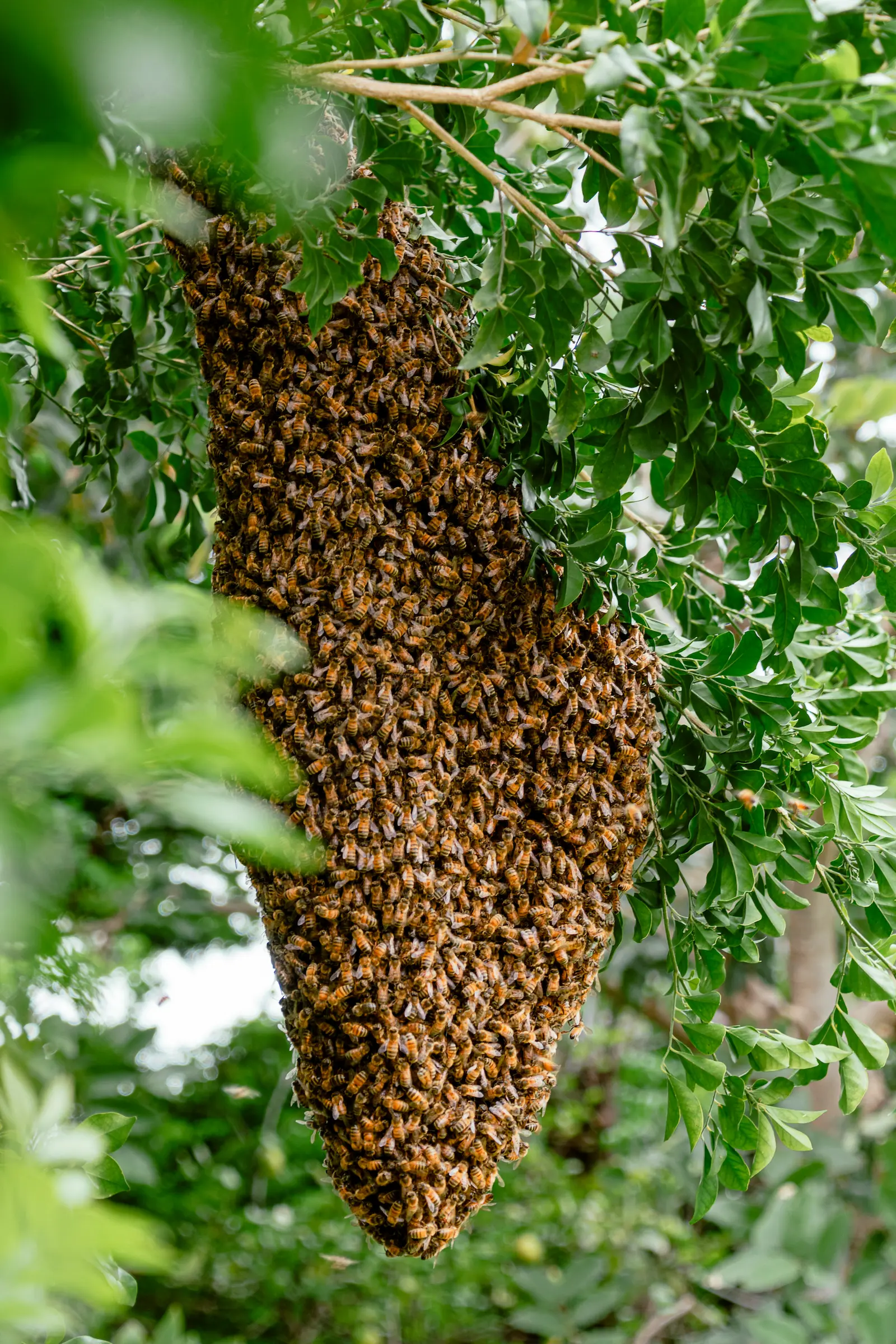
Found a "ball" of bees on a tree branch, fence, wall, or garden shed? It's often a honeybee swarm — a natural event where thousands of bees temporarily cluster together while they look for a new home.
Swarms are usually calmer than you'd expect, but you should still keep your distance and avoid disturbing them. If anyone nearby is allergic to stings, treat it seriously and keep a wide safety zone.
What to Do Right Now (Simple Checklist)
-
Keep people and pets away.
Close windows and keep children and dogs away from the swarm area.
-
Do not spray or disturb the bees.
Aerosols, water hoses and poking the swarm can provoke defensive behaviour and harm pollinators.
-
Take a photo from a safe distance.
A clear photo helps confirm if they are honeybees, wasps or bumblebees.
-
Contact a local swarm collector.
Many UK beekeepers volunteer to collect swarms when accessible.
Do Not Attempt to Remove a Swarm Yourself
Even if you have gloves or a "bee suit", swarm collection needs the right equipment and experience. Swarms can move, become inaccessible, or be in awkward locations (e.g., above conservatories or near roads). It's safer to call a swarm collector who knows how to manage risk and rehome bees properly.
Is It Definitely Honeybees?
Not every "bee problem" is a honeybee swarm. Many people confuse honeybees with wasps (or bumblebees), and the right advice depends on what you're seeing.
-
A dense hanging cluster ("ball of bees") on a branch, fence, post or wall.
-
Bees often look browner-gold and a little fuzzy compared with wasps.
-
Scout bees may fly in and out while the main cluster stays put.
If you want help identifying them, see Honeybee Anatomy.
How to Contact a Swarm Collector (UK)
In the UK, many associations keep a list of local collectors. A good starting point is the BBKA Swarm Map. Some collectors are volunteers; others may charge depending on distance, difficulty or specialist work.
What Information Should You Share?
-
Exact location and access
Ground level, on a fence, high in a tree, behind a shed, etc.
-
How long it's been there
Just arrived? Been present for a full day? This helps predict whether it might move on.
-
Any hazards nearby
Public footpaths, schools, busy roads, hospitals, or vulnerable people.
-
A clear photo
From a safe distance — never climb ladders or reach into tight spaces to get it.
What Happens Next?
If the swarm is accessible and confirmed as honeybees, the collector may place them into a suitable box and remove them safely. The bees are typically rehomed to a managed apiary where they can continue their pollination work. If you want to understand why that matters, visit Pollination.
Why Do Honeybees Swarm?
Swarming is a natural part of honeybee reproduction. The old queen leaves with a large group of workers to form a new colony, while the original colony raises a new queen. If you want a deeper explanation of swarm behaviour and seasonal triggers, see Honeybee Behaviour and Year in the Apiary.
Report a Swarm FAQs
Sometimes only a few hours, sometimes a day or two. The cluster is usually temporary while scout bees search for a permanent site.
No. It can attract other insects, encourage robbing, and complicate collection. The best action is to leave them alone and contact a collector.
That may be a colony that has moved in rather than a temporary swarm cluster. This often needs specialist advice and is not always suitable for standard swarm collection. Seek guidance before any work is started.
Yes — they are still bees — but swarms are often calmer than a defensive colony because they are focused on protecting the queen and relocating. Keep a safe distance and do not disturb them.
Treat serious allergic reactions as an emergency. If there is breathing difficulty, facial swelling, collapse or widespread hives, seek urgent medical help immediately.
Need Help?
If you're unsure whether it's honeybees, or you need guidance on what to do next, you can contact BeezKnees. Include a photo (from a safe distance) and your location.
If you'd like to help pollinators beyond a swarm situation, see Help the Bees and Bee Gardening.