Learn how to read brood stages, recognise what a healthy pattern looks like, and assess patchy brood, cappings and warning signs with a calmer, evidence-based approach.
Learn how to read brood stages, what good looks like, and common reasons brood can go patchy without jumping straight to worst-case conclusions. This page works best alongside the colony health triage tool, the Bee Health Checker and the main Bee Diseases and Pests hub.
If brood changes seem linked to queen status, requeening or swarm-related disruption, it also helps to read the Swarm & Queen section alongside this guide.
Eggs and young larvae usually mean a queen has been laying recently.
Small gaps can be normal
Weather, brood cycles and a young queen can create messy patterns that later improve.
Cappings are clues
Sunken or perforated cappings are not a diagnosis. They are a prompt to observe carefully and record evidence.
Field approach: observe → record → decide next step.
Foundation
Brood stages: eggs, larvae and capped brood
Field answer
Field answer: If you can see eggs, the queen was laying very recently. If you see young larvae in a C shape, you are usually within a few days. Capped brood tells you what successfully made it through to pupation. If you want to understand how brood stages fit into queen development, read the Swarm & Queen guides.
Eggs
Fresh evidence
Single egg per cell is the usual goal in worker brood.
Eggs are hard to see, so use light and angle.
Eggs strongly suggest the queen was present and laying very recently.
Larvae
Feeding phase
Young larvae often sit in a C shape with a glossy bed of food.
Healthy larvae look pearly, white and moist.
The larval stage is where chilling or starvation can show up.
Capped brood
Outcome
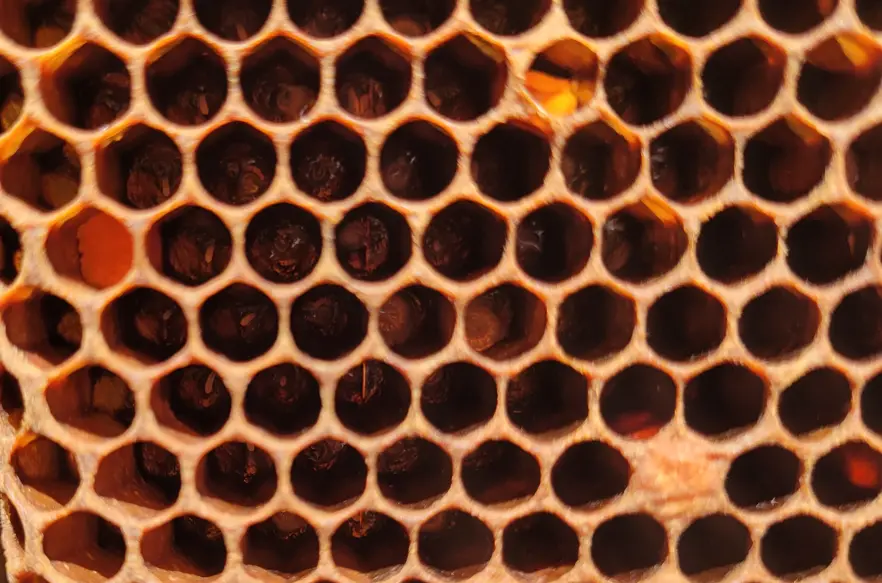
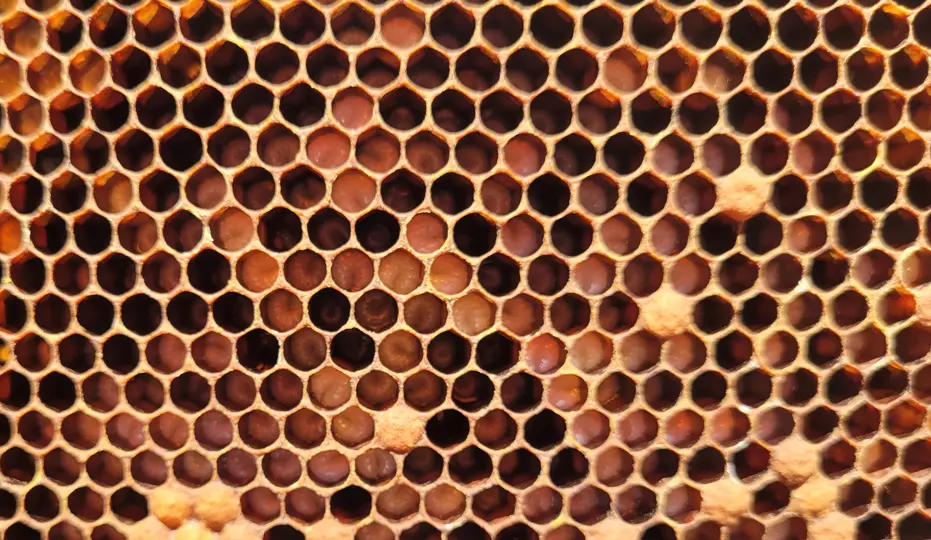
Solid capped worker brood suggests good continuity.
Uneven cappings can be normal, so look for patterns and other clues.
Use cappings as a prompt to record evidence, not to diagnose instantly.
Eggs stage
Fresh eggs are one of the clearest signs of very recent laying.
Larvae stage
Young larvae help confirm the brood nest is progressing normally.
Capped brood stage
Capped brood shows what has made it successfully through to pupation.
Baseline
What a good brood pattern looks like
Field answer
Field answer: Good often means consistent rather than perfect. Look for broad areas of worker brood, a sensible mix of stages, and enough stores and pollen nearby to feed larvae.
Normal variation
Common
Small gaps can happen after cold snaps or nectar flow shifts.
A young queen can improve pattern over a few weeks.
Brood nest edges can look messier than the centre.
Signals of strength
Positive
Multiple frames with mixed stages: eggs, larvae and capped brood.
Healthy larvae are pearly, moist and consistent.
Stores and pollen are positioned close to brood.
Keep it evidence-based
Notes
Describe what you see, not what you fear.
Photos help you compare week to week.
Use trend over time rather than one-frame judgement.
Troubleshooting
Patchy brood: common causes
Field answer
Field answer: Patchiness is a symptom, not a diagnosis. Consider queen performance, weather, chilled brood, feeding, varroa and virus pressure, bacterial brood disease, and brood nest disruption. Then look for confirming evidence.
Queen factors
Common
A young queen may settle and improve.
An older or underperforming queen may show a declining pattern.
Weather or nectar changes can interrupt laying.
Weather, chill and handling
Seasonal
Cold snaps can chill brood, especially at the edges.
Frequent inspections can disrupt brood temperature.
Moving frames can split the brood nest and slow progress.
Varroa and virus pressure
Watch
Heavier varroa loads can correlate with poor brood viability.
Look for additional clues such as abnormal brood or weak bees.
Use your monitoring plan and follow up with varroa management if needed.
Deeper detail: The key is confirmation. If you suspect something, collect clear photos, note which frames and brood stages are affected, and check whether the pattern is improving or worsening week to week.
Visual clues
Cappings guide: worker, drone and caution signs
Field answer
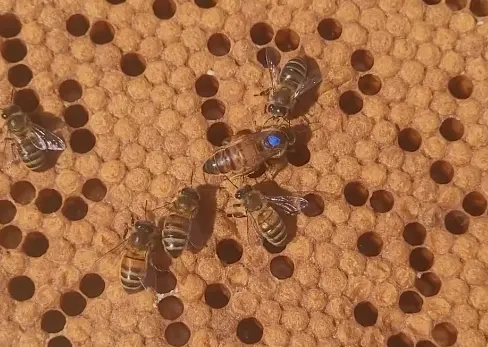
Field answer: Drone cappings are typically more domed. Worker cappings are flatter. If you notice sunken or perforated cappings, treat it as a prompt to observe closely and record evidence.
Worker brood cappings
Typical
Flatter and more uniform.
Large connected areas are common in strong colonies.
Small gaps can be normal.
Drone brood cappings
Domed
More bullet-shaped or domed.
Often around brood nest edges or in drone comb.
Seasonal increases are normal.
Caution signs
Careful
Widespread sunken or perforated cappings.
Odd smells, abnormal larvae or wet remains.
Rapid decline from fine last week to significantly worse.
Important note: This guide is not a diagnosis tool. If you suspect a serious or notifiable brood disease, minimise disturbance, take photos, isolate equipment where appropriate, and seek local bee health advice promptly. Use the colony health triage tool or the Bee Health Checker if you need help narrowing down unclear symptoms first.
Record keeping
What to record
Field answer
Field answer: Write what you can prove: eggs or larvae present, brood area size, pattern description, cappings appearance, and what you will check next time.
Copy and paste notes template
Queen evidence: eggs seen / young larvae seen / queen seen
Pattern: solid / slightly patchy / very patchy + where: centre / edges / scattered
Cappings: normal / mixed / perforated / sunken + extent: few / many / widespread
Context: weather, recent feeding, congestion, varroa check result if known
Photos taken: yes / no + frame reference
Action today: none / add space / feed / plan follow-up / seek advice
Follow-up goal/date: what you will confirm next visit
Next step
When to seek advice
Field answer
Field answer: If you see repeated decline, widespread abnormal cappings, unusual brood remains, strong bad odours, or you are genuinely unsure, stop guessing and get a second set of eyes.
Bring evidence
Helpful
Photos of the same frame area, including centre and edges.
Your notes on what changed since the last inspection.
Avoid repeated re-checking of the same brood frames.
Do not spread combs or equipment between colonies if you suspect disease.
Related brood pattern guides
If brood pattern changes raise questions about disease, colony health, varroa pressure or queen status, these guides will help you decide what to check next.
Useful where brood problems may be linked to varroa pressure and virus pressure.
FAQ
Not really. Good is usually consistent and improving, with stages present and enough resources. Tiny gaps can be normal.
Fresh eggs and young larvae are strong evidence of a laying queen. Combine that with pattern and cappings clues.
Weather and chilled brood at the edges, plus temporary disruption from inspections or brood nest rearrangement, are common contributors.
No. They are a caution sign. Look for additional evidence such as larval remains, smell, extent and change over time, and seek advice if unsure.
Take photos, write evidence-based notes, minimise disturbance, and get guidance rather than trying random fixes.
Privacy choices
We use cookies to keep the site working and measure what helps visitors most.
Necessary cookies help core parts of the site work. Analytics cookies help us understand page use through Google Analytics, but only if you choose to allow them.
Read our Privacy Policy.
Cookie settings
Manage your cookie preferences
Strictly necessary
Always active. These are needed for core site functions such as saving your cookie preference.
Always on
Allows Google Analytics so we can understand which pages are used and how visitors move around the site.