Honeybee Facts
Honeybee Facts (UK) – Queen, Worker & Drone Bees Explained
Last updated: 15 August 2026
Honeybees are one of the best examples of a "superorganism" — a colony where thousands of individuals behave like a single living system. If you're new to beekeeping in the UK, understanding the difference between the queen, workers and drones makes everything else easier: inspections, swarm control, colony strength checks, and knowing what you're looking at on a frame.
This page also connects the bigger picture: how caste differences relate to honeybee anatomy, how bees make honey, colony decision-making during swarming, and the seasonal changes in the colony that UK beekeepers see through the year.
In Britain, weather can compress foraging into short windows and push swarming into a few intense weeks. That's why the same colony can look "quiet" one week and "booming" the next — and why good records matter. If you want structured inspection notes, see HiveTag.
Quick honeybee facts you can actually use
Bees make food people eat
Honeybees are the only insect that produces a major food humans routinely harvest and store (honey), and they also create wax that beekeepers use in frames and foundation. If you want to follow the full process from nectar collection to capped stores, see how bees make honey.
A colony is huge in summer
A strong colony in season commonly sits in the tens of thousands of bees, depending on time of year, forage and hive space. That's why hive organisation and role-sharing matters so much, especially when viewed through the seasonal changes in the colony.
Wings beat incredibly fast
A honeybee's wings beat so quickly that you hear a steady buzz rather than individual flaps. This is part of how they ventilate the hive too (fanning behaviour).
They navigate by landmarks
Bees learn the "map" around your apiary. Orientation flights (hovering and circling) are normal, especially on warm afternoons.
Pollination happens by accident
While collecting nectar and pollen, bees transfer pollen between flowers. That's the basis of pollination.
Winter clustering is normal
In colder weather, bees form a tight cluster to conserve heat and protect the queen and brood area. This is one reason winter inspections are kept minimal in the UK.
Queen vs Worker vs Drone – how to spot the difference
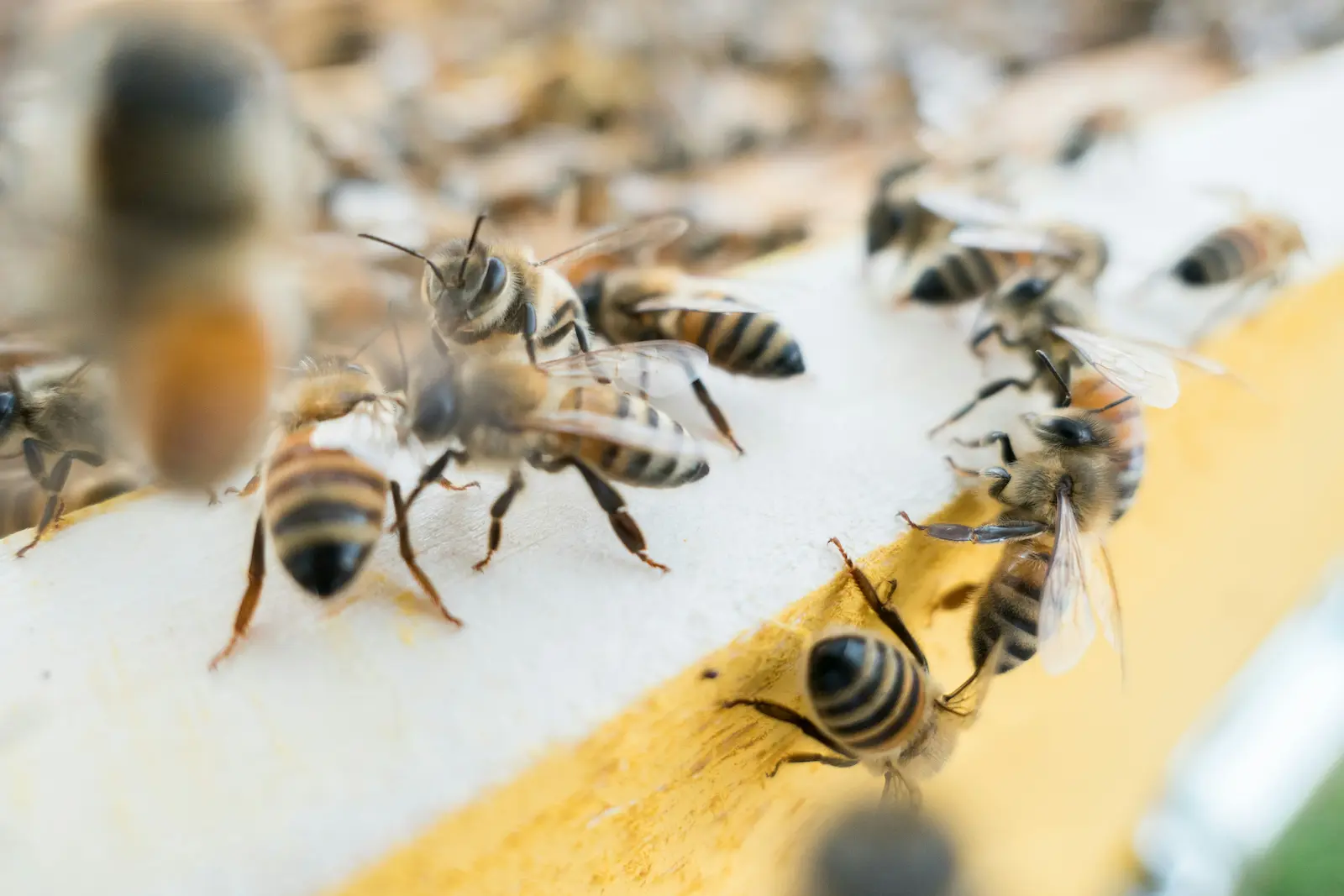
New beekeepers often know the names but struggle with real-world identification. Here's what to look for on the frame — including the subtle bits like drone eye size and the shape of drone brood cappings. For a closer look at the body structures behind these differences, see Honeybee Anatomy.
| Feature | Queen (female) | Worker (female) | Drone (male) |
|---|---|---|---|
| Main role | Egg-laying + colony cohesion via pheromones | All work: nursing, comb building, guarding, foraging | Mating with a virgin queen (genetic diversity) |
| Body shape | Long abdomen; often extends beyond wing tips | Slimmer; built for varied tasks | Chunkier "barrel" body; blunt abdomen |
| Eyes (big clue) | Normal size | Normal size | Very large eyes that meet at the top of the head (helps locate queens in flight) |
| Sting | Yes (rarely used; mainly against rival queens) | Yes (barbed; used for defence) | No sting |
| Pollen baskets | No | Yes (hind legs) | No |
| Brood cell cappings | Queen cells are peanut-shaped, hanging | Worker brood is flat/slightly domed | Drone brood is noticeably domed (often described as "bullet-shaped" cappings) |
| Typical lifespan | Often years (varies by management) | Weeks in peak season; longer over winter | Usually months at most; often removed in autumn ("drone eviction") |
If you're struggling to find the queen, look for a moving "retinue" of workers facing her and feeding her. Also check areas with fresh eggs — queens tend to work where they're laying.
Honeybee lifecycle timings (Queen vs Worker vs Drone)
In UK beekeeping, lifecycle timing is practical: it helps you interpret what you see during inspections, estimate when a virgin queen might emerge, and understand why drone brood appears and disappears seasonally. If you want a more focused breakdown of queen emergence and inspection timing, see the queen development timeline.
| Caste | Egg stage | Larva stage | Pupa stage (sealed) | Total time (egg → adult) |
|---|---|---|---|---|
| Queen | ~3 days | ~5–6 days (fed royal jelly) | ~7–8 days | ~16 days |
| Worker | ~3 days | ~6 days | ~12 days | ~21 days |
| Drone | ~3 days | ~6–7 days | ~14–15 days | ~24 days |
If a colony is queenless, timing helps you plan checks without constantly disturbing them. It also helps you understand when brood should start appearing again after a re-queening or swarm event, especially when viewed alongside the seasonal changes in the colony.
Behaviour & communication facts (the "how" behind the hive)
Honeybees communicate using movement, scent and touch. The colony's behaviour changes with forage, weather, space and stress — especially in the UK where conditions can swing quickly.
Waggle dance (direction + distance)
Foragers recruit other bees when they find good forage. The dance shares directional information and a rough idea of distance. Learn more in Behaviour.
Pheromones (chemical messaging)
The queen's pheromones help maintain colony cohesion. Alarm pheromone can trigger defensive behaviour fast — which is why calm handling matters.
Temperature control (fanning + clustering)
Bees fan to ventilate and help ripen nectar, which is part of how bees make honey. In cold weather, they cluster to conserve heat and keep the brood nest stable.
Hygienic behaviour (health protection)
Some colonies are better at detecting and removing unhealthy brood. This matters in disease management. See Hygiene and Diseases & Pests.
Swarming basics (UK-friendly, no panic)
Swarming is a natural colony reproduction strategy. Beekeepers manage it to avoid losing flying bees and honey production — but seeing swarm signs doesn't mean you've failed. If you want the fuller picture of what happens during swarming, including queen cells, splits and management options, read the swarm and queen guide.
- Rapid colony expansion and crowding.
- Queen cells appearing (context matters: swarm, supersedure, or emergency).
- Changes in "feel" — busy, restless colonies on warm days.
Management is covered in Hive Management. Public safety guidance is on Report a Swarm. For month-by-month context, swarming also needs to be understood alongside the seasonal changes in the colony.
Honeybee Facts FAQs
Look for the huge eyes (often meeting at the top of the head) and a bulkier body. Workers are slimmer and often show pollen baskets on their hind legs.
No — drones do not have a sting. Only females (workers and queens) have a stinger.
Roughly 16 days from egg to adult queen. Timing varies slightly with conditions, but it's a reliable planning guide.
Roughly 21 days from egg to adult worker.
Roughly 24 days from egg to adult drone.
Drones are larger than workers, so the cappings are more domed. This is one of the fastest visual clues beginners use when learning frames.
Fanning helps regulate temperature and humidity and can help ripen nectar by improving airflow through the hive.
It's a way for bees to share the direction and approximate distance to a good food source so more bees can forage efficiently.
Swarming commonly peaks in late spring and early summer when colonies grow rapidly. It's a natural process, and beekeepers manage it with space, inspections and swarm control methods.
Record brood pattern, temperament, stores, queen status, treatments and weather. If you want a structured option, try HiveTag.
If you're starting out, use Getting Started. If you want deeper knowledge, explore Anatomy, How Bees Make Honey, Behaviour, Swarm & Queen and A Year in the Apiary.