Varroa Overview (UK)
Varroa in 5 Minutes (UK): A Quick-Start Guide
Last updated: 15 August 2026
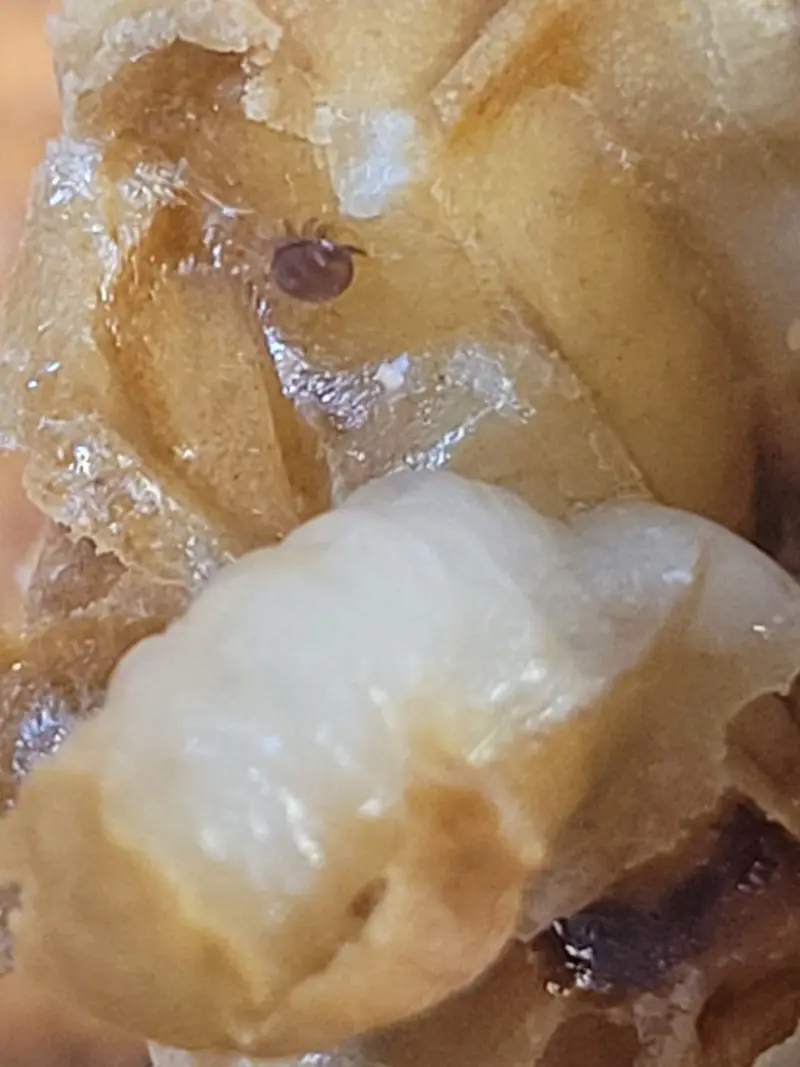
Varroa destructor is the most significant parasite affecting honey bees in the UK. You can't eliminate it completely, but you can keep colonies healthy by following a simple, evidence-based routine. If you are starting from symptoms such as deformed wings, brood problems or colony decline and are not yet sure varroa is the cause, try the interactive colony health triage tool or the bee health checker. For the wider context, the bee diseases and pests hub shows how varroa fits into overall colony health.
Varroa is best understood as part of the wider bee health picture, not as an isolated problem. Heavy mite loads can be associated with brood issues, virus symptoms and colony decline, which is why it helps to understand the broader bee diseases and pests picture and the role of parasitic mites in colony health.
The 5-Minute Varroa Checklist
- Assume varroa is present in every colony.
- Monitor before you treat. Use a method you can repeat consistently: Monitoring Methods.
- Use the season to guide decisions, not guesswork — especially around August varroa control and the varroa treatment calendar UK.
- Reduce pressure year-round using IPM methods.
- Treat only when needed, following current approved product labels, manufacturer instructions and correct seasonal timing: Chemical Treatments + Treatment Calendar (UK).
Fast Warning Signs (Check Mites Sooner)
These are prompts to monitor, not diagnoses or confirmed proof of varroa damage. If you are not sure whether the signs point to varroa, use the colony health triage tool or the bee health checker first.
- Late-season colony decline despite stores and a laying queen
- Deformed wings on emerging bees
- Patchy or failing brood pattern
- Robbing, drifting, or nearby colony collapse
- New swarms or bought-in bees with unknown history
Monitoring: What Actually Matters
You don't need every method — you need one you trust and repeat. Monitoring helps you assess whether mite levels are rising and whether a treatment appears to have worked. It also helps you separate likely varroa pressure from other issues covered in the bee diseases and pests section.
See: Monitoring Methods.
Seasonal Timing (UK): Why Late Summer Matters
In the UK, late summer and early autumn are critical because this is when winter bees are being raised. High mite levels at this point can cause colonies to fail months later. For many beekeepers, this makes August varroa control one of the most important points in the year.
Common Mistakes
- Treating without monitoring
- Ignoring brood levels and temperature limits
- Under-dosing, over-dosing or stopping treatments early instead of following the product label
- Relying on one method year after year
- Keeping no records
PPE and safe handling matter: PPE for Treatments. If you are still unsure whether you are dealing with varroa or another issue, use the bee health checker.
Quick FAQ
Yes. Most colonies carry varroa even when mites are not visible. Monitoring is the safest way to assess mite levels rather than relying on visible mites alone.
IPM methods can reduce pressure, but many colonies may still require approved treatments at certain times. Monitoring helps guide when treatment may be needed.
Use the Varroa Management hub for full guidance, then drill down into monitoring, treatments and seasonal planning as needed. If you are still trying to work out whether varroa is actually the issue, start with the colony health triage tool or the bee health checker. For the wider picture, see bee diseases and pests.