
PPE for Varroa Treatments (UK)
PPE for Varroa Treatments (UK) – Safety Checklist & Handling Notes
Last updated: 15 August 2026
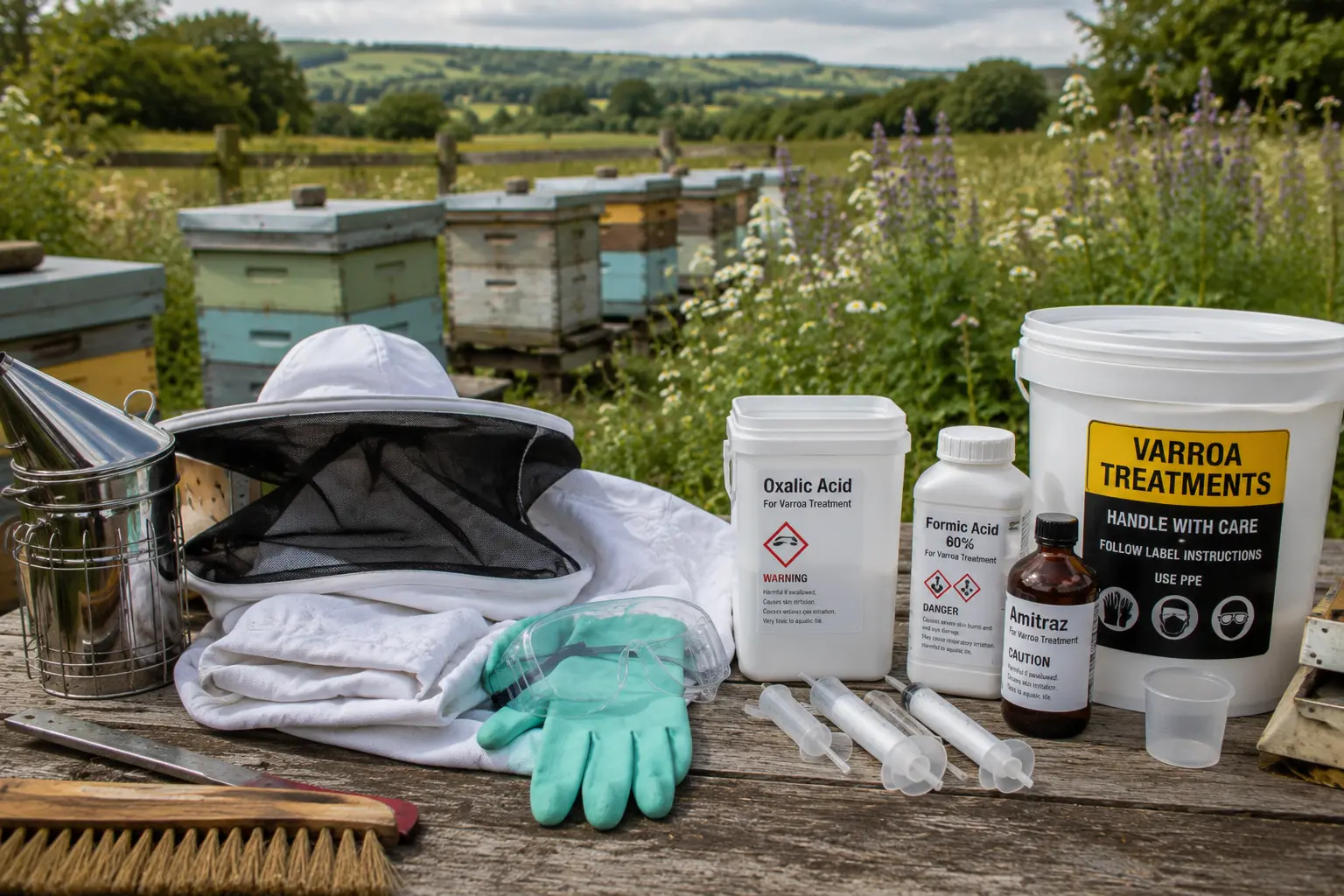
When managing varroa mites, you may handle substances that can irritate the skin, eyes, or airways if used incorrectly. This page explains sensible PPE for varroa treatments in plain English, with a printable checklist. Use it alongside the chemical varroa treatments guide, the varroa treatment calendar, and your medicine records so treatment choice, safe handling and record-keeping all join up properly.
Prefer a print-friendly copy for the shed / apiary box? Download: PPE for Varroa Treatments (PDF) or visit the Downloads page. This works well alongside the chemical treatments guide if you want both the treatment overview and the safety checklist together.
This guidance is educational. It does not replace product labels, safety data sheets, COSHH/workplace guidance, or professional/veterinary advice. Always follow the instructions supplied with any licensed varroa treatment and check current UK guidance (for example BeeBase / the National Bee Unit).
Why PPE Matters in Beekeeping
Many varroa controls are classed as veterinary medicines. Even products described as "natural" can still pose risks if they:
- Come into contact with skin or eyes
- Are inhaled as vapour, aerosol, or dust
- Are handled repeatedly without protection
Using appropriate PPE helps you work safely and consistently — and reduces avoidable exposure.
PPE Considerations by Treatment Type (Overview)
The table below is general guidance only. Always follow the product label. If you are still deciding which product family is appropriate, read the chemical varroa treatments page first.
| Treatment type (examples) | Typical risks | Common PPE considerations* |
|---|---|---|
| Organic acids (e.g. oxalic acid, formic acid) | Skin/eye irritation; respiratory irritation (vapour/aerosol) | Gloves + eye protection; respiratory protection may be needed depending on method |
| Thymol-based treatments | Skin/eye irritation; strong odour | Gloves; avoid direct contact; wash hands after handling |
| Amitraz-based treatments | Skin absorption; contamination of hands/clothing | Gloves; avoid prolonged skin contact; keep work area tidy |
| Pyrethroid-based treatments | Skin irritation; contamination via handling strips | Gloves; wash hands after handling; avoid touching face |
*These are common, sensible precautions — the product label is always the deciding factor.
Common Types of PPE Used by Beekeepers
Gloves
- Disposable nitrile gloves are commonly used for treatment handling
- Use clean gloves for each task
- Remove gloves before touching phones, car keys, or steering wheels
Eye protection
Eye protection helps prevent splashes or accidental contact, especially when handling liquids or working in windy conditions.
Respiratory protection
- Some treatments release vapours/aerosols/dust depending on method
- Check the label for specific respiratory requirements
- Avoid treating in enclosed or poorly ventilated areas
Protective clothing
- Long sleeves and dedicated beekeeping clothing can reduce skin exposure
- Wash contaminated clothing separately from household laundry
Environmental and situational factors
- Wind direction and strength
- Temperature (can affect vapour levels)
- Children, pets or bystanders nearby
- Working alone
- Main treatment season timing — many UK beekeepers are doing this work in August, when late-summer treatment decisions and safe handling matter most
Hygiene and Aftercare
- Wash hands thoroughly with soap and water after handling treatments
- Avoid touching your face until hands are clean
- Dispose of used PPE appropriately
- Clean any contaminated tools according to guidance
- Record the treatment promptly in your veterinary medicine records while details are still fresh
Storage and Disposal Safety
- Store treatments securely and out of reach of children
- Keep products in original containers with labels intact
- Dispose of empty packaging and used PPE according to local guidance
- Never reuse containers unless the label explicitly allows it
- Check the varroa treatment calendar so storage, use and disposal fit the wider treatment plan rather than being handled in isolation
PPE Checklist (Summary)
Use this as a quick pre-treatment check. Adjust based on the product label and your method of application.
| Item | Why it matters | Notes |
|---|---|---|
| Nitrile gloves (disposable) | Reduces skin contact and contamination | Change if torn; remove before touching phones/vehicles |
| Eye protection | Prevents splashes / accidental contact | Especially useful for liquids, windy days, awkward angles |
| Respiratory protection (if required) | Reduces inhalation of vapours/aerosols/dust | Check label and method (vapour/aerosol risk varies) |
| Long sleeves / protective clothing | Reduces skin exposure | Wash separately if contaminated |
| Handwashing plan | Prevents transfer to eyes/mouth and household surfaces | Soap + water after handling; avoid touching face |
| Safe disposal bag / container | Stops used PPE contaminating kit, car or home | Dispose according to local guidance; keep away from children |