
Swarm Prevention (UK)
Swarm Prevention (UK)
Last updated: 15 August 2026
Swarming is one of the most natural behaviours in beekeeping, and one of the most frustrating. A strong colony can leave in a matter of minutes, taking a large proportion of your bees with it.
The key to swarm prevention is not stopping bees from wanting to swarm, but managing that instinct before it reaches a tipping point.
This guide brings together everything you need to understand, recognise and control swarming in UK conditions.
Swarm Warning Signs – At a Glance
- Queen cups or queen cells appearing
- Brood nest becoming congested
- Frames backfilled with nectar
- Reduced laying space for the queen
- Large, booming colony in warm spring weather
What Is Swarming?
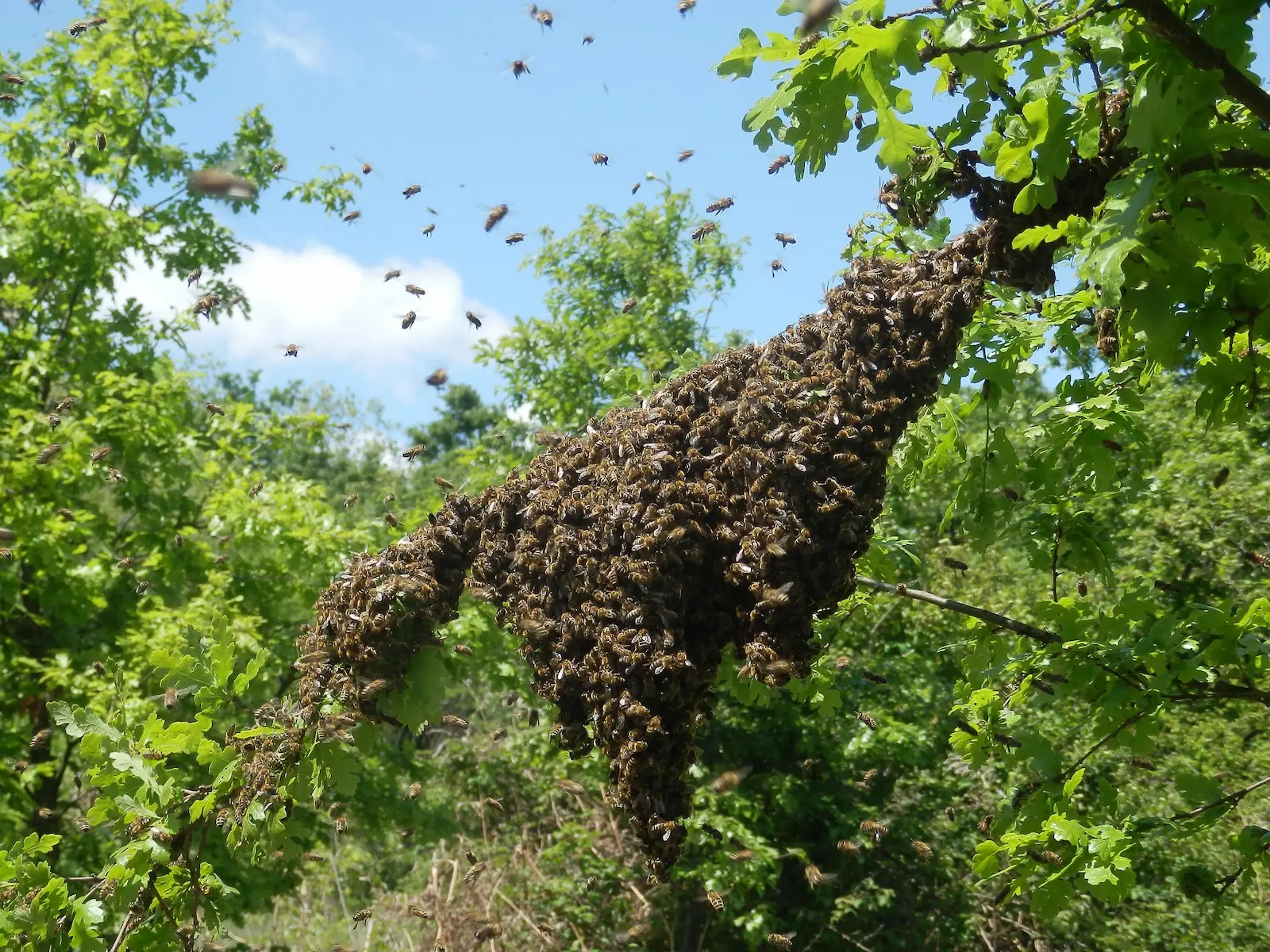
Swarming is how honey bee colonies reproduce. When conditions are right — strong population, good weather, and plenty of food — the colony divides.
The old queen leaves with a large group of flying bees, forming a swarm, while the remaining colony raises a new queen.
From the beekeeper's perspective, this means losing bees, reducing honey production and potentially losing control of the colony.
Why Bees Swarm
Swarming usually happens when several conditions come together at the same time.
The colony becomes crowded, the brood nest gets backfilled with nectar, and the queen begins to run out of space to lay. Combined with strong spring forage, this creates the perfect trigger.
In the UK, this typically occurs between April and June, though weather can shift timing significantly.
- Overcrowding in the brood box
- Strong nectar flow
- Limited laying space for the queen
- Genetic tendency to swarm
Early Warning Signs of Swarming
The biggest advantage you have as a beekeeper is spotting the signs early. Colonies rarely swarm without warning — the signals are usually there if you know what to look for.
These signs often build gradually over several inspections.
- Queen cups appearing on frames
- Increasing congestion in brood area
- Reduced laying space
- Backfilling of brood frames with nectar
- Multiple queen cells developing
If you're unsure what you're seeing, refer to the Queen Cell Guide to identify stages properly.
The Swarm Timeline – Why Timing Matters
Swarm control is all about timing. Once queen cells are started, the process is already underway.
By the time a cell is capped, the colony may be only days away from swarming — or may already have done so.
This is why understanding development timing is critical.
See the Queen Cell Timeline to understand exactly where you are in the process.
Swarm Prevention Methods
There is no single method that works in every situation. Good swarm control combines awareness, timing and appropriate action.
1. Managing Space
Giving the colony enough room is one of the simplest ways to reduce swarm pressure. This includes adding supers and ensuring the brood nest is not restricted.
2. Regular Inspections
Weekly inspections during spring allow you to catch early signs before they develop into a swarm situation.
3. Colony Splitting
Splitting a strong colony reduces congestion and mimics natural swarming in a controlled way.
4. Artificial Swarm
This is one of the most reliable methods. It separates the queen and flying bees from the brood, removing the trigger to swarm.
See the full Artificial Swarm for Beginners guide for step-by-step instructions.
What To Do If You Find Queen Cells
Finding queen cells is often the moment beekeepers panic. The instinct is to remove them immediately, but this is not always the correct action.
The correct response depends on context — how many cells, where they are, and what the colony is doing.
Use the What To Do If You Find Queen Cells guide to make the right decision based on your situation.
What To Do — and What Not To Do
Do
- Inspect regularly during spring
- Give colonies enough space early
- Learn to recognise queen cell stages
- Act promptly if swarm signs increase
Don't
- Assume extra supers alone will stop swarming
- Miss key inspections in strong colonies
- Destroy queen cells without understanding why they are there
- Wait until cells are capped before making a plan
Common Mistakes in Swarm Prevention
- Missing inspections during key weeks
- Destroying queen cells without understanding why they exist
- Adding space too late
- Not recognising congestion early enough
- Over-handling colonies during swarm preparation
Most swarm losses come down to timing rather than knowledge. Even experienced beekeepers lose swarms occasionally — the goal is to reduce the risk, not eliminate it entirely.
Swarm Prevention Through the Season (UK)
Swarm prevention is not a single action — it is a seasonal approach.
- Early spring: monitor build-up and space
- Mid spring: highest swarm risk period
- Late spring: ongoing management and splits
- Summer: reduced swarm pressure but still possible
See the Year in the Apiary for month-by-month guidance.
Swarm Prevention FAQ
No. Swarming is a natural instinct, but good inspections, timing and management can reduce the risk significantly.
Usually every 7 days during the main spring build-up. Very strong colonies may need particularly careful weekly checks.
Most strong, healthy colonies will show swarm tendencies at some point, especially in favourable spring conditions.
Not always. Extra super space can help with nectar storage, but it does not necessarily solve brood nest congestion or lack of laying space for the queen.
The best method depends on timing and colony condition, but the artificial swarm is one of the most reliable options for beginners.
Summary
Swarm prevention is one of the defining skills in beekeeping. With experience, you begin to recognise the signs earlier, act more confidently and work with your bees rather than reacting to them.