
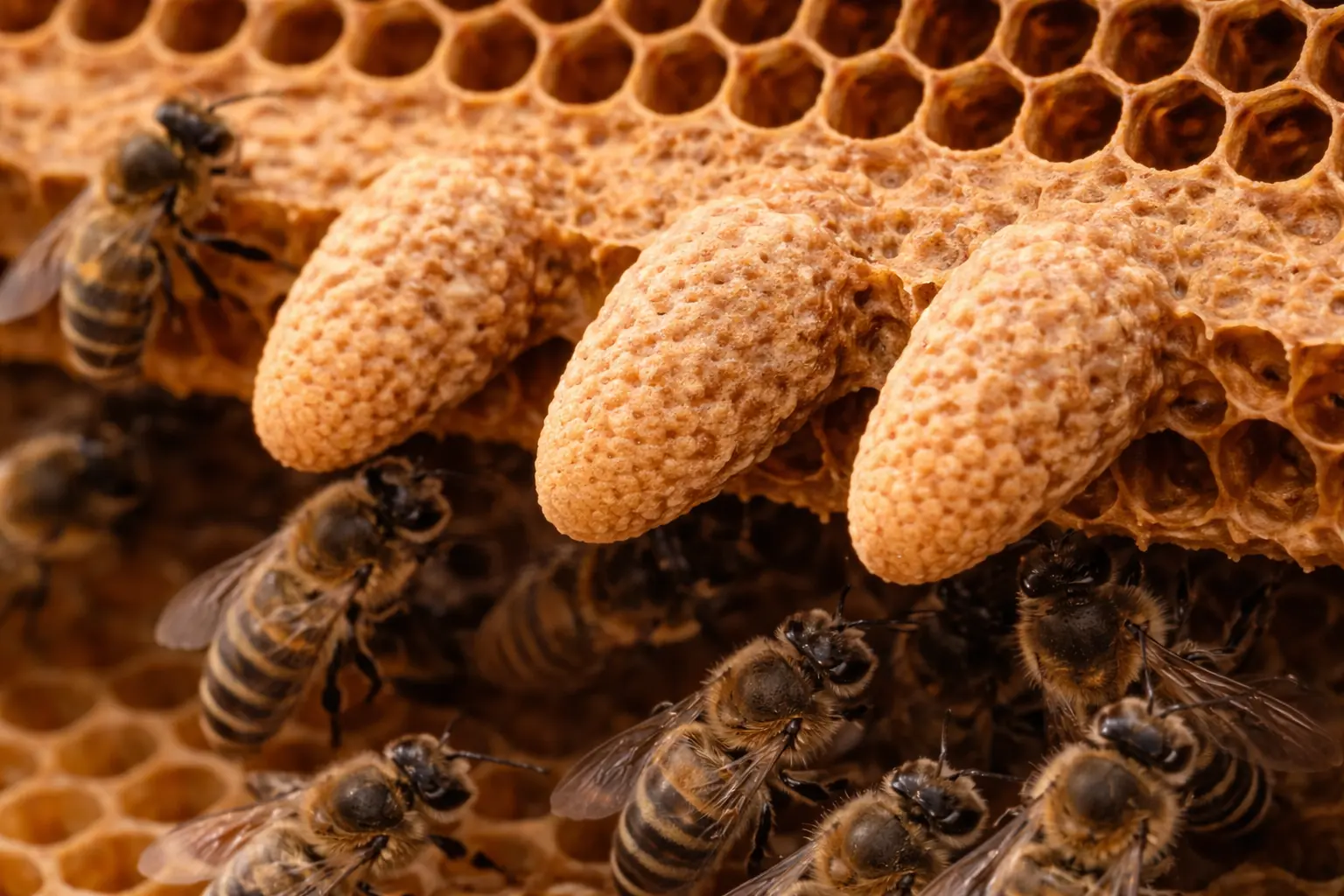
Emergency Queen Cells
Emergency Queen Cells Explained (UK)
Last updated: 15 August 2026
Emergency queen cells are one of the clearest signs that a colony believes it has lost its queen. Unlike swarm cells, which are part of reproduction, or supersedure cells, which are part of quiet replacement, emergency queen cells are a rescue response. The colony is not trying to multiply — it is trying to survive.
This is why emergency queen cells should be treated carefully. If you misunderstand them and remove them without a proper plan, you can leave the colony hopelessly queenless. This guide explains how to recognise emergency queen cells, what causes them, and what to do next in a UK hive. It also sits within the wider Swarm & Queen Management hub, where you can compare emergency cells with swarm cells, supersedure and queenless colony decisions.
If you are not yet confident identifying queen cell types, use this page alongside the Queen Cell Guide, the What To Do If You Find Queen Cells guide, and Queenless or Supersedure? if the colony story is still unclear.
Emergency Queen Cells at a Glance
What They Usually Mean
- The colony believes the queen has been lost
- Bees are trying to raise a replacement quickly
- The situation is urgent from the colony's point of view
Where They Often Appear
- Raised out from ordinary worker brood cells
- Often scattered on the face of comb
- Sometimes several are present at once
Main Risk for the Beekeeper
- Misreading them as swarm cells
- Destroying them without another queen plan
- Repeated inspections disrupting queen replacement
What Emergency Queen Cells Are
Emergency queen cells are built when the colony suddenly finds itself without a functioning queen. The bees select very young worker larvae and begin to remodel the existing worker cells into queen cells, feeding those larvae heavily with royal jelly. This is different from swarm cells, where the colony plans ahead, and different from supersedure, where replacement is usually quieter and more controlled.
Because the colony is acting after an unexpected loss, emergency queen cells can appear more scattered and less "neat" than classic swarm cells. Their appearance often reflects urgency rather than orderly planning.
What Causes Emergency Queen Cells?
The most common cause is loss of the queen. This might happen naturally, through the queen dying, failing suddenly or being damaged. It can also happen accidentally during inspection or manipulations, when the queen is rolled, dropped, injured or lost without the beekeeper realising at the time.
Sometimes the colony may also raise emergency cells if the queen is present physically but no longer functioning properly enough for the bees to recognise her as a viable queen. In practical terms, though, when you see true emergency cells, you should first assume the colony believes it has become queenless. If you are trying to separate true queenlessness from quiet replacement, compare this with Supersedure Queen Cells.
This is why inspection handling matters so much in spring and summer. A colony can go from normal to emergency queen-raising very quickly if the queen is lost.
How to Recognise Emergency Queen Cells
The biggest clue is context. Emergency queen cells are usually raised from ordinary worker brood cells that already contained suitable young larvae. Instead of being neatly prepared in advance like swarm cells, they are often built out suddenly from the face of the comb. Because of that, they can look as if the bees have pulled and extended the surrounding comb to create them.
You may also notice that they are more scattered and less uniform than classic swarm cells. There may be several across one or more brood frames rather than a line of cells along the bottom edge. At the same time, you may find no fresh eggs, no obvious queen, and a colony mood that feels different — often less driven than a classic swarm colony, and more unsettled or subdued.
- Cells raised from the face of worker comb rather than prepared cups
- No eggs present, or only older brood remaining
- Queen not seen and colony may feel queenless
- Cells look more like a rescue attempt than a swarm programme
Emergency Cells vs Swarm Cells vs Supersedure Cells
This is the point where many beekeepers get caught out. Swarm cells usually appear in a strong, crowded colony that is preparing to reproduce. Supersedure cells usually appear when the colony is replacing a poor queen while staying otherwise stable. Emergency cells usually appear when the colony believes it no longer has a queen at all.
Swarm cells are often more numerous and commonly found along the lower edges of brood frames. Supersedure cells are often one or two, more central on the face of comb, in a colony that still has a queen but may be unhappy with her performance. Emergency cells are usually raised directly from suitable worker brood and often look more improvised because the colony is reacting after the event, not planning calmly in advance.
If you are unsure, look for eggs first. Eggs and very young larvae often tell you more than the cell shape on its own. It is also worth comparing this page with Queen Cells & Swarm Control and Supersedure Action before deciding what you are seeing.
What To Do If You Find Emergency Queen Cells
The first step is to confirm whether the colony is still queenright. Look carefully for eggs and very young larvae. If none are present, and the cells fit an emergency pattern, you should work on the assumption that the colony is trying to save itself.
In many cases, the safest option is to leave the colony to complete that process rather than interfere. The main danger is destroying the cells without giving the colony another viable way of getting a queen. Unless you are deliberately introducing a purchased queen, uniting with another colony, or carrying out another controlled recovery plan, removing emergency cells can make the situation far worse.
If you do decide to let the colony continue, reduce disturbance afterwards. Repeated heavy inspections during queen replacement can damage delicate cells or disrupt the colony at exactly the point it needs stability. Once cells are underway, the next useful references are often Queen Cell Timeline and Virgin Queen Timeline, because the colony may seem queenless for a while even when progress is normal.
When You Might Intervene Instead
There are situations where you may choose not to let the colony raise an emergency queen. For example, you may already have a good quality mated queen ready to introduce, or you may know the colony is too weak to requeen itself successfully. In those cases, a deliberate recovery plan may be better than relying on emergency queen-raising.
However, intervention should only happen if you are clear on exactly what you are doing next. The worst option is to remove emergency cells first and then decide later. If you are in doubt, stabilising the colony by leaving the cells alone is often better than creating a bigger problem. If the queen is missing and you are still trying to work out what evidence remains, Can't Find Queen is also worth checking.
What Happens After Emergency Queen Cells Are Raised?
If the colony is allowed to continue, one of the emergency queens will eventually emerge, and the colony will then move into the same broad timeline as any other queen replacement process. The virgin queen must harden, mate and begin laying. During this period, the hive may appear queenless to the beekeeper even though the process is still underway.
This is where patience matters. The absence of eggs immediately after emergence does not mean failure. Weather can delay mating flights, and colonies often need time before normal brood rearing resumes. The Queen Cell Timeline page explains this process in more detail.
Common Mistakes with Emergency Queen Cells
The most common mistake is assuming every queen cell means swarming. The next most damaging mistake is removing emergency cells automatically. After that comes over-inspection: opening the hive too often, damaging cells, or disrupting a colony that is already under pressure.
Another mistake is expecting immediate laying once a new queen emerges. Emergency queen replacement takes time, and impatience often leads beekeepers to interfere with a process that was actually progressing normally.
Emergency Queen Cells FAQ
Usually, yes — or at least the colony believes it has. That is the most common reason they are raised.
Generally, no, unless you already have a clear alternative plan such as introducing a mated queen or carrying out another controlled recovery method.
Emergency cells are usually a rescue response after queen loss and are often raised from worker comb on the face of the frame. Swarm cells are usually part of a strong colony's reproductive plan and are commonly found along lower edges.
Yes, many do, provided the cells are viable, mating conditions are suitable and the colony is not disturbed unnecessarily.
Look at the wider colony story. Eggs, queen presence, brood pattern, cell number and location all help. If you are unsure, use the Queen Cell Guide and What To Do If You Find Queen Cells pages together.
Summary
Emergency queen cells are the colony's way of saying something important has already gone wrong. Your job as a beekeeper is not to react automatically, but to understand what the colony is trying to do and decide whether it needs your help or your patience.