
Queen Cells Action (UK)
What To Do If You Find Queen Cells (UK Guide)
Last updated: 15 August 2026
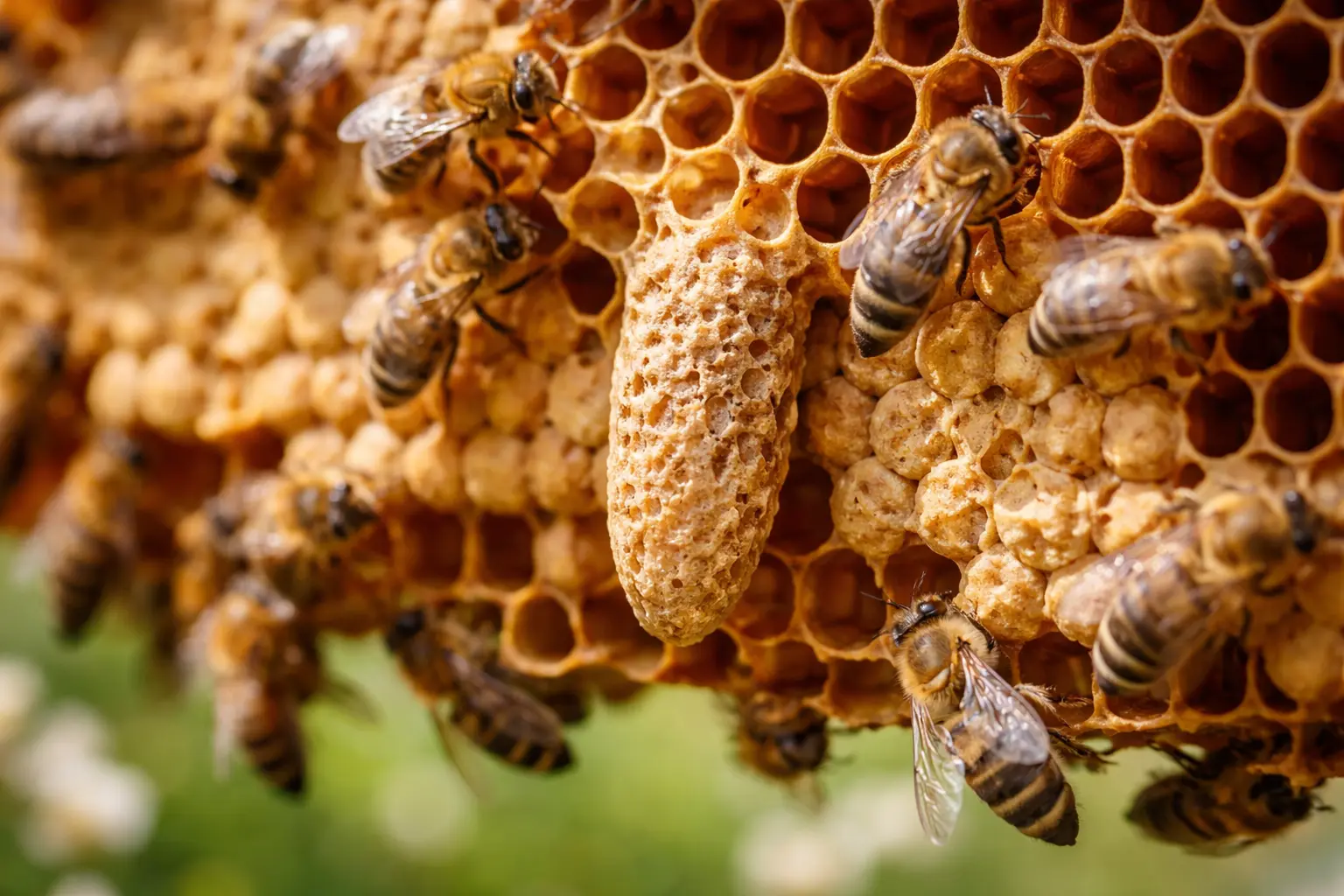
Finding queen cells is one of the points in beekeeping where confidence is either built or lost. Many pages explain what queen cells are, but very few explain clearly what to do next when you are standing in the apiary with a brood frame in your hand. That is where mistakes often happen. People panic, cut cells out too early, assume everything is a swarm, or intervene when the colony was actually trying to solve its own problem.
This guide is designed to answer the practical question most beekeepers actually have: what should I do now? The correct response depends on the stage of the cells, how many there are, where they are positioned, whether the colony is still clearly queenright, and whether the bees appear to be preparing to swarm, quietly replacing a failing queen, or responding to queen loss. These situations are not the same and should not be managed in the same way.
This page works alongside the BeezKnees Queen Cell Guide. That page helps you identify what you are seeing. This page focuses on what action to take next. For the wider cluster of guides on queen cells, swarm control, splits and queen problems, return to the Swarm & Queen Management hub. It also works closely with the Queen Cell Timeline, Step-by-Step Inspections and the Beekeeper's Rule Calculator if you want to map queen cell timing against real inspection dates.
At a Glance – What Matters Most
If you are not yet sure what type of queen cells you are looking at, start with the Queen Cells Guide first, then return here for the action step.
First Priority
- Do not destroy cells immediately
- Record stage, number and location
- Confirm whether eggs or young larvae are present
What Usually Changes the Decision
- Multiple cells in a strong spring colony often point to swarming
- One or two cells with a poor queen often suggest supersedure
- Scattered emergency cells usually follow queen loss
Biggest Mistakes
- Cutting out cells without understanding why they are there
- Assuming all queen cells mean swarming
- Leaving capped swarm cells too long in spring
What To Do First Before Touching Anything
The first thing to understand is that queen cells are not a single problem with a single solution. The bees may be preparing to swarm, they may be replacing a failing queen, or they may be trying to recover from sudden queen loss. The same-looking cell can mean very different things depending on the colony around it.
Before making any decision, slow down and record what you are actually seeing. Look for eggs and very young larvae so you know whether the colony is still clearly queenright. Count how many cells are present, note whether they are empty cups, charged cells or capped cells, and observe where they are positioned. Lower edges and bottom bars often support a swarm story, while one or two cells on the face of comb more often suggest supersedure. That pattern-based approach works best when combined with a calm inspection routine and a clear understanding of the queen cell timeline.
Empty Queen Cups – Usually a Sign to Watch, Not Act
Empty queen cups are common and, on their own, are not evidence that a colony is about to swarm. Colonies often build and remove cups as part of normal behaviour. This is why experienced beekeepers try not to overreact when they first spot them. A cup only becomes truly meaningful when it is charged with a larva and royal jelly. If you are unsure whether what you are seeing is only a cup or something more advanced, compare this with the guides on Queen Cups and Charged Queen Cells.
If you find empty cups in an otherwise normal colony, the best response is usually to note them and pay closer attention at the next inspection. What matters is whether the colony is also strong, congested, backfilling the brood nest with nectar, and beginning to produce charged cells. If you want to compare the earliest stages more carefully, use the Queen Cells Guide and Queen Cups.
Charged Queen Cells – This Is Where Decisions Start
A charged cell contains a larva surrounded by royal jelly, and represents the point where the colony has moved from preparation to action. At this stage, you can still influence the outcome, but time is becoming more important.
This is the critical moment to decide whether the colony is swarming, superseding, or doing something else. A charged cell in a strong, congested spring colony with multiple others is more likely swarm-related. A single charged cell in an otherwise normal-looking colony might suggest supersedure. For detailed guidance on what charged cells mean and what to do next, see Charged Queen Cells – What To Do.
Capped Queen Cells – You Are Now on a Clock
Once a queen cell is capped, the process is already well underway. At that point, the beekeeper has less time to decide and act. A capped cell does not tell you whether the colony is swarming, superseding or recovering from queen loss, but it does tell you that the colony is further on than many people realise.
In swarm season, capped swarm cells can mean the colony is very close to issuing a swarm, and in some cases may already have done so. If you are at this stage, see Capped Queen Cells – What To Do. Once the process has reached the sealed-cell stage, timing is critical, so it is also worth checking the Queen Cell Timeline or mapping dates in the Beekeeper's Rule Calculator.
What the Colony Is Trying to Do
If you are going to make a good decision, you need to work out the colony's likely intention. Swarm cells are part of a reproductive programme. Supersedure cells are usually a quiet replacement of a failing queen. Emergency cells are a rescue response after the queen has been lost.
Swarm cells are often more numerous, commonly found on lower edges or in recesses around the frame edges, and are associated with a booming colony that feels crowded or is backfilling brood space. Supersedure cells are often fewer in number, more often on the face of the comb, and more likely to appear where the existing queen is underperforming. Emergency cells are commonly raised from ordinary worker cells containing suitable young larvae after the queen has been lost. Only true swarm cells mean the colony is intent on swarming; supersedure and emergency queen cells do not normally lead to a swarm in themselves. If that distinction still feels unclear, go back to the Queen Cells Guide before deciding what to do.
What Action To Take in Each Situation
If the colony appears to be preparing to swarm, the response is not to keep knocking cells down and hope for the best. UK guidance is consistent that this is not a reliable swarm-control strategy. If you have identified a genuine swarm situation, the practical response is to use a swarm-control method you understand, reduce congestion where appropriate, and work to a clear follow-up plan rather than a vague hope that the impulse will disappear. Useful next pages here are Queen Cells & Swarm Control, Swarm Prevention, Artificial Swarm, Split a Hive and Split Methods. If you want to place that decision into the wider seasonal build-up, also compare it with Year in the Apiary, especially April, May and June.
If the cells look more like supersedure, the safest response is often to let the colony get on with replacing the queen. Constant interference can do more harm than good. Record what you saw, note brood pattern and queen evidence, and inspect carefully but not obsessively on the next visit. In that case, it is worth comparing Supersedure Queen Cells with Supersedure Action.
If the colony appears to be making emergency cells, the first question is whether there are still eggs or very young larvae. If not, the colony may have already moved beyond the stage where it can make further emergency cells from fresh brood. In that situation, careless destruction of the existing cells can leave the colony hopelessly queenless. That is one of the reasons emergency cells should never be treated casually. This is also where Emergency Queen Cells and Queenless or Supersedure? become especially useful.
Should You Cut Out Queen Cells?
This is one of the most misunderstood parts of beekeeping. The honest answer is that queen cells should not be destroyed automatically. Empty cups are usually left alone. Charged or capped swarm cells in a strong spring colony are usually a sign that proper swarm control is needed rather than repeated cell destruction. Supersedure cells are often best left alone. Emergency cells should not be cut out unless you have an immediate and better alternative plan, such as introducing a mated queen or following a deliberate requeening strategy. If you are still working out what type of cells you have, go back to the Queen Cells Guide before acting.
When You Should Split a Colony
A split becomes worth considering when the colony is strong, the brood nest is expanding fast, queen cells are appearing in a pattern consistent with swarm preparation, and you want to prevent the loss of a prime swarm. In practice, that often means multiple charged or capped swarm cells in a crowded colony during the main spring build-up.
The key is not to split too early without reason, but also not to leave a genuine swarm colony unchanged while hoping it will calm down. If splitting is your likely next step, compare Split a Hive, Split Methods and After a Split. If you want to map that split against queen emergence and later laying dates, follow it with the Queen Cell Timeline and Virgin Queen Timeline.
Horizontal or Vertical Split – Which Makes More Sense?
For most newer beekeepers, a horizontal split or classic artificial swarm is easier to understand because the physical separation between the units is obvious. You can see which box is on the original site, which box contains brood, and how flying bees are redistributed.
Vertical methods, such as split-board arrangements or Demaree-style systems, can be very effective but usually demand more confident timing and closer follow-up. Success depends on carrying out the later steps on time, not just the first manipulation.
For a beginner, it is usually better to learn one straightforward horizontal method thoroughly before experimenting with more technical vertical approaches.
What If You Cannot Find the Queen?
Not being able to find the queen is one of the main reasons people hesitate when queen cells appear. The important thing is not to let a frantic queen hunt turn the inspection into chaos. If you can still see eggs or very young larvae, that is often more useful evidence than physically sighting the queen.
The key is to work to a clear method and a follow-up plan, not to keep searching indefinitely and disturb the colony beyond reason. For this situation, also see Can't Find Queen and Queenless or Supersedure?.
What To Check 7 to 10 Days Later
This is one of the most overlooked parts of swarm control. The first intervention matters, but the follow-up often determines whether the whole thing succeeds. Many manipulations only work if the second inspection or second stage is carried out on time. In some systems, 9 to 10 days is a key window, with 12 days being the outer safe limit before unwanted virgins may emerge.
At the follow-up visit, you are checking whether the colony still has unwanted queen cells, whether the intended queenless portion is behaving as expected, whether a virgin may already have emerged, and whether your original objective has actually been achieved. This is also the point where poor record keeping starts to hurt, because if you do not know exactly what you did on day one, it becomes much harder to judge what you are looking at now. For what happens after the first manipulation, it also helps to compare After a Split, After Swarm – Eggs and Virgin Queen Timeline. If you want to pin those dates to a real calendar, the Beekeeper's Rule Calculator is useful here as well.
Queen Cells Checklist – What To Record Before You Decide
- ✅ Number of queen cells seen
- ✅ Stage of each cell – cup, charged or capped
- ✅ Position – lower edge, side, face of comb or scattered
- ✅ Evidence of eggs or very young larvae
- ✅ Whether the colony feels congested or backfilled
- ✅ General colony strength and mood
- ✅ Whether the queen has been seen recently
- ✅ What action you took today
- ✅ What your follow-up goal is and when you will check again
What To Do If You Find Queen Cells – FAQ
Usually no. Queen cells should not be destroyed automatically. First determine whether they are swarm, supersedure or emergency cells. Removing the wrong cells can leave a colony queenless.
Not always, but in a strong spring colony multiple cells often indicate swarm preparation. You should consider number, position and colony condition together.
Capped queen cells mean the process is already advanced. In swarm season this can indicate limited time before swarming, and in some cases the colony may already have swarmed, so the wider colony situation should be assessed carefully and promptly.
Look for eggs or very young larvae instead. This is often more reliable evidence of a laying queen than physically spotting her during inspection.
A split is usually considered when a strong colony is preparing to swarm and you want to prevent losing bees while maintaining control of the colony.
Summary
Finding queen cells does not automatically mean disaster, but it does mean the colony is telling you something important. The skill is not just in seeing the cells. It is in reading the colony around them, understanding what programme the bees are following, and taking the right action at the right time. Use this page alongside the Queen Cell Guide, the Queen Cell Timeline, your chosen swarm-control method, and the Swarm & Queen Management hub so your next decision is based on evidence rather than panic.