
Entrance symptom guide
Dead Bees Outside the Hive – Causes and What To Do
Last updated: 15 August 2026
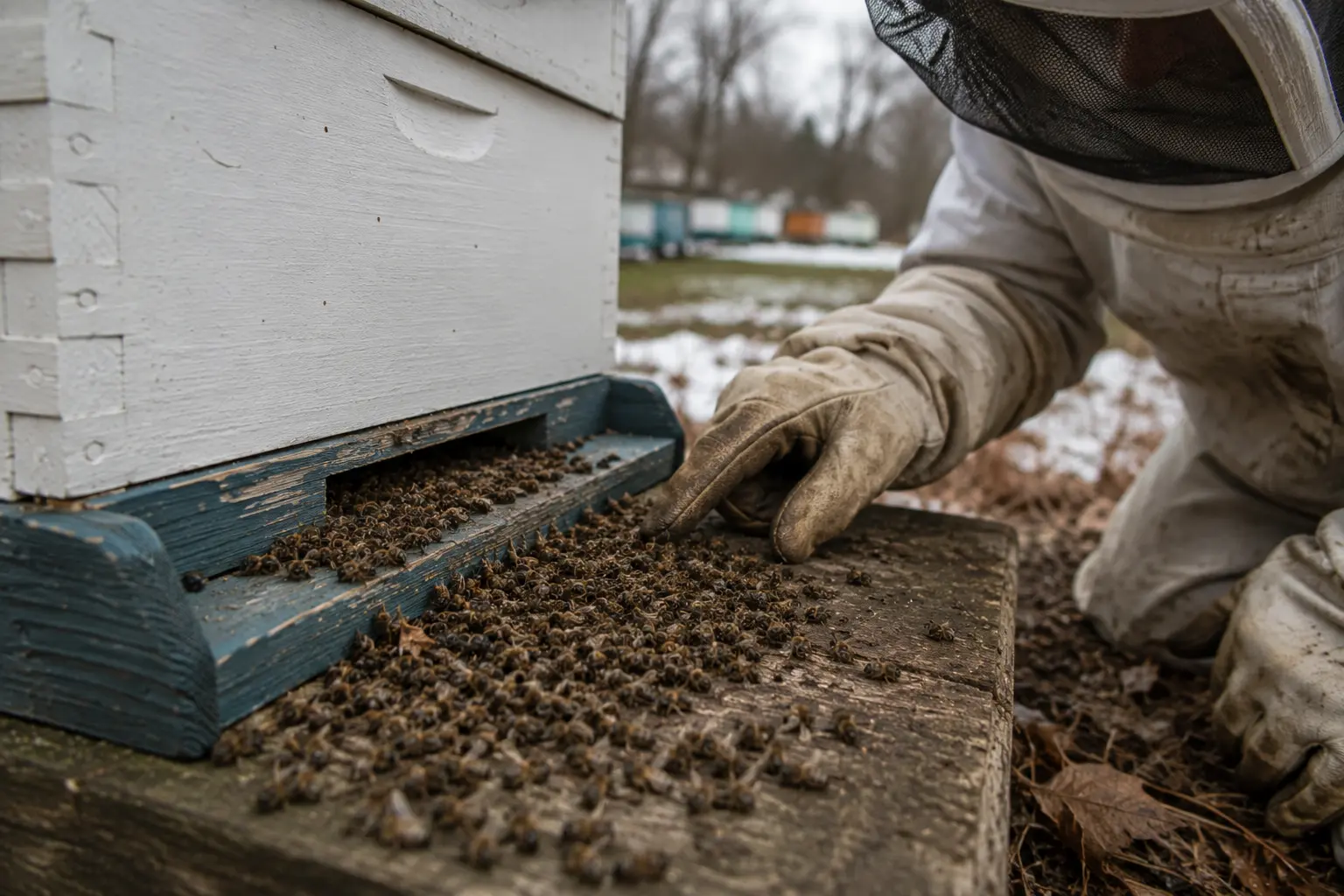
Finding dead bees outside the hive is a common concern for UK beekeepers. A few dead bees near the entrance can be completely normal, especially in a busy colony, but sudden piles of dead or dying bees can point to a more serious problem.
The number of dead bees matters, but it is not the only clue. Look at how suddenly it happened, whether bees are crawling or trembling, whether other colonies are affected, what the entrance looks like, and what is happening inside the hive.
This guide helps you compare normal bee turnover with possible poisoning, varroa and virus pressure, starvation, robbing, wasp attack, chilling, disease or sudden colony decline.
Is it normal to see dead bees outside a hive?
Yes. A small number of dead bees outside the hive is normal. Colonies remove dead or dying bees as part of hygiene, and older foragers naturally die during the active season.
In spring, you may also see old winter bees dying off as the colony changes over to younger workers. After cold or wet weather, bees may clear dead bees from inside the hive once conditions improve.
It becomes more concerning when the number is unusual for that colony, appears suddenly, includes crawling or trembling bees, or affects several colonies at the same time.
Common causes of dead bees outside the hive
Dead bees outside the hive can have several causes. Natural losses are common, but the same visible sign can also appear with pesticide exposure, varroa, starvation, robbing, wasp attack, weather stress or disease.
The best approach is to compare the dead bees with the wider colony picture. A strong colony with a few dead bees near the entrance is very different from a weak colony with crawling bees, dead brood, no stores or a sudden pile of bees after nearby spraying.
Pesticide or chemical exposure
Sudden piles of dead or dying bees outside the entrance can suggest possible poisoning, especially if bees are trembling, spinning, crawling, unable to fly, or if several colonies are affected at once.
Nearby spraying, garden chemicals, crop treatment or contaminated water sources may be relevant. Take photos, record dates and times, and avoid disturbing evidence if the loss is sudden and severe.
Read more in the guide to pesticide poisoning in bees.
Varroa and virus pressure
Varroa-related problems may show as crawling bees, bees with damaged or deformed wings, poor brood pattern, weakening colony strength or increased dead bees around the entrance.
Varroa problems often build over time. You may have seen earlier signs during inspections, such as patchy brood, reduced colony strength, crawling bees or high mite counts. By the time bees are dying outside the hive, the colony may already be under significant pressure.
Read more in varroa symptoms, varroa collapse signs and deformed wing virus.
Starvation and weak colonies
Starvation is more likely in winter, early spring, poor weather, nectar gaps or weak colonies. Bees may appear weak, slow or dead inside the hive, sometimes with bees head-first in cells.
A colony can also die from isolation starvation, where food exists in the hive but the cluster cannot reach it during cold weather. In that case, dead bees outside may be only part of a wider hive loss pattern.
Read more in starvation in bees and isolation starvation.
Robbing, wasps and fighting at the entrance
Robbing can leave dead bees near the entrance, especially where a weak colony is being attacked by other bees. Look for fighting, fast darting bees, bees trying to force entry, torn cappings, wax debris and stores being stripped.
Wasp pressure can look similar, particularly in late summer and autumn. A weak colony with a large entrance is more vulnerable.
Read more in robbing behaviour in bees and wasps around beehives.
Weather stress, chilling and old winter bees
Cold, wet or windy weather can leave bees chilled and unable to return to the colony. This is more common when bees are caught away from the cluster or when a mild spell encourages flight before conditions worsen.
In early spring, older winter bees may die off in greater numbers as younger bees take over. This can look worrying but may be normal if the colony is otherwise strong, has stores and is building well.
If dead bees are linked with a dead cluster inside the hive, compare the signs with dead cluster of bees and winter colony loss.
When should you be concerned?
You should be concerned if large numbers of dead bees appear suddenly, bees are crawling or trembling, several colonies are affected, or the colony is rapidly losing strength.
You should also check more urgently if there are dead bees both outside and inside the hive, abnormal brood, sunken cappings, foul smells, ropy larvae, signs of robbing, or recent nearby chemical use.
If the brood looks suspicious or serious disease is possible, avoid moving frames, honey or equipment between colonies and seek advice.
What to check next
Start outside the hive. Take photos of the entrance, the dead bees and the surrounding ground. Record the date, time, weather and which colony is affected. Compare the hive with other colonies in the same apiary.
Then look for crawling bees, trembling bees, wasps, fighting, wax debris, unusual smells or signs that bees are unable to fly. If conditions are suitable, check colony strength, food stores, brood pattern, queen status and recent varroa monitoring or treatment history.
If you suspect poisoning, foulbrood, serious disease or unexplained sudden loss, avoid moving frames or equipment between colonies and contact your local bee inspector or the National Bee Unit for advice.
Use the Bee Health Checker
This guide supports Bee Health Checker outcomes where dead or dying bees are the main visible symptom. The checker can help separate normal losses from possible starvation, pesticide exposure, varroa and virus pressure, robbing, chilling or disease.
Use the Bee Health Checker if you are unsure what the signs mean.
Dead Bees Outside the Hive FAQ
Yes. A small number of dead bees outside the hive is normal because colonies remove dead or dying bees. Large piles, sudden losses or crawling bees need closer checking.
Possible causes include natural bee turnover, pesticide exposure, varroa and viruses, starvation, robbing, wasp attack, chilling, disease or old winter bees dying off.
Check how many bees are affected, whether it happened suddenly, whether bees are crawling or trembling, whether other hives are affected, and then check stores, brood, varroa history and entrance signs.
Not always. Poisoning is one possible cause, especially when losses are sudden and widespread, but starvation, robbing, varroa, disease and weather stress can also cause dead bees outside the hive.