
Varroa Symptoms (UK)
Varroa Symptoms in Honey Bees UK
Last updated: 15 August 2026
Varroa destructor can damage colonies directly and by increasing virus pressure. The difficult part is that colonies may carry varroa without obvious visible signs, especially early on. By the time symptoms are obvious, mite pressure may already be significant.
This page helps you recognise signs that should prompt a closer check. Use it alongside varroa monitoring methods, the varroa overview and the wider Varroa Management hub.
Visible Mites on Bees or Brood
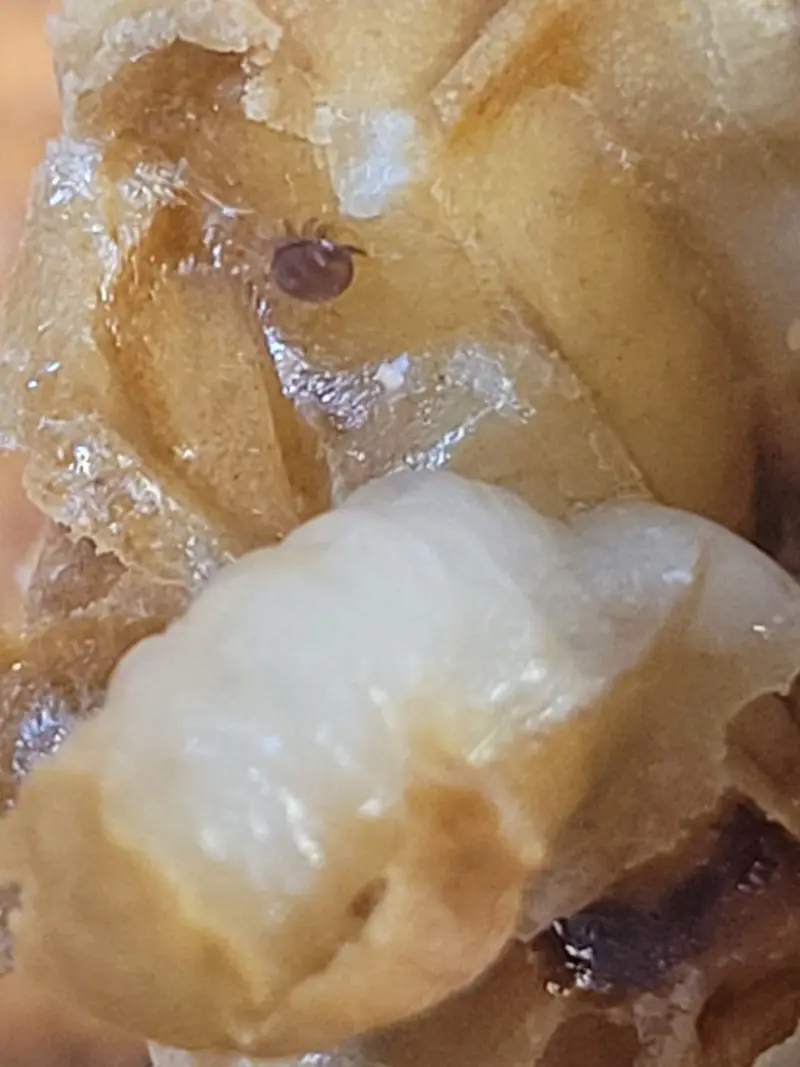
Adult female varroa mites are reddish-brown, oval and flattened. They are often hidden between abdominal segments or inside capped brood cells, so not seeing mites does not mean the colony is clear.
You may occasionally spot mites on adult bees, especially if you look closely between the abdominal segments. They may also appear when drone brood is opened, or show up as mites and debris on monitoring boards beneath the colony.
An increasing natural mite drop over time is more useful than a one-off glance. A single visible mite should be treated as a prompt to monitor properly, but the absence of visible mites should not be taken as reassurance.
Adult Bee Symptoms Linked with Varroa Pressure
Varroa is closely linked with virus problems, especially where mite levels rise in late summer. Adult bee symptoms may include deformed, shrivelled or missing wings, crawling bees near the entrance, weak or trembling bees, and bees that appear unable to fly properly.
You may also notice newly emerged bees that look generally unhealthy, with shortened abdomens or poor movement. These signs do not prove varroa on their own, but they should make you stop and check mite levels rather than waiting for the colony to decline further.
Deformed wings are a particularly important red flag because they can indicate virus pressure associated with varroa. Compare with deformed wing virus if that sign is present.
Brood Signs That May Point to Varroa
Varroa reproduces in capped brood, especially drone brood. Heavy mite pressure can be associated with uneven brood, poor emergence and a colony that struggles to build despite appearing queenright.
Patchy brood, dead pupae, uncapped or chewed-out brood, and visible mites in drone brood can all raise concern. The timing matters as well: brood problems that worsen through late summer deserve particular attention because this is when colonies are raising the bees that need to survive winter.
Colony-Level Warning Signs
Sometimes the clearest sign is not one individual bee, but the overall pattern of colony decline. A colony that weakens in late summer despite having stores, or one with a laying queen that still fails to thrive, should be checked carefully for mite pressure.
Robbing pressure, drifting, or the collapse of a nearby colony can also change the risk picture. Varroa can move between colonies, and a colony that looked acceptable earlier in the season may become vulnerable as autumn approaches.
These signs are especially important in August, September and early autumn, when winter bees are being raised. Use the varroa treatment calendar UK to check whether monitoring or treatment planning is overdue.
When to Monitor Urgently
You should check mite levels promptly if you see deformed wings, crawling bees, patchy brood combined with weak colony growth, visible mites on bees or brood, or a late-summer decline that does not fit the colony’s usual pattern.
It is also sensible to monitor promptly after taking in a swarm, nuc or bought-in colony where the varroa history is unknown. These colonies may look healthy at first, but without a clear treatment and monitoring record you are starting with an unknown risk.
Use a repeatable method from the monitoring guide. After monitoring, compare your findings with the varroa overview, treatment calendar and safe treatment pages.
Common Mistakes When Reading Varroa Symptoms
One of the most common mistakes is assuming that no visible mites means there is no varroa problem. In reality, many mites are hidden in brood cells or tucked between the bee’s body segments, so visible mites are only part of the picture.
Another mistake is treating from panic without monitoring first, or without reading the product label carefully. Patchy brood can also be misread: it may be linked with varroa, but it can also come from queen problems, chilled brood, starvation, disease or other colony stress.
Late-summer timing is especially easy to underestimate. Nearby colony collapse, robbing and drifting can all increase mite pressure, so it is worth thinking about the wider apiary as well as the single hive in front of you.
Symptoms are a prompt to investigate. The safest pattern is: observe → monitor → decide → record → recheck.
Varroa Symptoms FAQ
Yes. Varroa can be present even when you cannot see mites or obvious damage. Regular monitoring is more reliable than waiting for symptoms.
Deformed wings are strongly associated with varroa-related virus pressure, but they should still be considered alongside monitoring results and the wider colony picture.
Monitor mite levels promptly, check colony strength and brood condition, then use the Varroa Management hub and treatment calendar to decide the safest next step.