
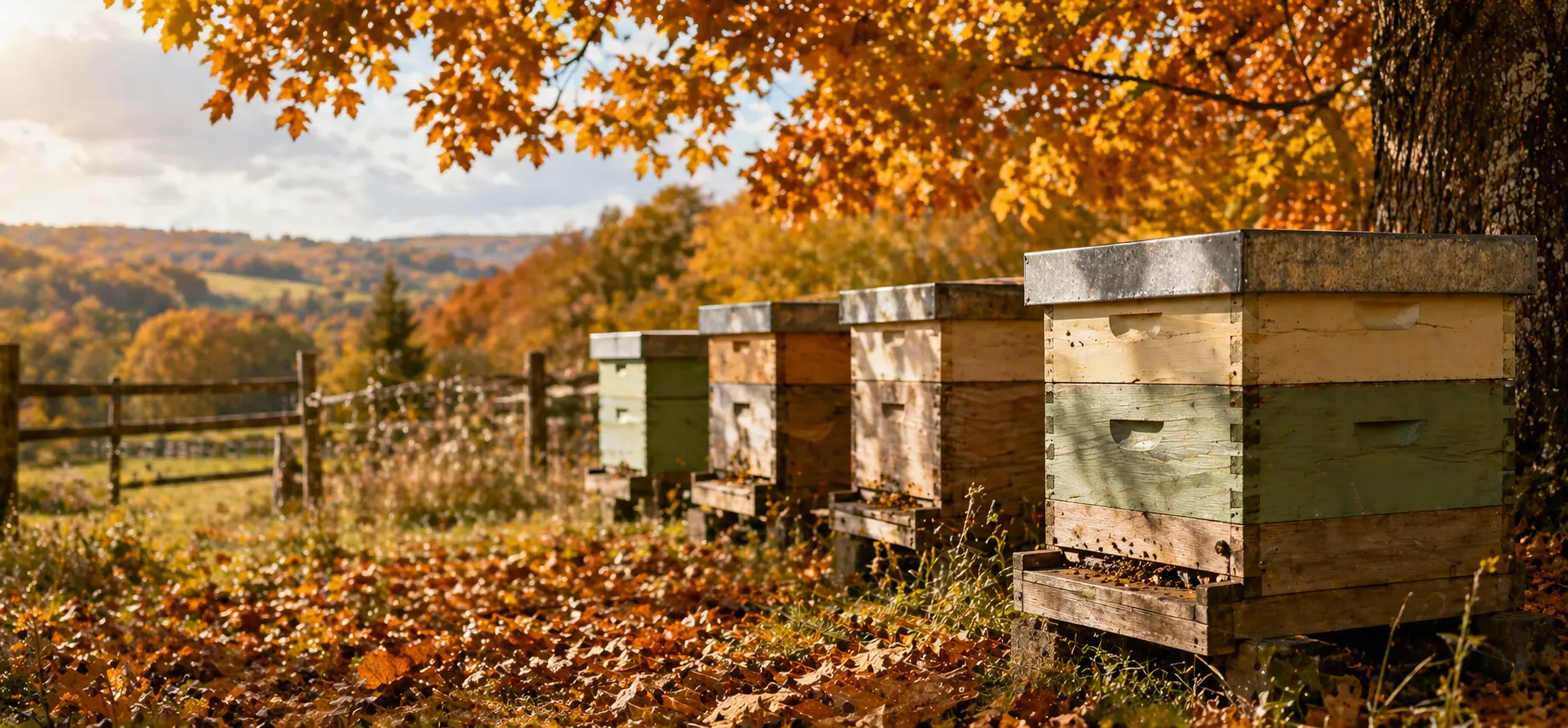
Autumn Beekeeping
Autumn Beekeeping UK – September, October and November Hive Tasks
Last updated: 15 August 2026
Autumn is when UK beekeeping shifts from honey production to winter preparation. The main jobs are checking colony strength, completing varroa control, feeding for winter, reducing entrances and protecting hives from weather and pests.
This guide covers the key autumn tasks for September, October and November, including stores, syrup feeding, treatment timing, mouseguards and final checks before winter.
Autumn Beekeeping at a Glance
- September: Finish feeding, complete varroa treatment where needed and assess colony strength.
- October: Reduce disturbance, check hive weight, fit mouseguards and secure hives.
- November: Carry out external checks only, monitor entrances and prepare for winter feeding if needed.
Autumn Weather
Autumn weather in the UK can be unsettled, with warm spells followed by wet, windy or cold periods. Avoid unnecessary inspections once temperatures drop and colonies begin settling for winter.
Use good weather windows for essential work, but keep hive openings short and purposeful.
September Tasks
September is usually the main month for finishing winter preparation. Colonies should be assessed for strength, stores and treatment needs before the weather becomes less reliable.
- Check stores and feed if colonies are light.
- Complete or monitor varroa treatment according to product instructions.
- Reduce entrances if robbing or wasp pressure is a problem.
- Assess whether colonies are strong enough for winter.
For more detail, see September beekeeping tasks, feeding bees for winter and late summer varroa.
October Tasks
October is about reducing disturbance and checking that winter preparations are in place. Full brood inspections are usually no longer helpful unless there is a specific concern and conditions are suitable.
- Heft hives or check weight to judge stores.
- Fit mouseguards where appropriate.
- Check roofs, stands, straps and hive stability.
- Keep entrances clear and reduce unnecessary disturbance.
For more detail, see October beekeeping tasks and winter bee checks.
November Tasks
By November, most beekeeping work should be external. The colony should not be opened unless there is a genuine emergency.
- Check hives after storms or strong winds.
- Keep entrances clear of dead bees, leaves or debris.
- Monitor hive weight and plan fondant if stores become low later in winter.
- Avoid breaking the winter cluster.
For more detail, see November beekeeping tasks and when to feed fondant to bees.
Winter Feeding
Autumn feeding should be completed early enough for bees to process and store syrup before colder weather. Heavy syrup is normally used in autumn, while fondant is more useful later as emergency winter food.
- Feed based on stores, not habit.
- Avoid leaving feeding too late.
- Reduce entrances if feeding triggers robbing risk.
- Check hive weight before assuming the colony has enough stores.
Varroa Treatment
Autumn varroa management protects the bees that need to survive through winter. Treatment timing should fit around honey removal, weather, brood levels and product instructions.
Keep accurate medicine records for authorised treatments and avoid guessing. Varroa control is not just an autumn job, but autumn is one of the most important pressure points in the year.
Common Autumn Beekeeping Mistakes
- Leaving winter feeding too late.
- Opening colonies too often once the weather cools.
- Forgetting mouseguards or entrance protection.
- Not checking hive weight before winter.
- Delaying varroa treatment until winter bees have already been affected.
- Assuming all colonies need the same amount of food.
Autumn Beekeeping UK – FAQs
Autumn feeding should usually be completed before colder weather stops bees processing syrup properly. Exact timing depends on local conditions, colony strength and stores.
Only if there is a clear reason and the weather is suitable. In most cases, checks should become external as autumn progresses.
Mouseguards are usually fitted in autumn before mice start looking for warm winter shelter inside hives.
Yes. Late-summer and autumn varroa control helps protect winter bees, which are essential for colony survival through winter.