
Winter Bee Checks (UK)
Winter Bee Checks UK – What to Check Without Opening
Last updated: 15 August 2026
Winter bee checks in the UK should be calm, brief and mostly external. The aim is to make sure the hive is secure, dry, ventilated, protected from pests and not running dangerously short of food.
In winter, avoid opening the hive unless there is a genuine need. The colony is clustered for warmth, and unnecessary disturbance can do more harm than good.
Quick Answer
In winter, check bees from the outside. Look for blocked entrances, storm damage, mouseguard problems, hive weight and signs that emergency fondant may be needed. Do not carry out normal frame inspections in cold weather.
External Checks
Most winter colony problems can be spotted from outside the hive without carrying out a full inspection. During cold weather, the bees form a tight cluster to conserve heat, so repeatedly opening the hive can chill brood, disturb the colony and increase stress at a difficult time of year.
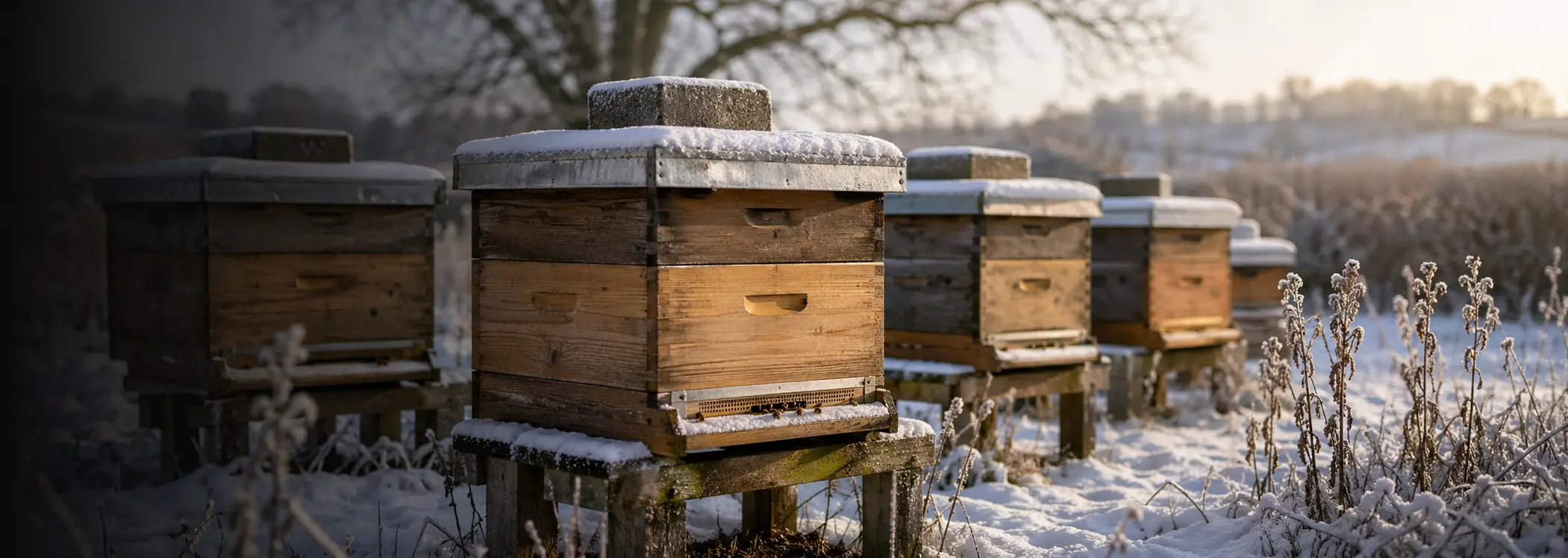
Walk through the apiary regularly during winter, particularly after storms, prolonged rain, snow or freezing conditions. Look carefully at roofs, straps and hive stands. Strong winds can loosen roofs or shift brood boxes slightly, allowing cold draughts and damp air into the hive. Water ingress during winter can be more dangerous than cold itself because damp conditions increase mould, chill the cluster and make it harder for bees to survive until spring.
Check the surrounding ground as well. Hives standing in waterlogged areas may become unstable during prolonged wet weather. If hive legs sink or lean, the boxes may separate slightly, creating gaps that allow heat loss. In exposed apiaries, ensure straps or weights are still secure and that nearby branches or debris have not fallen against the hive.
Winter is also a good time to look for signs of wildlife damage. Woodpeckers may peck hive walls in search of bees, while mice can attempt to enter weak colonies looking for warmth and food. If you notice scratching, disturbed entrances or damaged woodwork, investigate carefully without dismantling the hive unnecessarily.
If you are unsure whether the colony is alive, avoid opening the hive immediately. Instead, look for subtle signs such as occasional cleansing flights on mild days, faint buzzing when placing an ear near the hive wall, or fresh debris appearing beneath an open mesh floor. You can also compare conditions with guidance in our Winter Beekeeping UK, Weak Colony Bees and Why Did My Hive Die? guides.
Food Stores
Food shortage is one of the biggest winter risks. Heft the hive gently from the back or side to judge whether it still feels heavy enough.
If the hive feels very light, add fondant above the cluster where the bees can reach it. Do not rely on bees moving long distances across cold comb to find food.
Entrances
Hive entrances are especially important during winter because they help maintain ventilation while allowing bees to carry out cleansing flights during milder weather. A completely blocked entrance can trap moisture inside the hive and restrict airflow, increasing condensation and damp conditions around the cluster.
It is normal to see some dead bees near the entrance during winter. Worker bees naturally die off throughout the colder months, and undertaker bees may remove bodies during warmer spells. However, if dead bees build up heavily across the entrance, they can restrict airflow and prevent bees from exiting properly.
Use a small stick or hive tool carefully to remove debris from the entrance if necessary, but avoid pushing deeply into the hive. Disturbing the cluster during freezing weather may cause bees to break formation and lose valuable heat. Snow, wet leaves and mud should also be cleared if they begin sealing the entrance completely.
On calm winter days above roughly 8–10°C, you may notice bees flying briefly outside the hive. These cleansing flights are a healthy sign and allow bees to empty waste after long periods confined inside the colony. Lack of visible flying during cold weather does not automatically mean the colony is dead, especially during prolonged freezing conditions.
If you notice robbing behaviour, dysentery staining, large piles of dead bees or unusual inactivity during mild weather, further investigation may eventually be needed when temperatures improve. Related guidance can be found in Winter Colony Loss UK, Nosema UK and Robbing Behaviour in Bees.
Storm Damage
After high winds, check that roofs, crownboards, straps and hive parts are still secure. A lifted roof or shifted brood box can quickly chill the colony.
If a hive has been blown over or opened by weather, put it back together calmly and quickly, then seek local advice if you are unsure how much damage has been caused.
Mouseguards
Mouseguards are one of the simplest but most important winter protections for UK beehives. As temperatures fall, mice search for warm, sheltered spaces with access to food. A hive containing wax, pollen and clustered bees can quickly become an attractive nesting site if entrances are left unprotected.
Once inside a hive, mice can cause significant damage. They may chew comb, contaminate frames with droppings and urine, destroy insulation and disturb the winter cluster repeatedly. Colonies weakened by cold weather or low numbers are often less able to defend themselves against intrusion.
Check regularly that mouseguards remain firmly attached and have not shifted during storms or strong winds. Entrances should still allow good airflow while preventing rodents from squeezing through. During prolonged cold weather, dead bees and wax debris can gradually block the holes in a mouseguard, so inspect them periodically and clear obstructions gently where needed.
Signs of mouse activity may include scratching noises, chewed wood, disturbed grass around the hive stand or unusual debris beneath the entrance. If you suspect mice have entered the hive, avoid opening it immediately during freezing conditions unless there is a serious welfare concern. Disturbing the colony unnecessarily in severe weather may cause additional stress.
Winter hive security is closely linked with overall colony survival. You can also read our guides on Winter Beekeeping UK, Winter Colony Loss and Cluster Died in Place for further cold-weather management advice.
Emergency Feeding
Fondant is usually the safest emergency winter feed because bees do not need to process it like syrup. Place it directly above the cluster, under the roof, using your normal feeder board or eke arrangement.
Avoid liquid syrup in cold weather because bees may not be able to take it down or ripen it properly.
Common Mistakes
One of the most common winter beekeeping mistakes is opening hives too frequently during cold weather. New beekeepers often worry when they see little activity at the entrance, but winter colonies naturally become quiet and conserve energy inside the hive. Repeated inspections can chill the cluster and increase stress at a time when bees are already under pressure from cold temperatures and limited food.
Another major problem is failing to monitor food stores during late winter. Colonies often survive the coldest part of winter only to starve during February or early spring when brood rearing increases food demand. A hive may still contain bees but become dangerously light very quickly. Learning to heft hives regularly is one of the most valuable winter skills a beekeeper can develop.
Entrance management is also frequently overlooked. Dead bees, snow, mud and wet leaves can gradually block ventilation, increasing damp conditions inside the hive. Damp is often more dangerous than cold because condensation dripping onto the cluster can chill bees rapidly.
Feeding mistakes are another common issue. Liquid syrup is usually unsuitable during very cold weather because bees may struggle to process it properly. Fondant is generally safer for emergency feeding because it can be placed directly above the cluster where bees can access it more easily.
Finally, some winter colony losses happen because storm damage or varroa problems were ignored earlier in the season. Winter losses are often the result of several pressures building together rather than a single event. Colonies weakened by mites, poor autumn preparation, damp conditions or low food stores are much less likely to survive until spring.
You can learn more in our related guides on Varroa Collapse Signs, Winter Colony Loss UK, When to Feed Fondant and Post-Mortem Hive Analysis.
FAQs
No, not for normal inspections. Winter checks should usually be external unless there is an urgent reason to intervene.
You may see occasional flying on mild days, hear a quiet hum, or notice debris under the open mesh floor. Lack of activity on a cold day does not automatically mean the colony is dead.
Fondant is usually preferred for winter or emergency feeding because it can be placed above the cluster and does not need processing like syrup.
Check after storms, snow, prolonged wet weather and during late winter when food stores can run low. Keep checks brief and avoid disturbing the colony.