
Feeding Bees for Winter
Feeding Bees for Winter UK – Autumn Stores and Syrup
Last updated: 15 August 2026
Feeding bees for winter is one of the most important autumn jobs for UK beekeepers. Once honey supers are removed and varroa plans are underway, the colony needs enough stores to survive winter without constant disturbance.
This guide explains when to feed, how to judge stores, whether to use syrup or fondant, how to avoid robbing and what to consider with weak colonies before cold weather arrives.
Quick Answer
Feed bees for winter after the honey crop has been removed and before cold weather prevents bees from processing syrup properly. In the UK, this is usually late August through September, depending on region, forage and colony condition.
When To Feed
Autumn feeding should begin soon after honey supers are removed and while temperatures are still warm enough for bees to process syrup efficiently. In much of the UK this often means late August through September, although local forage, weather and colony condition can change the timing.
The goal is to allow the colony enough time to take syrup down, reduce the moisture content and store it properly before colder weather arrives. Leaving heavy feeding too late into autumn can create problems because bees may struggle to process large volumes of liquid feed once temperatures drop.
Colonies should be assessed individually rather than fed automatically. Some hives may still contain excellent stores after summer forage, while others may feel dangerously light once the honey crop has been removed. Feeding decisions should also work alongside varroa treatment plans so colonies are not stressed or disturbed unnecessarily going into winter.
How Much Stores
The amount of food a colony needs for winter depends on several factors including hive type, colony size, local climate, exposure and how long forage shortages typically last in your area. A large thriving colony will normally consume more stores than a smaller colony, particularly once brood rearing begins again toward late winter.
Many UK beekeepers judge winter readiness by hive weight rather than exact measurements. A properly prepared hive should feel reassuringly heavy when hefted from the back or side. Colonies should also have good capped stores around and above the brood nest so the bees can reach food without travelling too far during cold weather.
If you are uncertain, comparing colonies in the same apiary can be useful. A hive that feels much lighter than neighbouring colonies may need feeding or closer inspection. Local beekeepers can often give valuable guidance on what is considered a safe winter weight for your area and hive setup.
Syrup Or Fondant
Heavy syrup is normally the main autumn feeding option because bees can take it down, process it and store it before winter settles in. The aim is to help the colony build enough reserves to survive long periods without dependable forage.
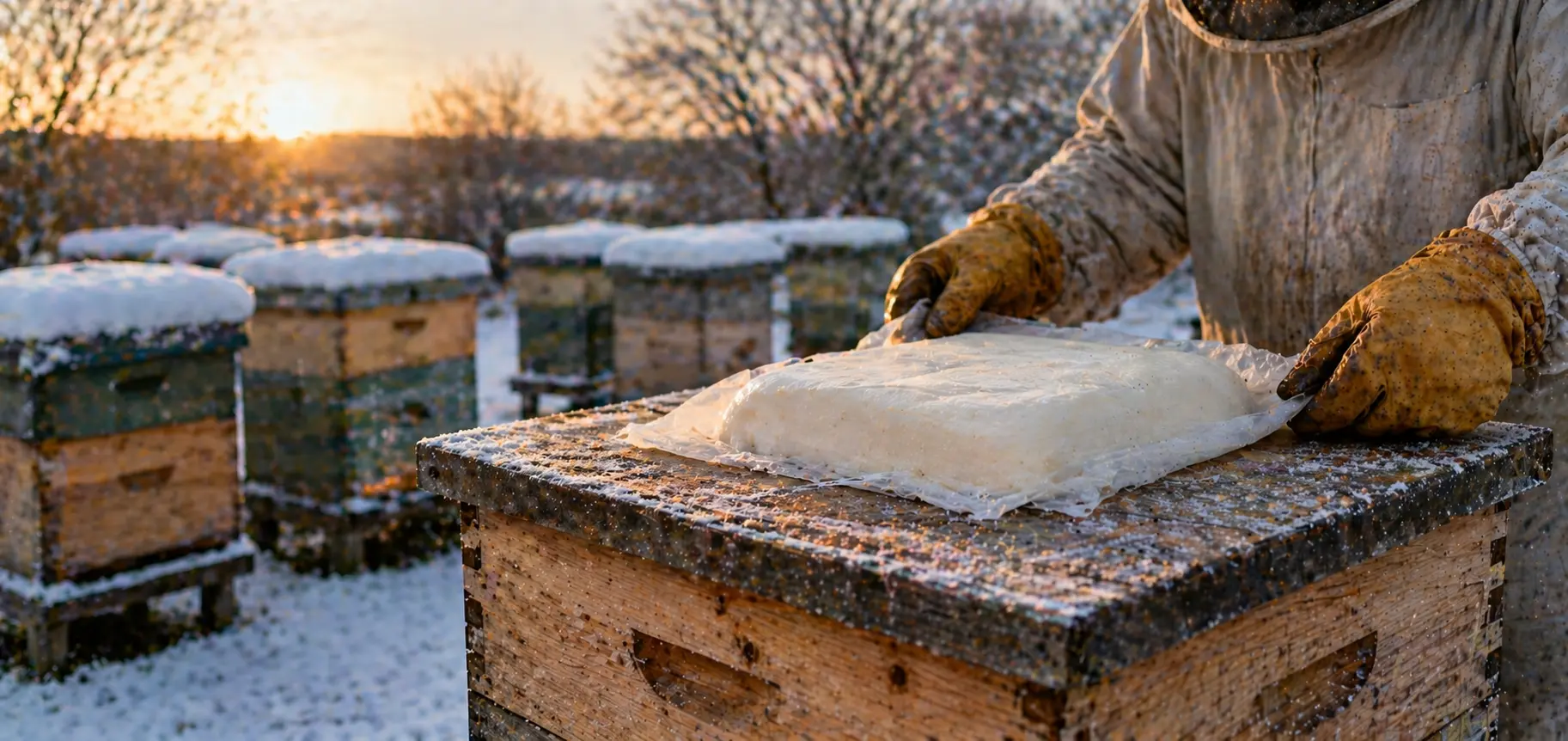
Fondant is usually more suitable later in the season when temperatures are colder and bees cannot safely process large amounts of liquid feed. It is commonly used during winter and early spring as emergency food if colonies become light or are at risk of starvation.
Timing matters. Syrup fed too late in autumn may remain too wet inside the hive and can contribute to excess moisture problems. Fondant, by contrast, is safer during cold weather because it can be placed directly above the cluster where bees can reach it with minimal movement.
Avoid Robbing
Robbing becomes a serious risk in late summer and autumn when natural forage declines and colonies become defensive over food sources. Feeding can unintentionally attract attention from nearby colonies if syrup is spilled, feeders leak or exposed comb is left around the apiary.
One of the safest approaches is to feed during the evening when flying activity is reducing. Entrances on weaker colonies may also need reducing so fewer bees are required to defend the hive. Feeders should fit properly and should not drip syrup outside the colony.
Good apiary hygiene also matters during feeding season. Wet supers, exposed frames and open syrup containers can all encourage robbing behaviour. Once robbing begins it can escalate quickly, causing stress, fighting and even collapse of weaker colonies.
Hive Weight
Learning the feel of a well-stocked hive is one of the most useful winter-preparation skills. Hefting from the back or side can give a quick indication of whether the colony is heavy enough.
If you are unsure, compare colonies in the same apiary. A hive that feels much lighter than the others may need closer checking or feeding.
Weak Colonies
Weak colonies require careful assessment before winter arrives. Feeding can support a viable colony that is short on stores, but food alone will not solve deeper problems such as queen failure, disease, severe varroa damage or a colony that is simply too small to survive cold weather.
Before winter closes in, check whether the queen is laying properly and whether the colony has enough bees to cover and protect brood frames. A small struggling colony may continue to decline even if large amounts of syrup are provided.
In some situations, uniting weak colonies can give bees a better chance of surviving winter than trying to overwinter multiple failing hives separately. Local conditions vary, so newer beekeepers should not hesitate to seek advice from experienced beekeepers nearby when deciding whether a colony is realistically strong enough to overwinter.
Common Mistakes
One of the most common mistakes is leaving autumn feeding too late and assuming colonies will still have enough time to process syrup before cold weather arrives. Colonies that enter winter light are at much greater risk of starvation, particularly during long cold spells or late-winter brood rearing.
Another mistake is relying too heavily on ivy or other late forage without checking actual hive weight and stores. Some years provide excellent autumn forage, while others do not. Colonies should always be assessed directly rather than relying on assumptions about what forage may still be available.
Feeding syrup during cold conditions can also cause problems because bees may struggle to process it properly. At that stage, fondant is usually the safer emergency option. Beekeepers should also avoid creating robbing conditions by spilling syrup, leaving wet supers exposed or using leaking feeders.
Finally, winter preparation should not focus only on food. Colonies weakened by varroa, disease or queen problems may still fail despite having enough stores. Strong healthy winter bees are just as important as the food surrounding them.
Frequently Asked Questions
Usually after honey removal in late summer or early autumn, often from late August into September depending on your area and colony condition.
Use heavy syrup for autumn feeding while bees can process it. Use fondant later in cold weather or as emergency winter food.
Yes. Overfeeding can reduce brood space or leave the colony with poor balance. Feed according to need and check the hive’s condition.
Only if they are otherwise viable. A very weak, diseased or queenless colony may need uniting or other action rather than simply more syrup.