
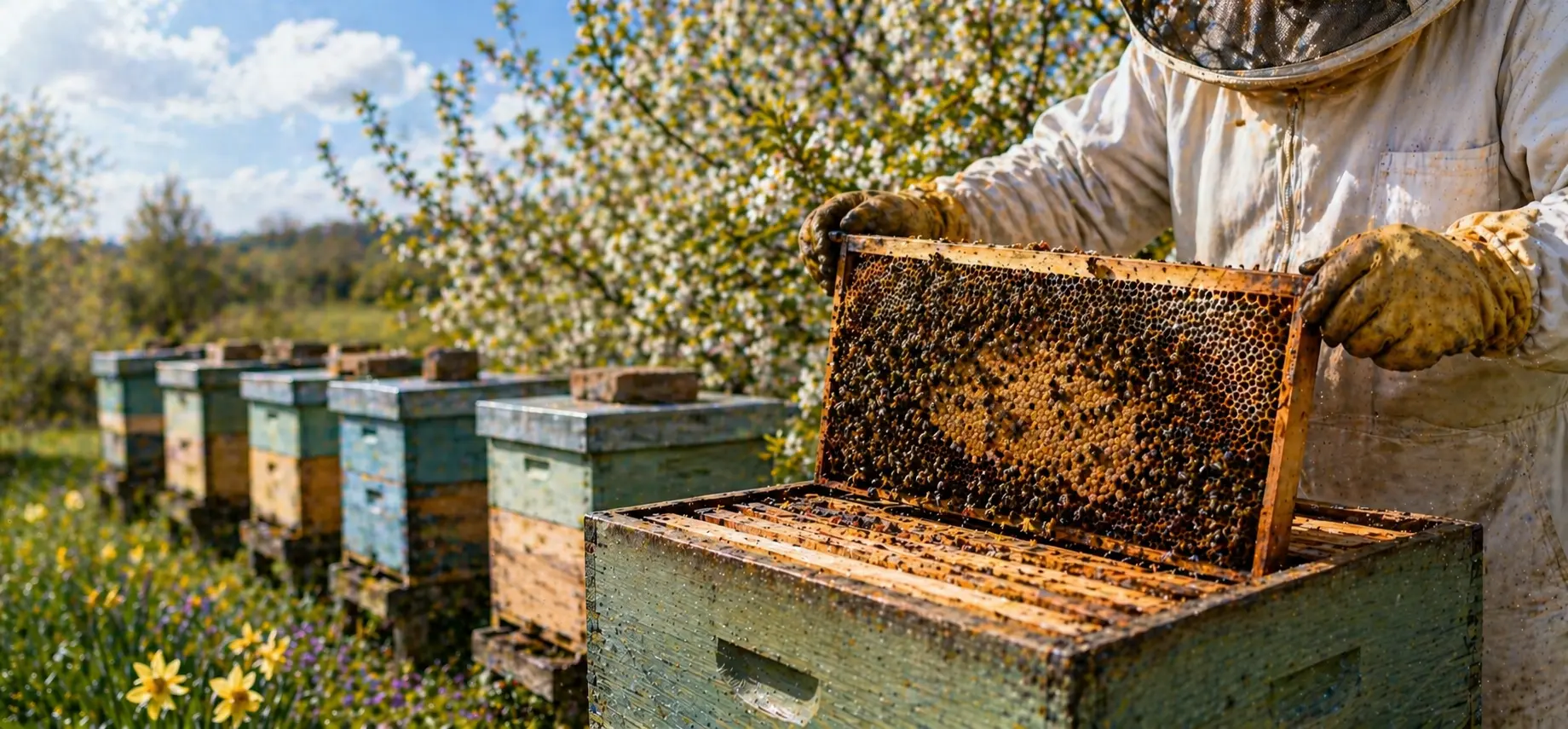
First Spring Inspection
First Spring Inspection UK – What to Check in the Hive
Last updated: 15 August 2026
The first spring inspection is your first proper look inside the colony after winter. The aim is not to disturb everything or find every possible detail. The aim is to confirm that the colony is alive, queenright, building sensibly, has enough food and is strong enough for the season ahead.
In the UK, this inspection should always be weather-led. A calm, warm spring day is far better than forcing the inspection because the calendar says March or April. If conditions are not suitable, wait.
Quick Answer
Your first spring inspection should be carried out on a warm, dry and calm day, ideally around 15°C or above, when bees are flying well. The inspection should stay focused and purposeful rather than becoming a long search through every frame.
Start by checking food stores because spring starvation can still happen even after winter has passed. Then look for signs of a laying queen such as eggs, larvae or sealed brood. Assess colony strength, available space and any obvious signs of disease, damp or damage. If conditions are poor or the colony looks stressed, keep the inspection brief and avoid unnecessary disturbance.
When To Do the First Spring Inspection
The first proper spring inspection usually falls sometime between March and April in many parts of the UK, but the exact timing depends on weather, location and colony strength.
Wait until the colony is flying well, the day is dry and calm, and temperatures are warm enough that brood will not be chilled. If you only need to check food, a quick crownboard check may be enough before conditions are suitable for a full inspection.
For more detail on timing, see when to inspect bees in the UK and spring beekeeping UK.
What To Check During the First Spring Inspection
The first spring inspection should answer a few simple but important questions. The aim is not to carry out the longest inspection possible, but to confirm that the colony has survived winter properly and is building in the right direction.
Check whether the colony is alive and active, whether enough food remains near the brood nest and whether brood is present in sensible amounts for the time of year. You should also assess whether the queen is laying properly, whether the colony has enough room to expand and whether there are any obvious warning signs such as mould, dampness, dysentery, unusual brood patterns or signs of pests and disease.
You do not always need to physically find the queen. In many cases, seeing eggs, young larvae and a sensible brood pattern is enough evidence that she has been present recently.
Brood and Queen Signs
One of the most important parts of the first spring inspection is confirming that the colony has a healthy laying queen. Look for eggs, larvae and sealed brood across the brood nest. A developing spring colony should normally show signs that brood rearing is increasing as temperatures improve.
Fresh eggs show that the queen has been present very recently, while larvae and sealed brood show that brood production has been underway for some time. The brood pattern should look reasonably compact and consistent for the season. Patchy brood does not always mean disaster, but it may need monitoring, especially if combined with poor colony strength or unusual behaviour.
If brood looks poor, scattered or abnormal, compare it with the brood pattern guide and keep clear notes for your next inspection.
Stores and Feeding
Spring colonies can still starve surprisingly quickly. As brood rearing increases, food consumption rises sharply, sometimes before reliable nectar and pollen become available. Colonies that survived winter well can suddenly become short of stores during cold spring weather.
Check whether food is still available close to the brood nest and compare what you see with the overall weight of the hive when hefted. If emergency feeding is needed during colder conditions, fondant is usually safer. Syrup is generally more suitable once temperatures improve and bees can process it properly.
Avoid overfeeding because excessive syrup can block brood space and reduce laying room for the queen. The aim is to support colony growth, not fill every available cell with stores.
For more detailed guidance, see feeding bees in spring.
Colony Strength
Colony strength is important because bees need enough workers to cover brood, regulate hive temperature and gather food efficiently. Some colonies naturally build up faster than others, so avoid comparing every hive too harshly early in the season.
During the inspection, assess how many frames are covered with bees and whether brood is properly attended by workers. Strong colonies may expand quickly and need additional room sooner than expected, while weaker colonies may simply need warmth, food and time to develop naturally.
Try to balance space carefully. Too little space can restrict a strong colony, but too much empty space can make a weak colony harder to keep warm.
What Not To Do During the First Spring Inspection
The first spring inspection should be calm and measured. Avoid turning it into a full disturbance unless there is a clear reason.
Do not inspect in cold, wet or windy weather, and do not leave brood frames exposed for longer than necessary. If eggs or young larvae are present, there is usually no need to spend a long time trying to find the queen.
Avoid splitting up the brood nest unnecessarily, adding too much empty space to a weak colony or assuming that spring weather means food stores are no longer important. Low stores remain one of the main risks at this point in the year.
Common First Spring Inspection Mistakes
One of the most common mistakes is opening too early in cold weather. A cold inspection can chill brood and set a colony back just as it is beginning to build. Another common mistake is spending too long searching for the queen when eggs and young larvae already confirm recent queen activity.
Food stores are also easy to underestimate in spring. Colonies can starve after winter if brood rearing increases faster than forage becomes available. Overfeeding can cause problems too, especially if syrup fills the brood nest and reduces laying space.
Adding supers too soon can make weak colonies harder to manage, while failing to take notes makes it much more difficult to judge whether a colony is improving at the next inspection.
First Spring Inspection FAQs
Wait for a warm, dry, calm day when bees are flying well. Around 15°C or above is a useful guide for a full inspection.
No. If you see eggs, young larvae and a normal brood pattern, that usually tells you the queen has been present recently.
Food stores, brood, queen signs and colony strength are the main priorities. Low stores in spring should be dealt with quickly.
Only feed if the colony needs it. If stores are low, use the most suitable feed for the conditions.
Only if the colony is strong enough and needs space. Do not add supers to weak colonies too early.