
Last updated: 1 November 2026
A mild day can still bring the bees out
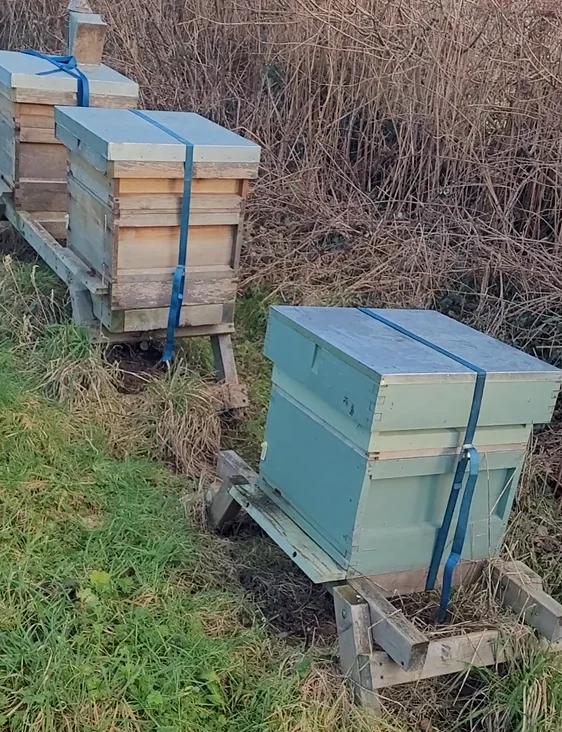
By the time November arrives, I have usually finished most of my preparations for winter. The feeders have been removed, the colonies have been checked for stores, and I'm no longer carrying out the regular inspections that occupied so much of the spring and summer.
That doesn't mean I stop visiting the apiary. I still like to check that the hives are secure, particularly after the wind and rain we get here in South Wales. But those visits are generally about observing rather than opening anything up.
And then we get one of those unexpectedly pleasant afternoons. The sun appears, the air feels a little warmer, and there are bees flying at the entrance. It can seem odd for November, or even December, when we're inclined to think the bees should be tucked away for winter.
The simple explanation is that honeybees don't hibernate. On suitable days, some workers can still leave the hive. What interests me is not just that they are flying, but how they are behaving.
The weather matters more than the date
One thing beekeeping teaches you is that the bees don't keep to our calendar. November can be cold, wet and miserable, but it can also bring spells of sunshine. The same is true of December.
As a rough guide, occasional flights can happen around 8–10°C in sheltered, sunny conditions. More sustained activity usually needs warmer weather. Those figures aren't rules: wind, direct sunlight and the conditions around the hive make a difference.
A hive facing the afternoon sun may warm up differently from one in shade. Colony strength and individual colony behaviour can vary too. I wouldn't assume something was wrong merely because not every hive showed the same amount of activity.
What I wouldn't do is confuse a mild flying day with a suitable day for a full inspection. Those are two different things.
Sometimes they just need to get outside
One of the most common reasons for winter flying is a cleansing flight. Bees generally avoid defecating inside the hive, so after a stretch of cold or wet weather they may take advantage of a warmer spell to relieve themselves outside.
That can produce quite noticeable activity around the entrance, sometimes after several days when the hive has seemed completely quiet.
I have already explained what cleansing flights look like, the signs of normal behaviour and the things that can cause concern in my guide to cleansing flights. There's no need to repeat all that detail here. The important point is that a burst of activity on a mild day is not, by itself, a problem.
Are they finding pollen or nectar?
Whenever bees are flying, it's worth taking a moment to see whether any are returning with pollen on their legs. Ivy is particularly important in autumn, and in a mild year some flowers may linger into November. Winter-flowering plants such as mahonia can also provide forage when conditions allow.
But I wouldn't take a few bees returning with pollen as proof that the colony has enough food to last until spring, or even as proof that the queen is laying. It tells me something is available nearby, not how much is stored inside the hive.
And a warm December day doesn't mean the bees are bringing back meaningful quantities of nectar. Flying itself takes energy, so I still keep an eye on stores, whatever the activity at the entrance might suggest.
Why might one hive be active and another quiet?
With more than one colony, it's natural to compare them. But I don't expect every hive to behave identically.
The amount of shelter, the position of the entrance, the sunshine and the size or condition of the colony can all influence what you see. A few bees coming and going at one entrance while another remains quiet doesn't tell me enough to decide that either colony is in trouble.
Instead, I'd look for more useful clues. Are the bees flying and landing normally? Do they return to the hive? Is the activity reasonably calm, or are there large numbers struggling on the ground?
Those details are far more informative than comparing hive entrances for a few minutes and expecting the same number of bees at each one.
What would make me concerned?
Although winter flying is often perfectly normal, I wouldn't ignore behaviour that looked unusual. Large numbers of bees crawling around and unable to fly, extensive faecal staining on the hive front, or a sudden accumulation of dead bees would all make me pay closer attention.
There can be a number of reasons for those signs, and I wouldn't jump straight to a diagnosis. In particular, unusual flying doesn't establish that a colony is queenless, nor does spotting on the hive automatically mean a particular disease is present.
If you're seeing bees on the ground rather than normal flights, my separate article on why bees may be crawling outside a hive looks at the possible causes in more detail.
I would also take a hive that suddenly feels very light seriously. Normal entrance activity cannot tell us how many food stores remain.
The hive can be active and still be short of food
It can be tempting to regard a lively entrance as a sign that the colony is doing well. But a few bees flying doesn't mean there is plenty of honey left inside.
Prolonged mild weather may increase activity, while brood rearing, colony size and other factors also affect food consumption. I wouldn't assume a mild winter is automatically an easier one for the bees.
For that reason I continue to assess stores during the colder months by carefully hefting the hives. I've written about this in my article How to Heft a Beehive: Is Your Colony Heavy Enough for Winter?. My winter feeding guide also explains how to judge stores and when additional food may be necessary. If a colony is genuinely running short, it may need emergency fondant, placed where the bees can access it with as little disturbance as possible.
For the wider winter routine, my winter beekeeping guide covers external checks, feeding and weather protection.
Knowing when to leave them alone
One of the hardest things about winter beekeeping, especially when you're starting out, is getting used to not opening the hives. During the active season we're checking brood, looking for queen cells and making decisions with frames in our hands. Winter is different.
If I see normal activity on a mild November or December afternoon, I'll watch for a few minutes. I'll check that the entrance isn't blocked and that the roof and straps are secure. I might make a note of the weather and what I've seen, particularly if I want to compare it with a later visit.
What I won't do is take the brood box apart simply because a few bees have flown out. If there's an urgent problem, such as suspected starvation, the situation is different and a carefully targeted intervention may be necessary.
For routine month-by-month jobs, there's also my December beekeeping guide.
My final thoughts
I think there is something reassuring about seeing a few bees coming and going on a bright winter afternoon. It is a reminder that the colony is still alive and responding to the weather, even though most of what happens inside the hive is out of sight.
It doesn't guarantee that the colony is healthy, that stores are sufficient or that everything will be fine in spring. But it is a useful observation when you put it alongside the hive's weight, its condition and what you've recorded through the season.
So if you find bees flying in November or December, don't feel you have to do something about it. Watch how they behave, check for anything genuinely unusual, and remember that sometimes the best thing I can do for my bees is simply leave them in peace.
Frequently Asked Questions
Yes. Honeybees may fly on mild, sheltered days in December, especially for cleansing flights. Normal flying activity alone is not a reason to open the hive.
Some bees may take short flights at around 8–10°C in sunshine and light wind, but there is no fixed threshold. Weather, shelter and colony conditions all matter.
No. Workers can fly for cleansing or other reasons even when there is little or no brood. Entrance activity cannot confirm queen status.
Not simply because they are flying. Winter checks should usually remain external unless there is a genuine reason for an intervention.
Activity alone is not a reason to feed. Assess stores, for example through careful hefting, and consider emergency fondant if a colony is at risk of starvation.
Join the Conversation
Beekeeping is all about learning from one another. Follow BeezKnees for more practical UK beekeeping guides, seasonal observations and equipment explainers.
Follow the BeezKnees Facebook Page