
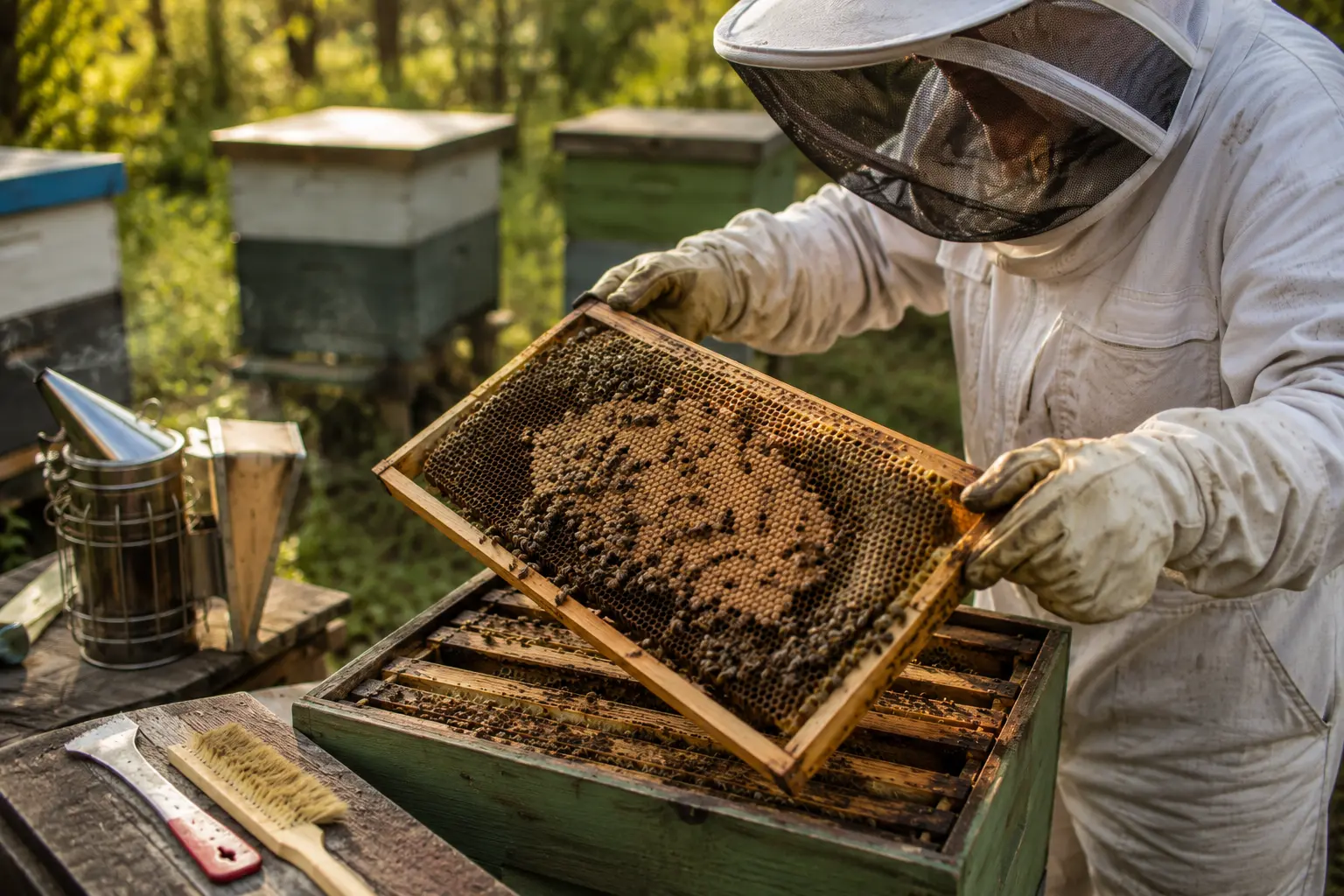
Hive Problems
Hive Problems UK – Diagnose Common Beekeeping Problems
Last updated: 15 August 2026
This Hive Problems hub brings together the common issues beekeepers notice in and around the hive, including dead bees, colony loss, starvation, crawling bees, queen failure, brood problems, comb faults, robbing, wasps and pests.
The aim is not to guess from one symptom alone. A pile of dead bees, a weak colony, a missing queen, patchy brood or bees crawling on the ground can each have several possible causes. This page helps you start with what you can see, then move to the most relevant detailed guide.
Many hive problems become easier to understand when viewed alongside regular hive inspections, varroa monitoring, bee disease recognition and the seasonal guidance provided in Year in the Apiary.
Use this hub alongside your own inspection records, local association advice, BeeBase guidance and, where needed, support from a bee inspector or experienced mentor. Some problems can be managed by the beekeeper; others need quick advice because they may involve serious disease, pesticide exposure or severe colony collapse.
Start with the Symptom You Can See
When something looks wrong, begin with the clearest sign rather than jumping straight to a diagnosis. Look at the entrance, the floor, the brood nest, stores, queen status, bee behaviour and recent weather. Good diagnosis comes from patterns, not one isolated clue.
Dead bees or empty hive
Start with colony loss, winter failure, starvation, varroa collapse or a post-mortem style check.
Light hive or weak colony
Check whether the issue is starvation, isolation starvation, queen failure, disease pressure or lack of population.
Crawling or dying bees
Consider deformed wing virus, varroa pressure, pesticide exposure, chilled bees or other colony stress.
No eggs or brood problems
Look for queenlessness, failing queen signs, laying workers, drone-laying queens or wider brood problems.
Poor comb or super issues
Comb, space and super problems often relate to timing, nectar flow, colony strength and equipment setup.
Robbing, wasps or pests
Entrance fighting, wasp pressure, wax moth, ants and mice can all stress colonies, especially when weak.
Dead Bees & Colony Loss
Dead bees outside the hive, a silent colony, an empty brood box or a cluster that has died in place can all point to different causes. The key is to look at where the bees are, whether stores remain, what the brood area looks like and whether there are signs of varroa, starvation, disease or sudden collapse.
Dead Bees Outside Hive
Use this guide when you notice dead bees at the entrance, on the landing board or on the ground in front of the hive.
Why Did My Hive Die?
A broad starting point for working through the possible reasons a colony has died.
Sudden Colony Death UK
For cases where a colony appears to fail quickly or unexpectedly, especially after recent signs of activity.
Cluster Died in Place
Helps interpret a dead winter cluster, including starvation, isolation starvation, cold stress and colony weakness.
Empty Hive, No Bees
For colonies that appear to have vanished, leaving few bees behind and little obvious evidence at first glance.
Winter Colony Loss UK
Explains common winter loss patterns, including stores, varroa, queen issues, weak colonies and weather stress.
Post-Mortem Hive Analysis
A structured way to examine a failed hive and record what you find before cleaning up equipment.
Starvation & Weak Colonies
Starvation is not always as simple as an empty hive. Colonies can die with stores nearby if the cluster cannot reach them, and weak colonies may struggle to cover brood, defend the entrance or maintain momentum through poor weather.
Starvation in Bees Signs
Recognise the main signs of starvation, including light hives, empty comb, dead bees and bees head-first in cells.
Isolation Starvation Bees
Understand how a colony can starve even when food remains elsewhere in the hive.
Weak Colony Bees
Use this guide when the colony is small, slow to build up, poorly defended or not matching the season.
Crawling, Dying or Poisoned Bees
Bees crawling on the ground, unable to fly, trembling, dying in numbers or showing damaged wings need careful interpretation. Possible causes include deformed wing virus, varroa collapse, pesticide exposure, chilled bees, exhaustion or wider colony stress.
Why Bees Are Crawling on the Ground
A symptom-first guide to crawling bees and possible causes around the hive entrance or apiary.
Pesticide Poisoning Bees
For sudden deaths, trembling bees, piles of foragers or unusual losses following local spraying or exposure.
Deformed Wing Virus UK
Recognise deformed wings, crawling bees and the close link between DWV and varroa pressure.
Varroa Collapse Signs
Understand late-stage varroa damage, collapsing population, viral symptoms and why action is often needed earlier.
Queen & Brood Problems
Queen and brood problems often show up as missing eggs, patchy brood, drone-only brood, emergency queen cells, laying workers, poor temperament or a colony that simply does not build up as expected. Before acting, confirm what you can see on the frames.
Queen Failing Signs
Recognise when a queen may be ageing, poorly mated, damaged or no longer laying well.
Missing Queen – What to Check
Use this when you cannot find the queen and need to work out whether she is truly missing.
Queenless Colony – What to Do
Practical next steps when a colony appears queenless, including checks before taking action.
Queenless or Supersedure?
Helps distinguish emergency queenlessness from a colony quietly replacing its queen.
Laying Workers UK
For colonies with multiple eggs, scattered drone brood and signs that workers may have started laying.
Drone-Laying Queen
Understand the difference between a drone-laying queen and laying workers.
Brood Problems UK
A wider guide to abnormal brood patterns, dead larvae, patchy brood and when to seek advice.
Comb, Space & Super Problems
Not every hive problem is disease or queen failure. Some issues come from timing, space, equipment, weather and nectar flow. Bees may refuse foundation, build cross comb, ignore supers or behave differently around a queen excluder.
Why Bees Are Not Drawing Comb
Understand why bees may ignore foundation or delay drawing comb, especially when conditions are not right.
Cross Comb – How to Fix It
Practical guidance for dealing with brace comb, wild comb and frames drawn across the intended direction.
Queen Excluder Problems
For colonies reluctant to move through the excluder, brood in supers or problems caused by poor timing.
Adding Supers UK
Learn when to add supers, how to avoid congestion and why timing matters during nectar flows.
Robbing, Wasps & Pests
Robbing, wasps, wax moth, ants and mice are often worse when colonies are weak, entrances are too large, feed is exposed or equipment is left vulnerable. These guides help you identify the problem and reduce the pressure on the colony.
Robbing Behaviour Bees
Recognise fighting, frantic entrance activity, bees searching cracks and robbing pressure between colonies.
Wasps & Beehives UK
Understand wasp pressure in late summer and autumn and how to help colonies defend themselves.
Wax Moth UK
Identify wax moth damage, webbing, larvae and risk factors in weak colonies or stored comb.
Ants in Beehives
Work out when ants are just a nuisance and when they indicate damp, spills or colony weakness.
Mice in Beehives
Recognise mouse damage, nesting signs and why entrance protection matters before winter.
Most Common Causes of Hive Problems in the UK
While every colony is different, many hive problems seen by UK beekeepers can usually be traced back to a small number of underlying causes. Understanding these common causes can help you diagnose issues more quickly and avoid unnecessary intervention.
- Varroa pressure and associated viruses – often linked to weak colonies, crawling bees, deformed wings and colony collapse.
- Starvation and isolation starvation – particularly during winter, early spring and periods of poor weather.
- Queen failure – resulting in poor brood patterns, falling populations and reduced colony performance.
- Swarming – causing sudden population reduction and apparent colony decline.
- Poor weather and forage shortages – leading to weak colonies, poor comb building and reduced honey production.
- Pests and predators – including wasps, wax moth, ants and mice.
- Disease and brood disorders – which may require specialist advice or inspection.
If you are unsure what you are seeing, start with the visible symptoms and work through the linked guides above. Comparing multiple signs usually provides a much more reliable diagnosis than focusing on a single symptom in isolation.
When to Get Help with a Hive Problem
Some problems can be worked through calmly with inspection notes and local advice. Others need urgent help, especially if there is a risk of notifiable disease, pesticide poisoning, severe varroa collapse or unexplained colony death.
- Seek advice quickly if brood looks diseased, sunken, ropy, melted, foul-smelling or abnormal.
- Do not swap equipment between colonies if serious disease is possible.
- Record what you see before clearing up a dead colony, including photos, hive weight, stores, brood pattern and mite signs.
- Use local support from your association, mentor, BeeBase resources or bee inspector where appropriate.
HiveTag: keep better records when hive problems appear
Hive problems are easier to understand when you have a clear record of inspections, feeding, treatments, queen status, brood pattern and previous symptoms. HiveTag helps you keep those notes together so you can see what changed and when.
Log symptoms and follow-up actions
Record what you saw, what you did and what needs checking again at the next inspection.
Track queen, brood and colony strength
Keep notes on eggs, larvae, brood pattern, queen cells, temperament and colony build-up.
Review patterns across the season
Compare colonies and spot repeated issues such as poor build-up, robbing, starvation risk or varroa pressure.
Hive Problems – Frequently Asked Questions
These questions summarise common first steps when trying to diagnose a hive problem. Use them alongside the detailed guides linked above.
What should I check first if I think something is wrong with my hive?
Start with the visible symptoms: dead bees, crawling bees, lack of brood, queen problems, weak population, poor stores, robbing, pests or unusual behaviour. Then use those signs to narrow the issue before making changes.
Does a pile of dead bees outside the hive always mean the colony is dying?
Not always. Some dead bees outside the hive can be normal, especially after bad weather or cleansing flights, but large piles, crawling bees, deformed wings, sudden loss of flying bees or a dead cluster need closer investigation.
How do I know if my bees are starving?
Starving colonies may feel very light, have little or no capped stores, show bees head-first in cells, or die clustered close to empty comb. Isolation starvation can happen even when food is present elsewhere in the hive.
What does it mean if bees are crawling on the ground?
Crawling bees can be linked to several causes, including deformed wing virus, varroa pressure, pesticide exposure, chilled or exhausted bees, queen issues or other colony stress. The pattern and timing matter.
What are common signs of queen or brood problems?
Warning signs include no eggs, patchy brood, drone-only brood, multiple eggs in cells, emergency queen cells, falling population, poor laying pattern or a colony that becomes unusually unsettled.
When should I ask for help with a hive problem?
Ask for help quickly if you suspect notifiable disease, pesticide poisoning, severe varroa collapse, sudden colony death, major brood abnormalities or if you are unsure what you are seeing. A local mentor, association or bee inspector can help confirm the signs.
Use this Hive Problems hub as your starting point whenever something looks wrong in or around the hive. Start with the symptom, check the relevant section, keep clear notes, and seek local or official advice quickly if disease, poisoning or serious colony loss is possible.