
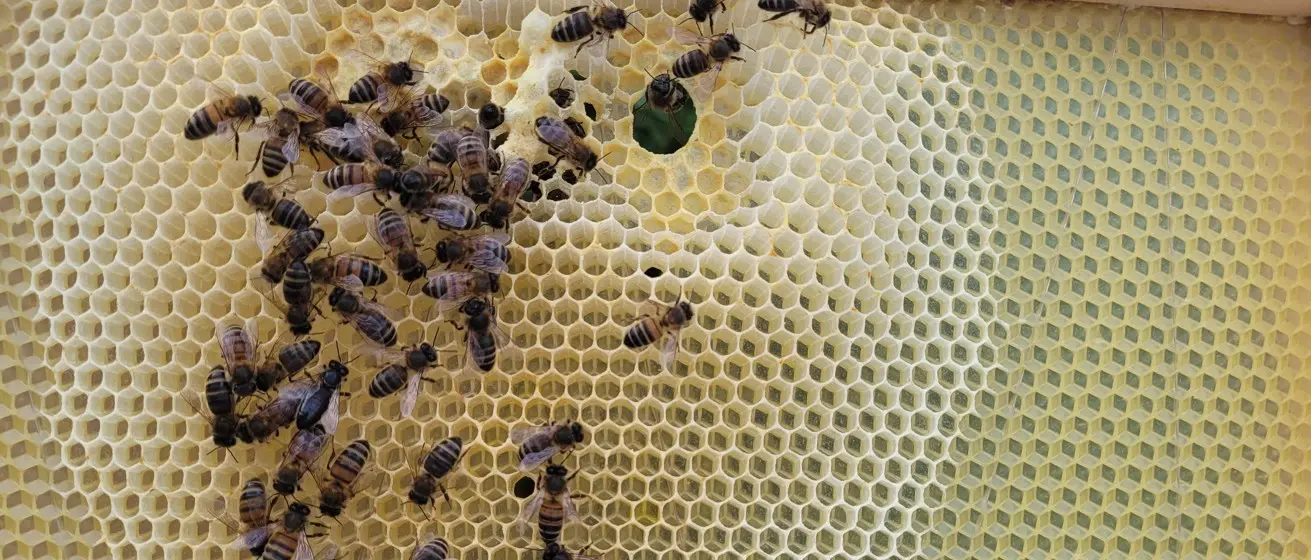
Comb building and hive management
Why Bees Are Not Drawing Comb: Causes and What To Do
Last updated: 15 August 2026
Bees will only draw comb when the colony has a reason and the resources to do it. If they are ignoring foundation or building very slowly, it usually means the conditions are not supporting wax production and expansion.
Comb building uses energy. It is closely linked to nectar flow, feeding, warm weather, young bees, colony strength and the need for space. A beekeeper may add frames or supers, but the bees will not always treat them as a priority.
This guide explains the most common reasons bees are not drawing comb and how to decide whether you need to feed, reduce space, wait for better conditions, check queen status or change the foundation.
Quick reasons bees are not drawing comb
The most common reason is lack of incoming food. Without a nectar flow or suitable feeding, bees often focus on survival and brood rearing rather than building new wax.
Colony strength matters as well. A small or weak colony may not have enough young wax-producing bees to draw comb efficiently. Cold weather, too much empty space, poor timing in the season and unappealing foundation can all slow or stop progress.
Queen and brood issues can also play a part. If the queen is not laying well, the colony may not be expanding and may have no need for more comb.
No nectar flow or insufficient feeding
Bees usually draw comb best during a strong nectar flow. When nectar is coming in, the colony has both the energy and the storage pressure to build. Without that flow, foundation may sit untouched.
Feeding can help in some situations, especially with nucs, swarms or colonies that need encouragement to draw foundation. However, feeding is not magic. If the colony is too small, too cold or queenless, syrup alone will not solve the problem.
If you feed, do it carefully and avoid creating robbing pressure. Related guide: Feeding bees.
Colony too weak
Small or weak colonies do not have the workforce to build comb quickly. Wax production depends heavily on young bees, food availability and warmth. If the colony is short of bees, it will prioritise brood care, defence and survival.
A weak colony may ignore outer frames, avoid a super, or only draw a small patch of comb near the brood nest. In this situation, reducing the space to match colony strength may help more than adding more foundation.
Related guide: Weak colony bees.
Temperature too low
Bees need warmth to draw comb. In cool weather, especially early spring or during cold nights, they may stay clustered around brood rather than moving onto cold foundation.
Even if daytime temperatures look suitable, cold nights can slow progress. A colony may start drawing comb during a warm spell and then stop when conditions change.
If the weather is unsettled, it may be better to wait rather than assume something is wrong with the foundation.
Too much space in the hive
Adding too much space too early can slow comb drawing. Bees prefer to expand from a compact, warm brood area. If given a large empty box or too many undrawn frames, they may not occupy it properly.
Too much space can also make temperature control harder and may leave outer frames ignored. In some cases, it is better to expand gradually as the colony grows rather than expecting the bees to fill everything at once.
This is closely linked to queen excluder problems and adding supers.
Wrong time in the season
Comb building is seasonal. In spring, drawing comb increases as colonies build up. In early summer, it is often at its strongest, especially during good forage conditions. Later in the season, comb building slows as colonies shift away from expansion.
In autumn and winter, bees are unlikely to draw fresh comb unless there are unusual conditions. Expecting new foundation to be drawn late in the year often leads to disappointment.
Related guide: Year in the Apiary.
Poor or unappealing foundation
Bees may avoid foundation if it is old, brittle, poorly waxed, contaminated, strongly scented or unfamiliar. Plastic foundation can sometimes be slower to accept unless it is well waxed and conditions are otherwise good.
Fresh, clean foundation is usually accepted more readily. Placing foundation next to drawn comb or near the brood nest can help, but avoid splitting the brood nest carelessly or chilling brood.
If only one batch of foundation is being ignored while other comb is being drawn normally, the foundation itself may be part of the problem.
Queen or brood issues
A strong laying queen helps drive colony expansion. If the queen is failing, missing or laying poorly, the colony may not have the brood, young bees or growth pressure needed to draw comb.
Low brood levels mean fewer young bees later, and young bees are important for wax production. If comb drawing has stalled, check for eggs, larvae, brood pattern, queen status and whether the colony is actually expanding.
Related guides: Queen failing signs and missing queen checks.
What to do if bees are not drawing comb
Start by checking whether there is a nectar flow or whether feeding is appropriate. Then check colony strength, queen status and brood pattern. If the colony is too small, reduce excess space and wait for it to grow.
Place foundation where bees are most likely to use it, usually close to drawn comb or the edge of the brood area, without breaking up the brood nest unnecessarily. Use fresh, good-quality foundation and avoid adding too many undrawn frames at once.
If conditions are cold or the season is wrong, waiting may be the correct answer. Bees cannot be forced to draw comb if the colony has no reason or ability to do it.
Common mistakes
A common mistake is adding too many frames or boxes at once. This can leave bees spread too thinly and make the hive harder to manage. Another is expecting comb drawing in cold weather or outside the main building season.
Feeding incorrectly can also cause problems. Feeding may help comb drawing, but careless feeding can trigger robbing, especially if colonies are weak or there is a nectar dearth.
Beekeepers also sometimes overlook queen and brood issues. If the colony is not expanding, the comb problem may be a symptom rather than the main issue.
Related guide: Feeding mistakes beekeepers make.
How HiveTag can help
Recording inspections in HiveTag helps you track when foundation was added, how much comb was drawn, whether feeding was given, what the weather was doing and whether the queen was laying well.
This makes it easier to see whether comb drawing stopped because of a nectar gap, cold weather, weak colony strength, queen problems or poor timing.
Learn more: HiveTag.
Comb Drawing FAQ
Bees usually ignore foundation when there is no nectar flow, the colony is too weak, conditions are too cold, or the hive has more space than the bees can use.
Feeding can help in some situations, but it will not fix poor timing, cold weather, a weak colony, queen problems or unsuitable foundation.
If the colony is struggling or spread too thinly, reducing space can help. Undrawn frames can be reintroduced later when the colony is stronger and conditions are better.
Bees draw comb best in warm weather, with a strong nectar flow or suitable feeding, and when the colony has enough young bees and enough need for extra space.