
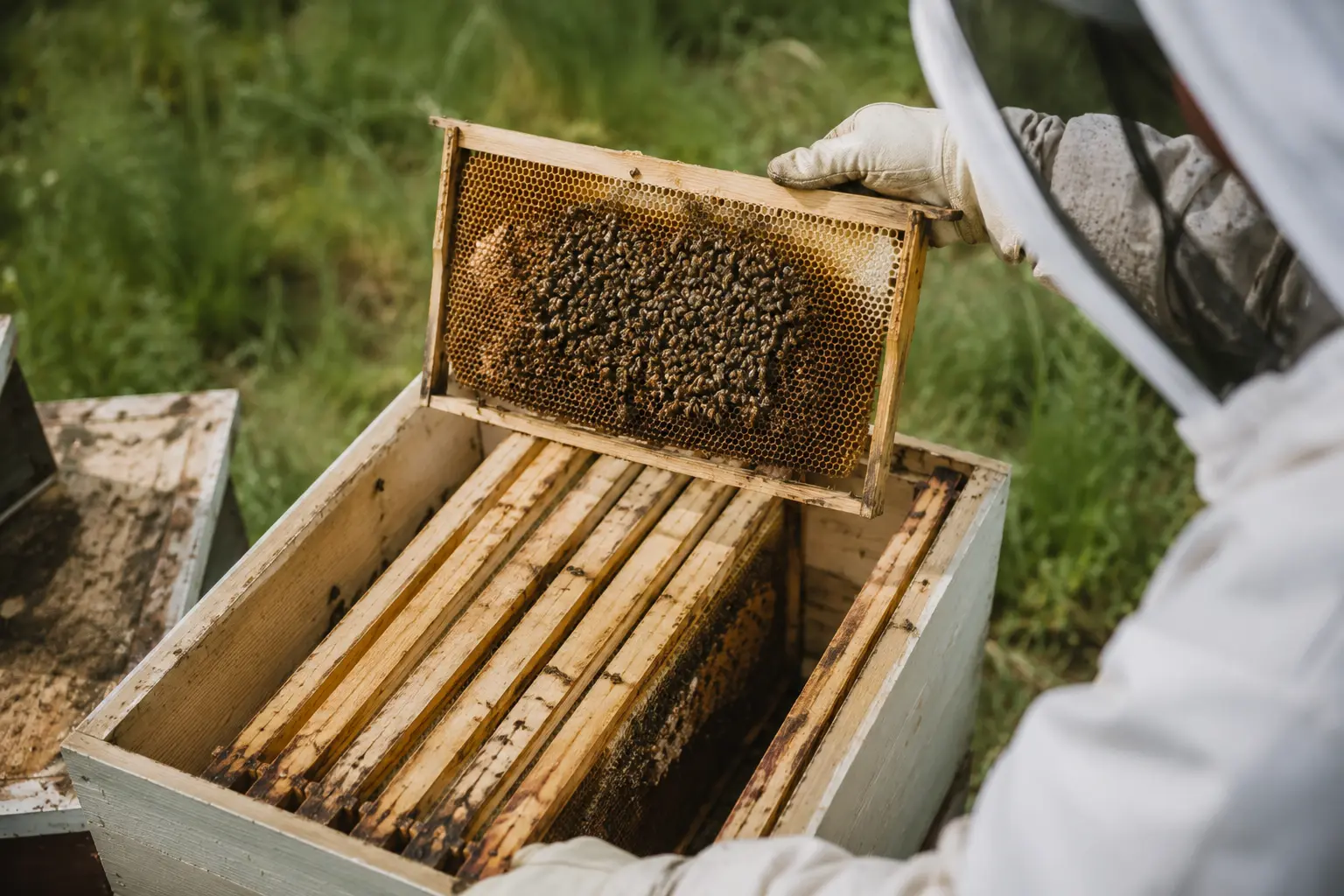
Weak colonies and recovery checks
Weak Bee Colony in the UK: Signs, Causes and What To Do
Last updated: 15 August 2026
A weak bee colony is more vulnerable to starvation, robbing, wasps, wax moth, chilled brood, poor build-up and winter loss. The key is to work out whether the colony is temporarily small, genuinely failing, or being held back by a deeper problem.
A colony can be small for a normal reason, such as a nuc, split, cast swarm or recently requeened hive. The concern is when the colony is not improving, cannot cover brood, lacks stores, has a poor brood pattern, or is being targeted by robbers and wasps.
This guide helps UK beekeepers check the most common causes of weak colonies, including queen problems, low stores, varroa pressure, disease, weather and poor colony balance.
Quick signs of a weak colony
A weak colony usually has fewer bees covering the frames than expected for the season. It may build up slowly compared with nearby colonies, show little entrance activity in good weather, or have too few bees to cover brood properly during colder spells.
The brood pattern may be patchy or reduced, stores may be low, and the colony may respond poorly to feeding. Weak colonies are also easier targets for robbing bees and wasps because they have fewer guard bees to defend the entrance.
The important question is whether the colony is improving, staying the same, or declining. A small colony that is steadily expanding is very different from one that is losing bees each inspection.
First checks to make
Start with queen status. Look for eggs, young larvae and a brood pattern that makes sense for the season. If there are no eggs or young larvae, or if the brood is mostly drone brood, the problem may be queenlessness, a failing queen, a drone-laying queen or laying workers.
Next, check stores. A weak colony with low food will struggle to expand and may not have enough energy to rear brood. Food should be close enough for the bees to reach, especially in cold weather.
Check varroa history, visible symptoms and recent treatment timing. Varroa and associated viruses can leave a colony small, crawling, slow to build or full of poor-quality bees. Also check brood health, entrance defence and whether the hive space is too large for the number of bees.
Common causes of weak colonies
Queen problems are one of the first things to rule out. A failing queen, missing queen, recently mated queen, drone-laying queen or laying workers can all leave a colony weak or slow to build. If the colony has no fresh eggs, poor brood or unusual drone brood, use the related queen guides before deciding on action.
Low stores and poor nutrition can also hold a colony back. Colonies need enough food to rear brood and maintain warmth. A colony short of stores may reduce brood rearing, become slow and vulnerable, or fail to recover after poor weather.
Varroa and viruses can weaken colonies gradually, especially later in the season. Crawling bees, deformed wings, patchy brood, poor build-up and sudden decline should all prompt a varroa check. Chilled brood can also occur when a small colony has too few bees to keep brood warm.
Robbing and wasp pressure can make a weak colony worse very quickly. If stores are disappearing, bees are fighting at the entrance, or activity looks chaotic, reduce the entrance and deal with the immediate pressure.
Weak colony or normal small colony?
Not every small colony is failing. Nucs, splits, casts and recently requeened colonies may be small for a valid reason. A newly made split may need time for a queen to mate and start laying. A small nuc may be healthy if it has a good queen, enough food and a sensible amount of space.
An improving colony has new brood, growing bee numbers, adequate stores and a pattern that is moving in the right direction. A stable colony may not be expanding quickly, but it is queenright and not under obvious pressure.
A declining colony is different. If each inspection shows fewer bees, poorer brood, low stores, pest pressure or disease signs, it needs action. Waiting too long can leave the colony too small to recover.
What to do if a colony is weak
Reduce the entrance so the colony can defend itself. This is especially important during wasp season or when nearby colonies are robbing. The smaller the colony, the more important it is that the entrance matches the number of guard bees available.
Reduce excess internal space if the hive is too large for the bees. A small colony spread across too much equipment may struggle to keep brood warm, defend comb and manage stores. Giving the colony a space it can occupy properly often helps.
Check food and feed appropriately if needed. Check queen status and brood pattern. Review varroa history and current mite pressure. Keep inspections brief in poor weather, and consider combining with another colony if the colony is too weak to recover as a separate unit.
What not to do
Do not leave a weak colony with a wide-open entrance during wasp season or a nectar dearth. Do not add too much space too early, and do not assume a small colony will fix itself without checking queen status, stores and brood health.
Do not ignore drone brood patterns, missing eggs or repeated poor brood. These signs may point to queen problems that need specific action. Do not keep feeding in a way that triggers robbing, and do not leave syrup or exposed comb around the apiary.
Do not move suspect brood frames into healthy colonies. If disease is possible, identify the issue first and seek advice where needed.
When a weak colony is unlikely to recover
A colony may be beyond recovery if it has very few bees, no viable queen, serious brood disease, heavy varroa damage, or cannot defend itself even with a reduced entrance. Late in the season, the threshold for recovery is higher because the colony has less time to build enough bees for winter.
In some cases, combining colonies is safer than leaving a weak colony to decline. A weak colony can become a target for robbers and wasps, and it may also allow pests such as wax moth to establish in unguarded comb.
If the colony dies, use Why did my hive die? and Hive post-mortem analysis to work out the likely cause.
How HiveTag can help
HiveTag records make it easier to see whether a colony is improving or declining. Log brood frames, bee coverage, queen status, stores, feeding, varroa checks and notes from each inspection so weak colonies do not slip through unnoticed.
If you reduce the entrance, add feed, combine colonies, check queen status or treat for varroa, record the action and the follow-up result. A clear timeline helps you avoid guessing at the next inspection.
Learn more about HiveTag.
Weak Bee Colony FAQ
Yes, a weak bee colony can recover if it is queenright, has enough food, is not badly diseased, and has enough bees to cover brood. The earlier the cause is identified, the better the chance of recovery.
Feed if stores are low, but do it carefully to avoid triggering robbing. Match the feed to the season, weather and colony condition.
Yes. A reduced entrance helps weak colonies defend against robbing bees and wasps, especially in late summer and autumn.
Consider combining if the colony has too few bees to recover, cannot defend itself, has no viable queen, or is heading into winter too weak.