
Varroa & colony collapse
Varroa Collapse in Bees: Signs, Symptoms and How to Prevent It
Last updated: 15 August 2026
Varroa collapse is the severe decline or loss of a honey bee colony after mite pressure and associated viruses have damaged the bees faster than the colony can replace them. It is often noticed when the colony suddenly looks smaller, quieter or strangely empty, but the underlying damage usually began weeks or months earlier.
In the UK, varroa collapse is most often linked with late summer and autumn mite build-up. This is a critical period because the colony is preparing the bees that must survive winter. If those bees are weakened by mites and viruses before winter, the colony may fail later even if food is still present.
This page explains the early warning signs, the clearer late-stage symptoms, how varroa collapse can be confused with starvation or an empty hive, and what steps reduce the risk.
Early warning signs of varroa problems
Early varroa pressure can be difficult to spot because the colony may still be flying and bringing in stores. The first clue is often a change in pattern rather than a dramatic failure. A colony that is building more slowly than nearby hives, has a patchy brood pattern, or repeatedly looks weaker at each inspection may be under pressure.
You may also notice more bees crawling near the hive, a few damaged wings, or brood that does not look as even as it should. These signs do not prove collapse on their own, but they should prompt a proper mite check and a review of your recent treatment history.
If you are comparing symptoms across several hives, the wider varroa symptoms guide is a useful next step.
Clear signs of varroa collapse
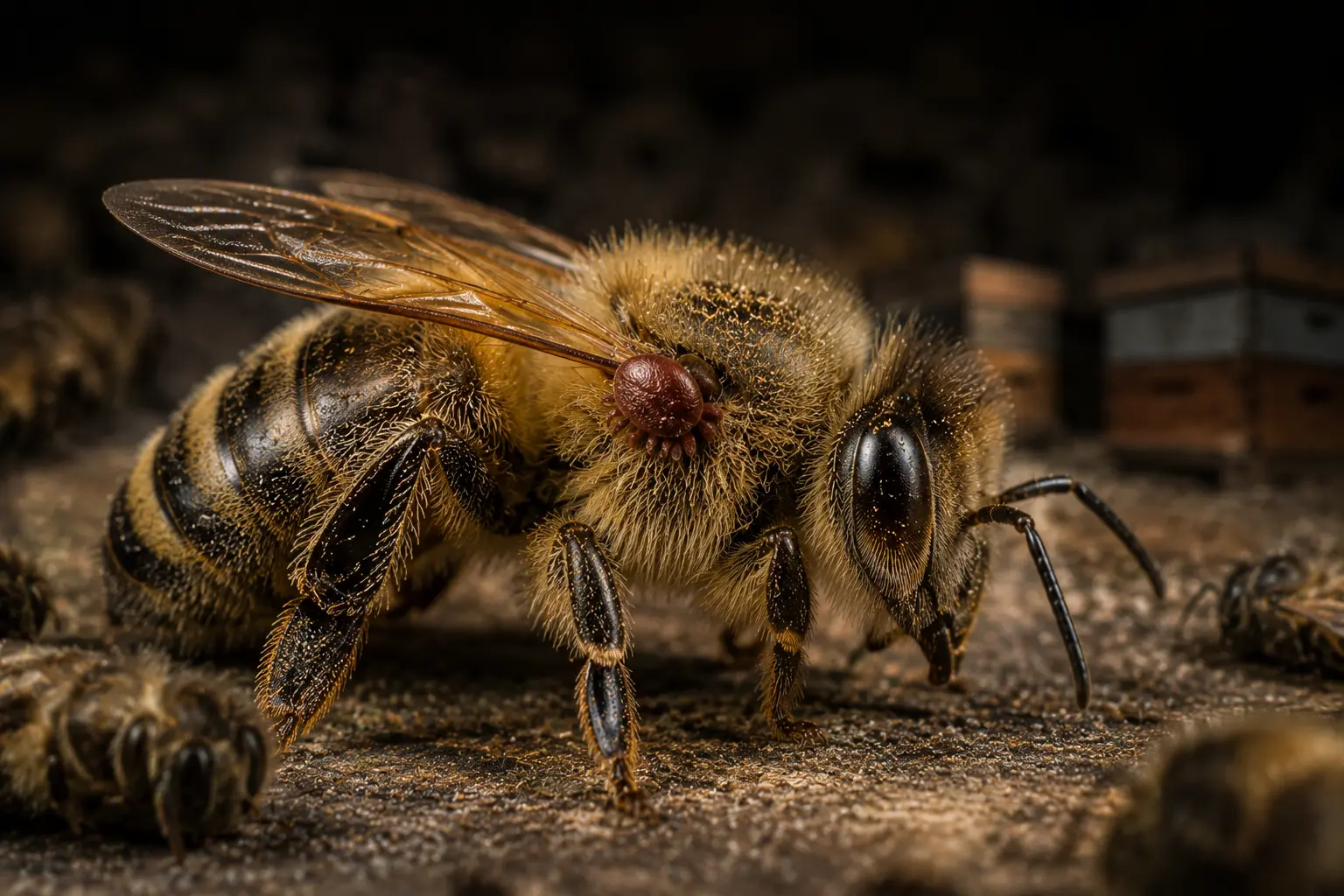
Varroa collapse becomes clearer when the colony is visibly failing. Bees with deformed, shortened or shrivelled wings are a major warning sign, especially when seen alongside crawling bees, weak young bees and a falling adult population.
The brood nest may become patchy, with fewer healthy bees emerging. The colony may still have a queen and may still have stores, but the workforce is no longer being replaced properly. If the adult population drops quickly between inspections, treat this as a serious warning sign rather than a normal seasonal reduction.
Deformed wing virus is strongly associated with varroa pressure, so compare visible wing damage with the dedicated deformed wing virus guide.
What happens during varroa collapse?
Varroa mites damage developing bees inside sealed brood cells and help spread viruses through the colony. Bees may emerge weaker, shorter-lived or visibly damaged. As more young bees are affected, the colony loses the healthy workforce it needs for brood care, foraging, defence and winter preparation.
The collapse can appear sudden because the visible adult bee population may fall quickly once enough damaged bees are emerging. In reality, the problem has usually been building through the brood cycle and is often linked to mite levels that were too high before the beekeeper noticed obvious symptoms.
Late-stage varroa collapse
Late-stage collapse can leave a hive with very few adult bees, abandoned brood and stores that have not been used. The queen may still be present, but there may not be enough healthy workers left to maintain the colony. At this point, rescue becomes much harder.
Some late-stage colonies look as though they have simply dwindled away. Others may be robbed after weakening, which can remove stores and confuse the diagnosis. This is why it is important to look at the whole picture: adult bee numbers, brood pattern, wing damage, crawling bees, mite history, treatment timing and whether neighbouring colonies are also affected.
Varroa collapse vs an empty hive
Varroa collapse can make a hive look unexpectedly empty. Weak bees may die away from the hive, drift into other colonies, or be removed by the remaining workers. By the time the hive is opened, there may be very few bees left to examine.
This can be confused with absconding, robbing, starvation or unexplained colony loss. Starvation often leaves a tight dead cluster and bees head-first in cells. Robbing often leaves torn cappings, wax debris and stripped stores. Varroa collapse is more likely when there were earlier signs such as crawling bees, deformed wings, poor brood, high mite counts or missed treatment.
For a deeper comparison, read empty hive / no bees and varroa collapse vs starvation.
When varroa collapse is most likely
Varroa collapse is commonly noticed in late summer, autumn and winter. Late summer is especially important because this is when colonies are raising the bees that need to survive into winter. If mite levels are high at this point, the winter bee population can be damaged before the colony has entered winter.
Winter losses linked to varroa may not be discovered until much later. A beekeeper may open the hive in winter or early spring and find a small dead cluster, very few bees or an apparently empty hive, even though the main damage happened months earlier.
Use the varroa treatment calendar and late summer varroa guide to plan checks before the colony reaches this stage.
How to prevent varroa collapse
Preventing varroa collapse depends on monitoring, timing and records. Guessing is risky because a colony can look busy while mite levels are already high. Regular mite checks help you understand whether treatment is needed and whether treatment has worked.
Treatments must be chosen and used correctly for the season, colony condition and product instructions. It is also important to keep records of dates, products, mite counts and colony response. Without records, it is easy to forget when treatment was applied or whether a colony was already showing signs of decline.
Good prevention also means keeping colonies strong, avoiding unnecessary stress, maintaining good hygiene and checking brood quality during inspections.
What to do if you suspect varroa collapse
If varroa collapse is suspected, check current mite levels where possible and review the colony’s recent history. Look at whether treatments were applied, whether they were applied at the right time, whether brood was present during treatment, and whether there were signs of deformed wing virus or crawling bees before the colony declined.
If the colony still has enough healthy bees, an appropriate treatment may help, provided it is suitable for the time of year and follows product guidance. If the colony is already very weak, it may not recover even after mite control. In that situation, the priority is to protect other colonies in the apiary and avoid spreading disease or pests through equipment movement.
Check neighbouring colonies as well. Varroa problems are rarely limited to one hive if monitoring and treatment have been missed across the apiary.
How HiveTag can help
HiveTag can help you record mite monitoring, treatment dates, products used, brood condition, colony strength and visible symptoms such as crawling bees or deformed wings. This makes it easier to see whether a colony is declining gradually rather than relying on memory between inspections.
Learn more about HiveTag.
Varroa Collapse FAQ
The clearest signs are deformed wings, crawling bees, patchy brood, a rapid fall in adult bee numbers, weak young bees and a colony that becomes smaller between inspections.
Varroa collapse is most often seen in late summer, autumn or winter, especially when mites have damaged the bees that should form the winter population.
A colony may recover if the problem is caught early and enough healthy bees remain, but late-stage varroa collapse is difficult to reverse.
Yes. In late-stage collapse the colony can dwindle rapidly, leaving very few bees, abandoned brood, remaining stores or a hive that appears unexpectedly empty.