
Bee diseases and varroa-linked viruses
Deformed Wing Virus (DWV) in Honey Bees
Last updated: 15 August 2026
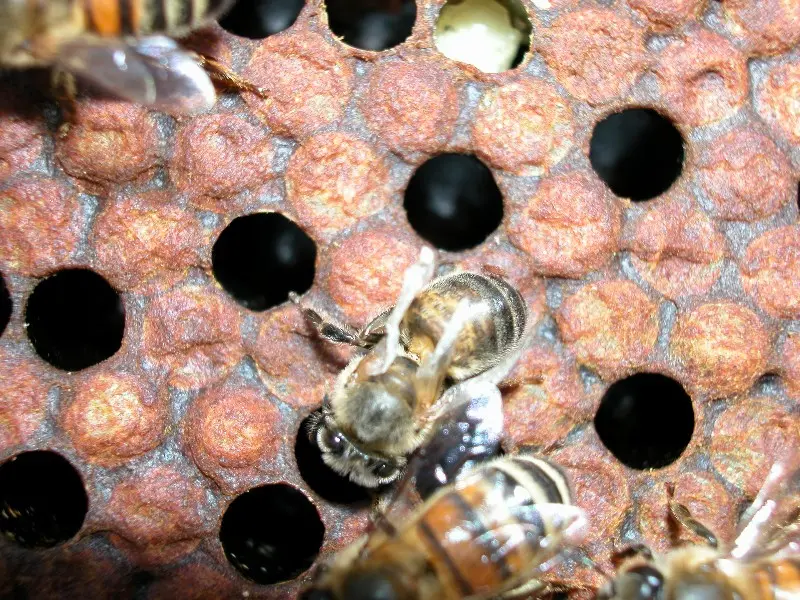
Deformed Wing Virus, usually shortened to DWV, is one of the most visible viral problems linked with varroa mite pressure in honey bee colonies. The virus may be present at low levels without obvious symptoms, but it becomes far more damaging when varroa mites spread it through developing and adult bees.
Bees affected by DWV may emerge with shrivelled, twisted or shortened wings and may be unable to fly. You may see them crawling outside the entrance, trembling, failing to launch or being removed by other workers.
A single bee with damaged wings does not always mean the colony is collapsing, but repeated sightings are a strong warning sign. When DWV is visible, the colony’s varroa history, recent treatment timing and overall strength need to be checked carefully.
Key signs of deformed wing virus
The most obvious sign of DWV is a bee with wings that look shrivelled, twisted, shortened or crumpled. Affected bees often cannot fly properly and may crawl near the hive entrance or across the ground instead of taking off.
You may also notice bees with shortened or abnormal-looking abdomens, trembling movement, poor coordination or workers removing weak bees from the hive. The colony may begin to look less vigorous if a noticeable number of young workers are emerging damaged.
DWV symptoms are most concerning when they are regular rather than occasional. If you keep seeing affected bees, especially in late summer or early autumn, treat it as a varroa warning sign and review mite levels and treatment history.
The link between DWV and varroa
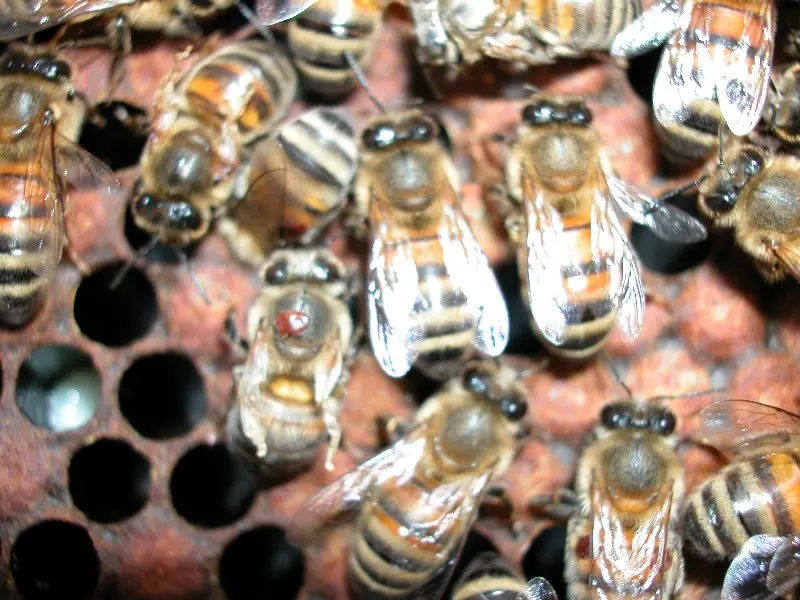
DWV is strongly linked with varroa because mites spread the virus very effectively. Varroa mites reproduce inside brood cells and feed on developing bees. When this happens, young bees can be exposed to high virus levels before they emerge.
The visible deformed wings are only part of the problem. High virus pressure can also shorten worker lifespan, reduce colony strength and weaken the bees needed for late-season work and winter survival.
This is why visible DWV is usually treated as a varroa management warning. The virus is the symptom you can see, but mite pressure is often the bigger issue behind it.
How serious is DWV?
DWV can be very serious because it affects the working population of the colony. Bees with badly deformed wings cannot forage properly, cannot contribute normally to the colony and are unlikely to live a full worker lifespan.
The timing makes a big difference. If DWV appears when the colony is raising winter bees, it can be especially damaging. The colony may go into winter with too few healthy long-lived bees, increasing the risk of late autumn or winter loss.
Mild or isolated cases may be manageable if varroa is brought under control early. Widespread signs, repeated crawling bees and a weakening colony suggest a much more serious situation.
When is DWV most common?
Visible DWV is often most noticeable in late summer and early autumn, after varroa numbers have had time to build through the season. This is also the period when colonies are preparing the long-lived bees needed for winter survival.
It is more likely to appear in colonies where varroa monitoring has been missed, treatment has been delayed, treatment has not worked properly, or reinvasion has occurred from nearby collapsing colonies.
DWV can also become more obvious when a colony is already under pressure from robbing, poor nutrition, queen problems or general weakness. For that reason, it should be assessed as part of the whole colony picture rather than as a wing problem alone.
What to do if you see DWV
If you see bees with deformed wings, start by checking varroa levels using your usual monitoring method. Then review recent treatment dates, whether the treatment was suitable for the season, and whether it was completed correctly.
If mite levels require action, use an appropriate authorised varroa treatment and follow the product instructions carefully. It is also important to monitor colony strength, brood pattern and the number of affected bees over the following inspections.
Reduce avoidable stress while the colony recovers. Make sure food is adequate, avoid unnecessary disturbance, watch for robbing and use the varroa management guide alongside this page, especially if DWV appears near the end of the beekeeping season.
Can a colony recover from DWV?
A colony can recover if action is taken early and varroa levels are brought under control before too much damage has been done. New healthy bees can replace affected workers if the queen is laying well and the colony still has enough strength.
Recovery is much less likely if the colony is already heavily weakened, has a failing brood pattern, or is raising poor-quality winter bees late in the season. In those cases DWV may be part of a wider varroa collapse pattern.
DWV vs other causes of crawling bees
Crawling bees are not always caused by DWV. Bees may crawl because of poisoning, starvation, chilling, old age, Nosema, pesticide exposure, queen or colony weakness, or other stress. The wing shape, timing, number of affected bees and condition of the colony all matter.
If bees are crawling with visibly shrivelled or twisted wings, DWV and varroa pressure should be high on your list. If there are sudden piles of dead or twitching bees, poisoning may need to be considered. If the colony is light, weak or short of food, starvation and general stress may be involved.
How HiveTag can help
Deformed wing virus is easier to manage when you can see the history behind it. Recording varroa checks, treatments, colony strength and unusual bee behaviour helps you spot whether a problem is building before visible symptoms become widespread.
HiveTag can be used to record inspections, treatment dates, mite counts, weak colony notes and seasonal reminders so that DWV signs are not viewed in isolation.
Deformed Wing Virus FAQ
Varroa does not create DWV, but it spreads the virus very effectively and can make infections far more severe.
Individual bees with badly deformed wings usually do not survive long, but the colony may recover if varroa levels are reduced early enough.
Not usually. The priority is to assess varroa pressure, treat appropriately if needed, and judge whether the colony still has enough strength to recover.
Yes. It can spread through drifting bees, robbing and varroa movement between colonies, which is why apiary-wide varroa control matters.
Image credits
Disease reference images on this page are courtesy of The Animal and Plant Health Agency (APHA), Crown Copyright.