
Brood virus guide
Sacbrood in Honey Bees
Last updated: 15 August 2026
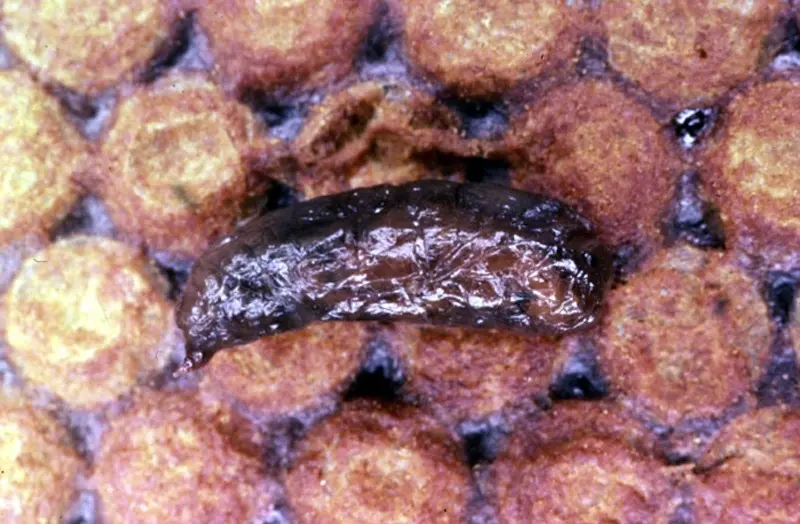
Sacbrood is a viral brood disease affecting developing honey bee larvae. It often appears in spring or early summer and is commonly linked with colony stress, unsettled weather, weak colonies or temporary nutritional pressure.
Affected larvae fail to pupate normally. Instead, the larval skin remains intact and can form a fluid-filled sac. As the larva dries, it may darken and form a curved, gondola-shaped scale in the cell.
Sacbrood is not normally a notifiable disease in the UK, but it can be confused with more serious brood problems. This guide explains what sacbrood looks like, how it differs from foulbrood and what UK beekeepers can do to support colony recovery.
Key signs of sacbrood
Sacbrood usually shows as abnormal larvae in open brood cells. The larva may look stretched out, slightly raised at the head end, or darker than the healthy pearly-white larvae around it. One of the most recognisable signs is the fluid-filled, bag-like appearance that gives the disease its name.
As the affected larva breaks down, the outer skin can remain intact for a while, forming a sac that may be lifted carefully from the cell. Later, the larva may dry into a dark, curved or gondola-shaped scale. The brood pattern can also look patchy if a noticeable number of larvae have been affected.
These signs can overlap with other brood problems, so sacbrood should be judged by the overall pattern rather than one single larva. If you see suspicious melted brood, ropiness, sunken cappings or a strong foul smell, compare the signs with the foulbrood pages and seek advice.
What does sacbrood look like?
Healthy young larvae are normally pearly white, well-fed and curled neatly in the bottom of the cell. With sacbrood, the larva fails to develop normally and often remains stretched out along the cell instead of pupating properly.
The body may become yellowish, grey or brown, while the skin can stay intact around the fluid inside. This gives the larva a watery, sac-like appearance. In some cases the head end of the larva appears slightly lifted, which can make the larva look pointed or canoe-shaped.
As it dries, the larva may turn darker and form a scale. These scales are usually easier for bees to remove than foulbrood scales, which is one reason sacbrood is usually considered less serious than American foulbrood.
What causes sacbrood?
Sacbrood is caused by a virus that affects honey bee larvae. The virus can be present in colonies without causing a major visible problem, but symptoms are more likely to appear when the colony is under stress.
In the UK, sacbrood is often noticed in spring or early summer when colonies are building up but the weather is still unsettled. Cold spells, poor forage, weak colonies, nutritional stress or disruption in the brood nest can all make symptoms more obvious.
Sacbrood can also appear where colony hygiene is poor or where the bees are struggling to remove affected larvae quickly. Strong colonies with good house-cleaning behaviour often clear diseased larvae before the problem becomes severe.
Is sacbrood serious?
Sacbrood is usually less serious than American foulbrood or European foulbrood, and it is not normally a notifiable disease in the UK. Many colonies recover naturally once weather, forage and colony strength improve.
However, it should not be ignored if it becomes widespread or keeps returning. A heavy sacbrood problem can slow colony build-up, reduce the amount of healthy emerging brood and leave the colony weaker than expected at an important point in the season.
If the colony is otherwise strong and the symptoms are mild, monitoring may be enough. If the colony is weak, poorly fed or repeatedly affected, it is worth looking more closely at nutrition, queen quality, comb condition and wider colony stress.
What to do if you see sacbrood
Start by checking the overall strength of the colony. A strong colony with plenty of bees, food and good brood coverage may clear sacbrood naturally as conditions improve.
Make sure the colony has enough food and access to forage, especially during poor spring weather. If the colony is short of stores, support it appropriately and avoid unnecessary disturbance while it recovers.
Old or heavily affected comb can be replaced gradually as part of normal brood comb management. If sacbrood keeps returning in the same colony despite good conditions, requeening may be worth considering because some colonies are better than others at removing affected larvae.
What not to do
Do not panic if you see a small amount of sacbrood. Many colonies show mild symptoms for a short period and recover without major intervention once the colony strengthens.
Do not assume every dead or discoloured larva is sacbrood. Brood disease signs can overlap, and suspicious symptoms such as ropiness, sunken perforated cappings, melted sealed brood or a strong unpleasant smell should be taken seriously.
Do not keep ignoring the same problem if it appears repeatedly. Persistent sacbrood may be telling you that the colony is under stress, the comb needs replacing, the queen line is not ideal, or wider management conditions need improving.
Similar problems
Sacbrood FAQ
Yes, it is a viral disease and can spread within and between colonies, but it usually appears when colonies are under stress.
No. Sacbrood is not a notifiable disease in the UK.
Often yes. Strong colonies can recover naturally once conditions improve.
Sacbrood larvae usually remain more intact and sac-like, while foulbrood involves different breakdown patterns, odour, capping changes or ropiness. If unsure, always seek advice.
Image credits
Disease reference images on this page are courtesy of The Animal and Plant Health Agency (APHA), Crown Copyright.