
Post-mortem and colony loss
Hive Post-Mortem: How to Analyse a Dead Colony
Last updated: 15 August 2026
Finding a dead colony is one of the hardest parts of beekeeping, but a careful hive post-mortem can turn the loss into useful information. The aim is not to blame yourself or guess from one sign, but to look at the whole hive: where the bees died, whether stores were present, what the brood looked like, whether varroa or disease signs were present, and what happened in the weeks before the colony died.
A dead hive rarely gives a perfect answer, especially if time has passed or the hive has already been disturbed. However, the original position of the bees, the state of the food stores, the brood pattern and the debris around the entrance can often point towards the most likely cause. Starvation, isolation starvation, varroa collapse, queen failure, robbing, wasp pressure, disease, poisoning and weather-related stress can all leave different clues.
This guide walks through the checks in a practical order so you can record evidence before it is disturbed and reduce the risk of the same issue affecting other colonies.
Before you start the hive post-mortem
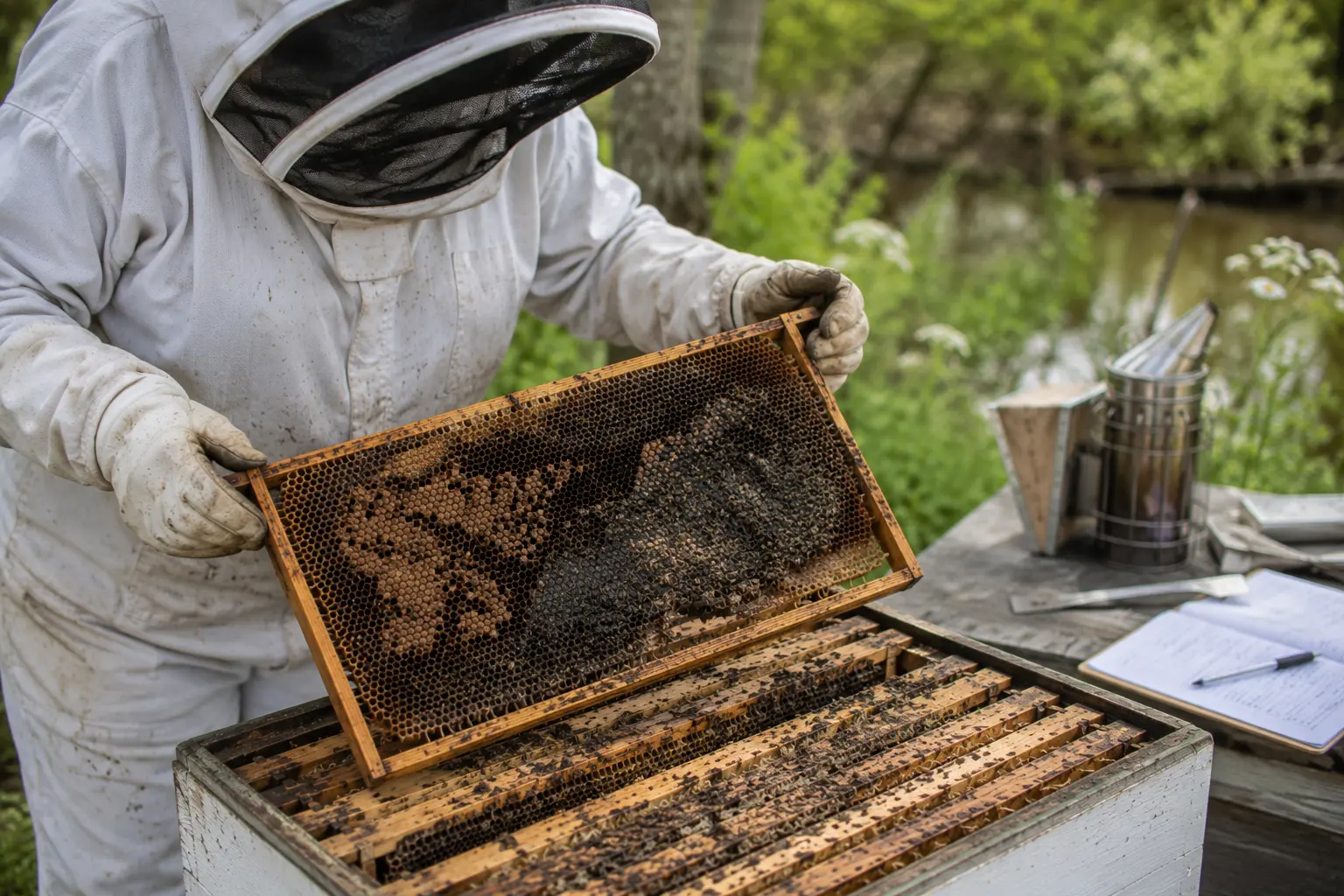
Before moving frames, take photographs of the hive entrance, floor, crown board, brood box and the first view inside the colony. These early photos are valuable because they show the original layout before the evidence is disturbed. If there are dead bees outside the entrance, photograph their position as well as the landing board and surrounding ground.
Work slowly and methodically. Keep frames in order as far as possible and avoid shaking dead bees off the comb until you have checked where they were clustered. Wear gloves and clean tools between colonies, especially if disease is a possibility. If the colony died some time ago, be alert for mould, wax moth, robbing damage and secondary changes that may have happened after the original death.
A useful post-mortem record should include the date, apiary, hive name, weather, last inspection date, last feeding date, recent varroa treatment, colony strength before winter, and anything unusual nearby such as spraying, flooding, storm damage or disturbance.
Step 1: Check the position of the bees
The position of the bees is one of the most useful clues. A tight cluster of dead bees on one or two frames can suggest that the colony was alive until late in the process and may have died from starvation, isolation starvation, cold stress or a failure to move onto available food. If the bees are head-first in cells around the cluster, starvation becomes more likely.
If there are very few bees left in the hive, the colony may have dwindled before death. This can happen with varroa-related collapse, queen failure, disease, drifting, robbing or absconding. A hive that still contains stores but has almost no adult bees often points away from simple starvation and towards a problem that reduced the adult bee population.
Large numbers of dead bees outside the hive can suggest robbing, poisoning, severe disturbance or bees being removed from inside the colony. The entrance and surrounding ground should be checked carefully before the area is cleared.
Step 2: Check the stores and signs of starvation
Food stores are central to any post-mortem. Look for capped honey, uncapped stores, syrup, fondant, empty comb and whether food was within reach of the dead cluster. A colony can starve even when food is present elsewhere in the hive if cold weather prevents the cluster moving across the frames. This is often described as isolation starvation.
No stores, light boxes and bees head-first in cells point towards starvation. Stores present but separated from the dead cluster may suggest isolation starvation. Ragged, stripped comb can suggest robbing or wasp activity after the colony weakened or died. If the hive still contains good stores and only a small number of bees, varroa collapse, queen failure or another weakening factor may be more likely.
If starvation is suspected, compare the finding with your autumn feeding, winter hefting and late-winter checks. A hive can go into winter looking reasonable but still run short if the colony is large, the winter is long, or stores are poorly positioned.
Read more: Starvation in bees and isolation starvation in bees.
Step 3: Check brood, cappings and queen clues
If brood is present, check whether the pattern is compact, patchy, chilled, diseased or abandoned. A small patch of brood with dead bees clustered nearby can suggest the colony was trying to keep brood warm but ran out of bees, food or warmth. Dead brood after a cold spell may point towards chilled brood, especially in a weak colony.
Patchy brood can have many causes, including queen problems, disease, varroa stress, chilled brood or a colony already in decline. Sunken, perforated or greasy cappings should be treated seriously, particularly if larvae look abnormal. Mummified white or grey larvae suggest chalkbrood, while ropy brown larval remains or hard scales may indicate foulbrood and should not be ignored.
Queen clues also matter. Drone-only brood, scattered eggs, no worker brood, emergency queen cells or a long brood break can suggest queen failure, a drone-laying queen or laying workers. These problems can weaken a colony before winter and make starvation or collapse more likely later.
Related guides: brood problems, American foulbrood, chalkbrood and chilled brood.
Step 4: Check for varroa and virus pressure
Varroa-related collapse is one of the most important causes to consider when a colony dwindles, especially in late summer, autumn and winter. Look for a small remaining cluster, very few adult bees, patchy brood, dead brood, deformed wings, crawling bees reported before death, or evidence that the colony weakened gradually rather than suddenly.
Check the floor debris, brood cells and any remaining bees for mites. The absence of obvious mites does not rule varroa out, especially if the colony died weeks earlier or was robbed out afterwards. Your treatment history is just as important as what you can see during the post-mortem. A late, missed or ineffective treatment can leave winter bees damaged before winter has even begun.
Varroa collapse can be confused with starvation because the final cluster may be small and dead. The difference is often in the wider history: starvation is usually linked with lack of accessible stores, while varroa collapse is often linked with a dwindling population, virus signs, poor late-season strength and mite pressure.
Read more: varroa symptoms, varroa collapse signs and deformed wing virus.
Step 5: Check the entrance and surroundings
The hive entrance can show what happened before or after the colony died. Dead bees on the landing board or ground may suggest a sudden event, fighting, robbing, poisoning or a large clean-out of dead bees. Wax crumbs, torn cappings and stripped comb can point towards robbing or wasp activity, especially if the colony was already weak.
Look for mouse damage, chewed comb, blocked entrances, water ingress, storm damage, woodpecker damage and signs that the hive was exposed to damp or poor ventilation. A colony may survive low temperatures if it is strong and well-fed, but damp, poor ventilation, small clusters and inadequate stores can combine badly.
If there are many dead or crawling bees outside the hive after a sudden event, compare the signs with dead bees outside the hive, bees crawling on the ground and suspected pesticide poisoning.
Step 6: Review recent events and management history
A hive post-mortem is much stronger when it is matched with recent records. Think back to the last inspection, the last confirmed queen or eggs, the amount of brood, the colony strength, the amount of food, and whether the colony had been declining. A colony that looked weak in autumn and died in winter tells a different story from a strong colony that died suddenly after a specific incident.
Review recent feeding, treatments, weather, queen events, robbing pressure and local conditions. Late feeding, insufficient winter stores, delayed varroa treatment, a failing queen, poor autumn bee numbers or a severe cold snap can all contribute. Sometimes the immediate cause of death is starvation, but the underlying reason was that the colony went into winter too small or too damaged by varroa.
If poisoning or chemical exposure is suspected, record the timing, nearby land use, visible symptoms, photographs and whether other colonies in the apiary were affected. Avoid assumptions, but keep the evidence.
Common post-mortem outcomes
The most common conclusion is not always a single neat answer. A colony may die from starvation because it was too small to move to stores, and it may have been too small because varroa damaged the winter bees. Another colony may be robbed out after it has already died, making the stores look different from how they were at the point of collapse.
Starvation is more likely where there are no stores, very light boxes, bees head-first in cells and a dead cluster close to empty comb. Isolation starvation is more likely where stores are present but separated from the cluster. Varroa collapse is more likely where the colony dwindled, had virus signs or entered winter with poor late-season strength. Queen failure is more likely where the colony had poor brood, drone brood, no eggs, laying worker signs or long-term decline.
Disease should be considered where brood signs are abnormal. Poisoning should be considered where large numbers of bees die suddenly, especially if several colonies are affected at the same time. Robbing or wasp attack may be involved where comb is stripped, cappings are torn and there are signs of fighting around the entrance.
What to do next after a colony loss
Once you have recorded the evidence, decide whether the equipment can be safely cleaned and reused. If serious disease is suspected, do not reuse frames, comb, boxes or tools until you have taken proper advice. Foulbrood concerns should always be treated cautiously because contaminated equipment can spread disease to other colonies.
If the likely cause was starvation, review autumn feeding, winter hefting and emergency fondant checks. If varroa was likely, review monitoring, treatment timing and whether the colony had enough healthy winter bees. If queen failure or weakness contributed, consider whether the colony should have been united, requeened or reduced before winter.
Clean equipment appropriately, store drawn comb securely from wax moth and robbing bees, and update your records while the details are still fresh. The most useful outcome of a post-mortem is a clear change to next season’s management.
How HiveTag can help with post-mortem records
HiveTag can help you build a clearer picture by keeping inspection notes, feeding records, treatment history, queen status, colony strength and photos in one place. When a colony dies, those earlier notes can help you see whether the loss was sudden or part of a gradual decline.
After a post-mortem, record the likely cause, what evidence you found, which frames or stores were present, whether disease was suspected, and what action you took with the equipment. This makes future decisions easier and helps you spot repeated patterns across apiaries or seasons.
You can also use the Bee Health Checker to compare the signs you found with common colony loss causes.
Colony Post-Mortem FAQ
No. Sometimes several factors contribute to colony loss. A post-mortem can usually identify the most likely cause, but starvation, varroa, queen failure, disease and weather may overlap.
Only reuse frames if you are confident there is no serious disease present. If foulbrood or another serious disease is suspected, do not reuse equipment until you have taken advice.
Contact a bee inspector if you see suspicious brood, sunken or perforated cappings, ropy larvae, unusual smells, possible poisoning, or anything that does not fit a straightforward winter loss.
Starvation and varroa-related collapse are two of the most common causes to consider, but the evidence inside the hive should be checked before deciding.