Winter cluster loss
Isolation Starvation in Bees (UK) – Why Bees Die With Honey Nearby
Last updated: 15 August 2026
Isolation starvation is one of the most frustrating and confusing causes of colony loss for UK beekeepers. It happens when bees die from starvation even though there is still honey in the hive. The problem is not always a lack of food, but that the winter cluster cannot reach it.
This type of loss is most common during prolonged cold weather, particularly in late winter when colonies may already be weakened. It is often discovered during a hive post-mortem or when investigating winter colony loss.
The important clue is the relationship between the dead cluster and the remaining food. If food exists but is not accessible to the cluster, isolation starvation becomes a strong possibility.
What is isolation starvation?
Honey bees survive winter by forming a tight cluster and generating heat. As they use stores, the cluster slowly moves across the combs to reach more food. During cold conditions, the cluster may not be able to break formation or move far enough to reach honey on another frame.
If the cluster becomes isolated from available stores, the bees can starve in place even with full frames of honey nearby. The food is present, but it is not accessible at the point when the bees need it.
Key signs of isolation starvation
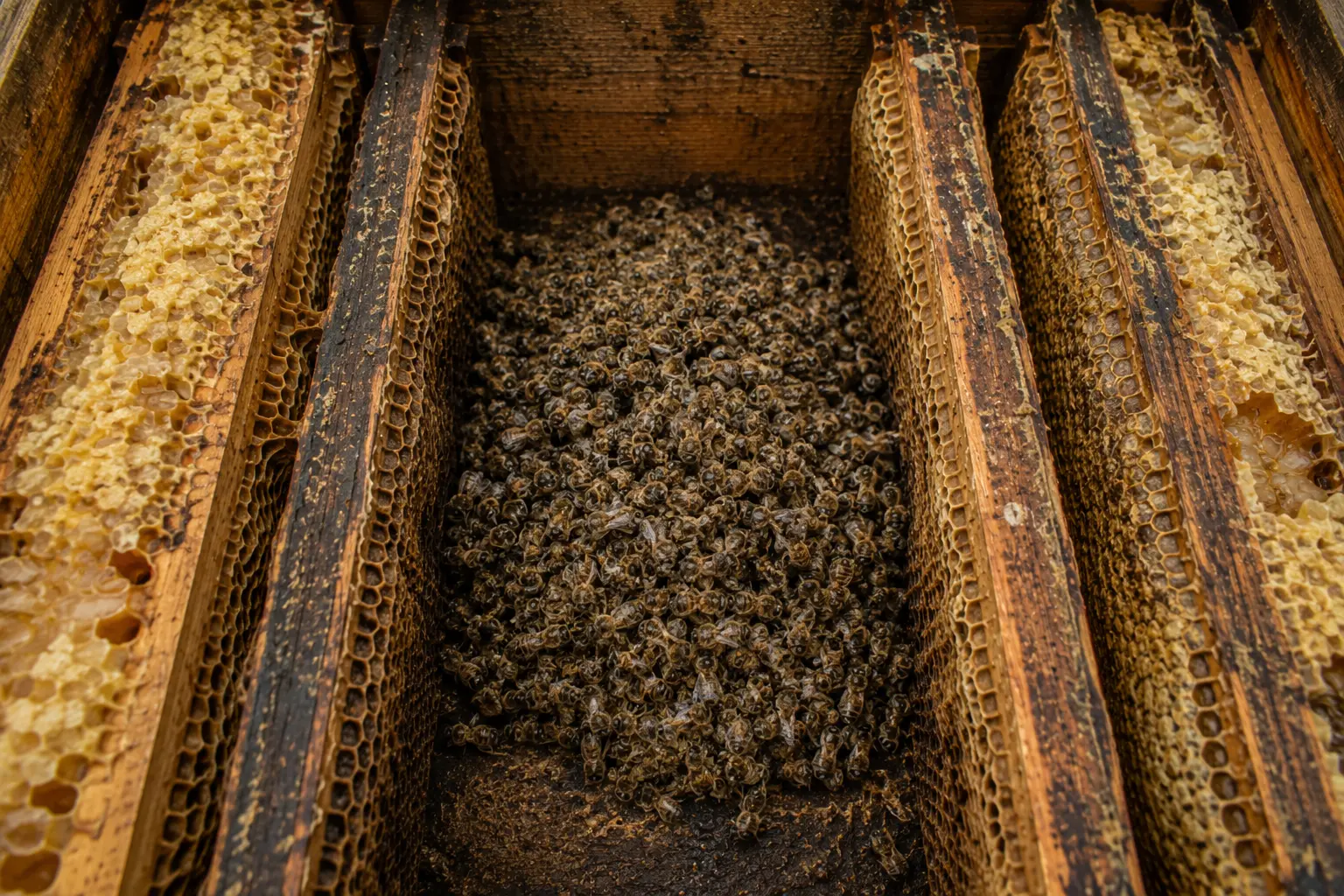
The classic sign is a tight dead cluster of bees in one area of the hive. Bees may be found head-first in cells, with honey or sealed stores still present elsewhere.
The cluster is often positioned away from the main food stores, or below stores it could not reach. The colony may also have been small or weakened going into winter, reducing its ability to generate heat and move onto fresh food.
These signs are often seen when investigating why a hive has died, particularly in late winter or early spring.
Why isolation starvation happens
Cold weather is the main trigger because bees cannot move freely through the hive when they are tightly clustered. Food position also matters. Stores above or next to the cluster are more useful than stores separated by empty comb or positioned too far away.
Small colonies are more vulnerable because they generate less heat and have less flexibility to move. Late-season stress, varroa, disease, poor nutrition or a weak winter bee population can all make the cluster less resilient.
In many cases, the final visible sign is starvation, but the underlying problem began earlier in the season.
How to confirm isolation starvation
Start by looking at where the bees died and where the food is. If the bees are in a tight cluster, many are head-first in cells, and honey is still present elsewhere but not immediately accessible, isolation starvation is likely.
Compare this with your inspection history. Was the colony small? Were stores unevenly placed? Was there prolonged cold weather? Were varroa levels or late-season stress a problem?
Use the hive post-mortem analysis guide before deciding the final cause.
Isolation starvation vs full starvation
Full starvation usually means little or no food remains in the hive. The colony has used its stores and has nothing left to eat.
Isolation starvation is different. Food is still present, but the cluster cannot reach it. This is why beekeepers sometimes find a dead colony beside or below frames that still contain honey.
If no food is present at all, read starvation in bees. If food remains but the cluster died away from it, isolation starvation is more likely.
Varroa, weak colonies and isolation starvation
Colonies affected by varroa pressure are particularly vulnerable because weakened winter bees struggle to maintain cluster temperature and movement.
A colony weakened by varroa may enter winter too small or with too few healthy long-lived winter bees. Even if food is present, the cluster may not be strong enough to move properly or generate enough heat.
This is why isolation starvation and varroa can overlap. The final sign may be a dead cluster with food nearby, but the root cause may include poor late-season varroa control.
How to prevent isolation starvation
Prevention starts before winter. Colonies need adequate stores, a strong winter bee population and effective varroa control before cold weather arrives.
Food should be accessible to the cluster. Stores directly above or close to the bees are more useful than food separated by empty comb. Reducing excessive empty space can also help the colony maintain warmth and contact with food.
Good preparation during late summer and autumn, as outlined in the Year in the Apiary, makes a significant difference.
When to intervene
During winter, avoid unnecessary disturbance, but there are times when action is needed. Regular hefting can help you identify colonies that are becoming light before they reach crisis point.
If stores are low or the colony is at risk, fondant placed directly above the cluster is often the safer emergency option in cold weather. Late winter is a particularly risky period because colonies may start raising brood and use stores more quickly.
Early intervention can prevent losses that would otherwise only be discovered months later.
What to do after finding isolation starvation
Take photos before clearing the hive. Record where the dead cluster was, where the remaining stores were, how much food remained and whether the colony was small.
Review your late-season feeding, hive weight checks, varroa treatment timing and colony strength going into winter. This helps separate a simple food-positioning issue from a deeper problem such as varroa-weakened winter bees.
If there are any suspicious disease signs, do not reuse equipment until you have checked further or sought advice.
Isolation Starvation FAQ
Yes. This is called isolation starvation. Bees may die even with honey nearby if the winter cluster cannot move to reach the food during cold weather.
Common signs include a tight dead cluster, bees head-first in cells, honey still present elsewhere in the hive and the cluster positioned away from accessible stores.
Prevent it by ensuring good winter stores, keeping food close to or above the cluster, managing varroa before winter, maintaining strong colonies and adding fondant above the cluster when needed.
No. Normal starvation usually means there is little or no food left in the hive. Isolation starvation means food is present but the bees cannot reach it.