
Colony loss diagnosis
Empty Hive With No Bees (UK) – Why Bees Disappear From the Hive
Last updated: 15 August 2026
Opening a hive and finding it empty or nearly empty is one of the most confusing situations in beekeeping. Unlike a dead cluster of bees, there may be very few bodies left inside the hive, which makes the cause harder to identify.
An empty hive does not automatically mean the bees absconded. It can also follow varroa collapse, robbing, queen failure, gradual dwindling, sudden colony loss or a combination of stress factors.
This guide helps UK beekeepers work through the most common causes and links to deeper diagnosis tools such as the hive post-mortem guide and colony health triage tool.
What does an empty hive look like?
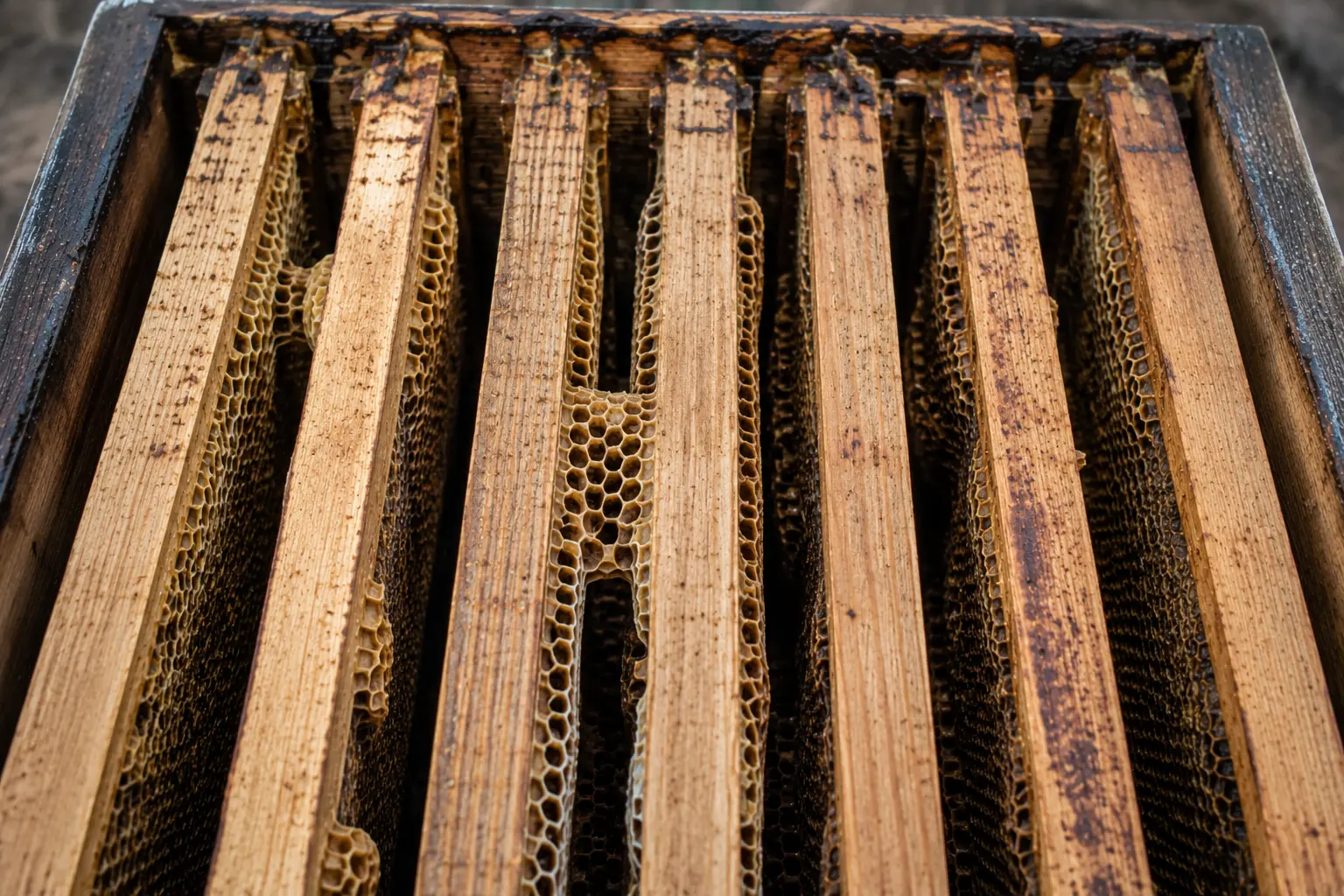
An empty hive usually has few or no bees present. There may be no obvious dead bee pile, and the comb may initially look fairly intact. Food stores may still be present, or they may have been stripped out by robbing bees or wasps after the colony weakened.
The brood area may be empty, abandoned, chilled, robbed out or damaged by pests after the colony has gone. Check carefully before assuming the hive was simply “deserted”.
This is different from isolation starvation, where a dead cluster is usually visible with food nearby but not reached.
Main causes of an empty hive
The main causes include absconding, varroa collapse, robbing after weakening, queen failure, sudden colony loss and gradual dwindling. The cause is often not obvious from one clue alone.
Timing matters. A hive found empty in late summer after a period of weakening may point more strongly towards varroa or robbing. A hive found empty after repeated queen problems may point towards queen failure and dwindling.
Absconding
Absconding is when the colony leaves the hive as a group. It is more common when the hive environment becomes unsuitable, such as severe disturbance, overheating, repeated pest pressure, poor ventilation or unsuitable conditions for a newly housed swarm.
In a true absconding event, you may find stores or comb left behind with very few dead bees. However, absconding should not be assumed without checking for other causes.
Varroa collapse
Heavy varroa pressure can weaken bees to the point where the colony collapses. Workers may die away from the hive, drift, fail to return or gradually disappear as the colony population crashes.
Varroa collapse is especially likely where there were high mite counts, missed treatment, late treatment, deformed wings, crawling bees, patchy brood or a colony that weakened through late summer and autumn.
Compare the evidence with varroa collapse signs and varroa collapse vs starvation.
Robbing after a colony weakens
Robbing often happens after a colony has already become weak. Stronger colonies or wasps may strip out stores, leaving the hive looking empty and cleaned out.
Clues include wax debris, torn cappings, ragged comb edges, fighting at the entrance before the loss, and stores disappearing quickly. Robbing can hide the original cause because it changes the evidence after the colony has failed.
Read more in robbing behaviour in bees.
Queen failure and gradual dwindling
If a colony loses its queen, fails to replace her, or has a failing queen, the worker population can gradually decline until very few bees remain. This can leave the hive looking empty without a dramatic dead bee pile.
Clues include no eggs, no young larvae, poor brood pattern in earlier inspections, repeated queen issues, laying workers or a colony that slowly became smaller over several weeks.
Compare with queen failing signs, queenless colony: what to do and laying workers.
Clues to help identify the cause
Stores still present may suggest absconding, varroa collapse, queen failure or sudden colony loss rather than straightforward starvation. Stores stripped out with wax debris may suggest robbing after the colony weakened.
Scattered dead bees outside the hive may point towards poisoning, varroa, robbing or weather stress. No brood and no queen signs may point towards gradual colony failure.
Look at the full pattern: what was present, what was missing, what the colony looked like at the last inspection, and what season the loss occurred in.
Seasonal patterns in the UK
In spring and summer, an apparently empty hive may be linked to absconding, swarming confusion, queen failure or robbing. In late summer and autumn, varroa collapse and robbing become more likely, especially if the colony was weakening.
In autumn and winter, gradual decline, starvation-related losses, varroa-weakened colonies and queen problems can all be involved.
Understanding seasonal risks through the Year in the Apiary helps reduce unexpected losses.
How to prevent empty hive losses
Prevention depends on the cause, but the main principles are consistent. Keep colonies strong, monitor and treat varroa at the correct time, make sure colonies are queenright, maintain suitable stores and reduce robbing pressure during dearth periods.
Good ventilation, appropriate entrances, regular queen checks, careful feeding and strong late-season varroa management all reduce the risk of a colony disappearing or dwindling away.
Good record-keeping using tools like the HiveTag app can help spot patterns before a colony disappears.
What to do next
If you find an empty hive, do not immediately reuse frames or equipment. First, take photos and inspect the hive carefully. Check for signs of disease, pests, robbing, mould, wax moth, dead brood, abnormal smells and damaged comb.
Review your inspection records. Look at queen status, brood pattern, varroa monitoring, treatment dates, feeding, colony strength and any signs of crawling bees or robbing before the hive became empty.
Then use the hive post-mortem analysis guide to narrow down the most likely cause.
Empty Hive FAQ
An empty hive can be caused by absconding, varroa collapse, robbing after a colony weakens, queen failure, sudden colony loss or a colony that dwindled until very few bees remained.
Not always. Absconding is one possibility, but varroa collapse, robbing, queen failure and gradual colony decline can also leave a hive empty or nearly empty.
Stores left behind can suggest absconding, varroa collapse, queen failure or sudden colony loss rather than straightforward starvation. The timing, brood remains, wax debris and colony history help narrow the cause.
Do not reuse frames immediately. First check for signs of disease, pests, robbing, mould, dead brood and abnormal comb. If serious disease is suspected, seek advice before moving or reusing equipment.