
Laying Workers in Bees (UK) – Signs, Causes and What To Do
Last updated: 15 August 2026
Laying workers develop when a colony has been queenless for too long. Without a queen and without enough open brood pheromone, some worker bees can begin laying eggs. Those eggs are unfertilised, so they develop into drones rather than worker bees.
This is different from a normal queen problem because there may be many workers laying in an uncoordinated way. By the time the signs are obvious, the colony is often disorganised, short of worker brood and increasingly difficult to correct.
This guide sits within the Swarm & Queen Guides section and links closely with queenless colony decisions, drone-laying queens, missing queen checks, the virgin queen timeline and brood problems in bees.
Signs of laying workers
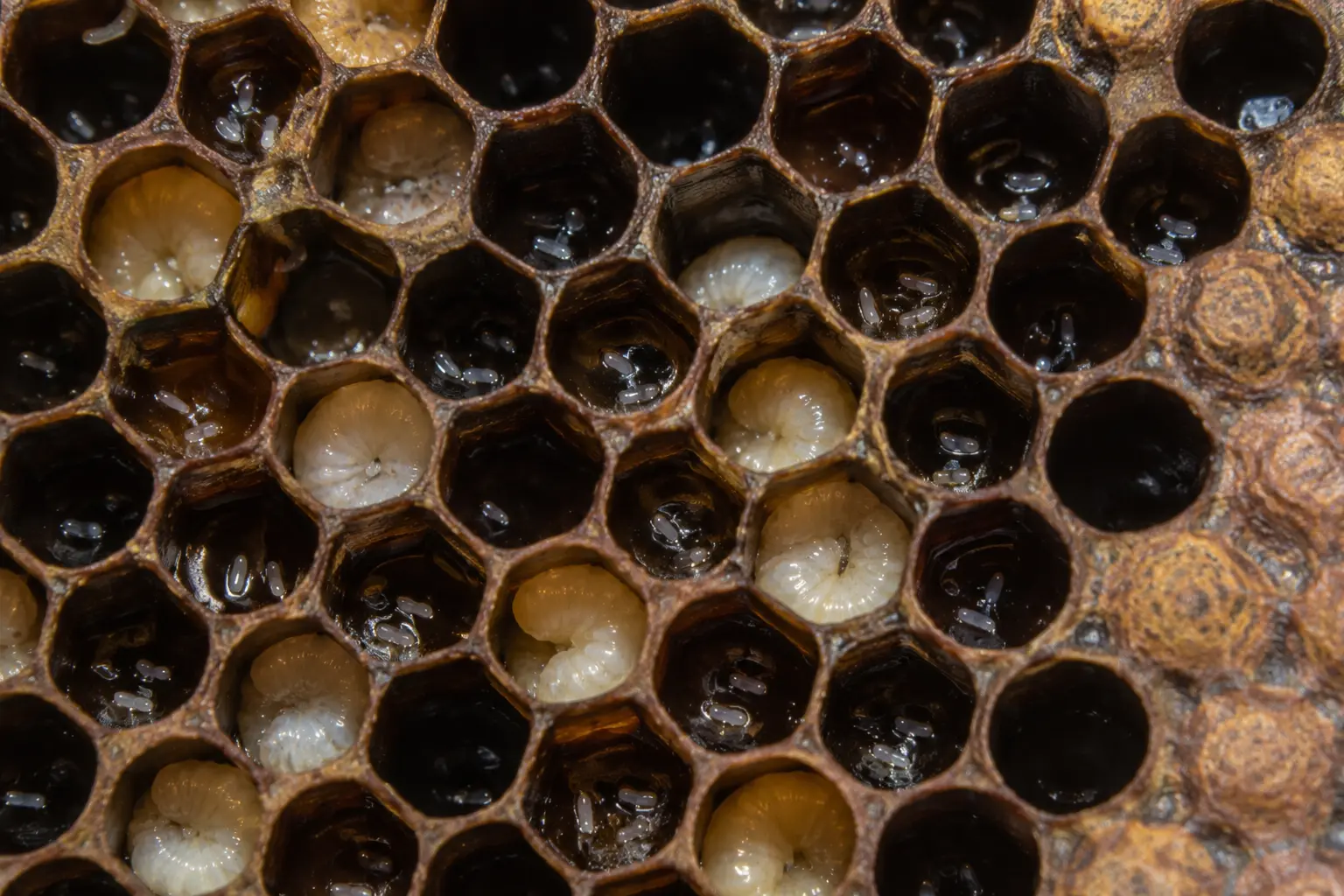
The clearest sign is several eggs in the same cell. A queen normally lays one egg neatly on the base of a cell. In a laying worker colony, eggs may be scattered, placed high on the cell walls or appear in groups because more than one worker is laying without the normal organisation of a queenright colony.
The brood pattern often becomes patchy and chaotic. You may see drone brood in worker-sized cells, raised domed cappings and little or no normal worker brood. The colony may feel unsettled, small or disorganised, especially if it has been without a queen for several weeks.
Do not rely on one sign alone. Multiple eggs can occasionally appear when a newly mated queen starts laying, but the wider pattern is different. A young queen usually settles into a normal pattern quickly, while laying workers continue to produce irregular drone brood and the colony steadily weakens.
Why laying workers develop
In a normal colony, the queen and open brood help suppress worker ovary development. When the queen is lost and no viable young brood remains, those signals fade. After a prolonged queenless period, some workers can begin to lay unfertilised eggs.
This often happens after a failed queen replacement, a missed swarm, a failed virgin queen, unsuccessful supersedure or a colony that has been left too long without eggs or young larvae. The problem is not simply that the colony is queenless; it is that it has been queenless long enough for worker laying behaviour to become established.
If the colony recently swarmed, was split or raised a virgin queen, check the virgin queen timeline before making a final judgement. Acting too early can disrupt a normal queen replacement, but waiting too long can allow laying workers to take hold.
Laying workers or a failing queen?
A failing queen may lay poorly, but she usually still lays in a more organised pattern than laying workers. You are more likely to see single eggs, often on the base of the cell, alongside a poor or patchy brood pattern. With laying workers, the pattern is usually more chaotic, with multiple eggs in cells and eggs placed where a queen would struggle to reach.
This distinction matters because a colony with a failing queen may be easier to correct if she is removed and replaced. A laying worker colony can be much harder to requeen because the colony may reject a new queen and no longer behaves like a normally queenless colony.
For a wider comparison, read queen failing signs and drone-laying queen.
Laying workers or a drone-laying queen?
Both problems can produce drone brood where worker brood should be, but the egg pattern is usually different. A drone-laying queen is normally one queen laying one egg per cell, although the eggs develop into drones because they are unfertilised. Laying workers often create several eggs per cell and irregular placement.
If you can find a queen and the eggs look neat and single, investigate a drone-laying queen. If the queen is absent, eggs are scattered and there are multiple eggs per cell, laying workers become more likely.
How laying workers affect the colony
Laying workers cannot rebuild the worker population. Their eggs produce drones, and drones do not carry out the essential worker jobs needed to maintain the colony. As older workers die, the colony loses the bees needed to forage, feed brood, defend the entrance, regulate temperature and keep the hive functioning.
The result is a slow decline. The colony may still look active for a while, but it is not producing the next generation of worker bees. Eventually it becomes too small, too old or too disorganised to recover as a separate colony.
Can a laying worker colony be saved?
Sometimes, but it is difficult. A colony with established laying workers often rejects a new queen because it no longer responds like a straightforward queenless colony. The longer the problem has been present, and the weaker the colony has become, the less likely a simple queen introduction is to work.
Recovery is more realistic if the colony is still strong, the problem is caught early and there are enough young bees to care for brood. In many practical beekeeping situations, combining with a stronger colony or shaking bees out away from the original hive is more reliable than trying to save the unit as it stands.
What to do if you suspect laying workers
Start by confirming the evidence. Look carefully for multiple eggs, egg placement on cell walls, drone-only brood, absence of worker brood and the general strength of the colony. Also check whether there are any queen cells, viable young larvae or signs that a virgin queen may still be in the mating window.
If laying workers are well established, direct queen introduction is risky. A common practical route is to combine the remaining bees with a strong queenright colony, provided disease has been ruled out and the receiving colony is suitable. Some beekeepers shake the bees out away from the original hive so flying bees can drift into neighbouring colonies, but this should be done thoughtfully and only where it makes sense in the apiary.
Adding frames of open brood from another colony can sometimes help suppress laying workers, but it may require repeated brood additions and is not always worthwhile if the colony is already small. Before committing resources, compare the colony with the weak colony guide and check for underlying brood problems.
Common mistakes to avoid
The most common mistake is introducing a new queen directly into a laying worker colony and expecting normal acceptance. By this stage, the colony may not behave like a simple queenless hive, and a valuable queen can be lost.
Another mistake is leaving the colony for repeated inspections while hoping it will correct itself. Laying workers cannot produce worker brood, so the colony usually declines unless action is taken. It is also important not to confuse laying workers with a newly mated queen that is just beginning to lay, which is why timing and wider brood pattern matter.
How to prevent laying workers
Prevention is easier than correction. Regular checks for eggs, larvae and brood pattern help you spot queen loss before the colony has been queenless for too long. After swarming, splitting or supersedure, keep clear notes of the expected queen timeline so you know when to wait and when to intervene.
If you cannot find the queen, do not assume the colony is queenless from one inspection alone. Use missing queen: what to check and queenless colony: what to do to work through eggs, brood age, queen cells, behaviour and timing before taking action.
How HiveTag can help
Laying workers are much easier to prevent than fix. HiveTag helps you track queen sightings, eggs, brood stages, queen events and inspection gaps so a colony does not quietly pass from queenless into laying-worker territory.
Learn more about the HiveTag beekeeping app.
Frequently asked questions
Laying workers usually develop several weeks after a colony becomes queenless, especially once queen pheromone and open brood pheromone have been absent for long enough.
No. Worker-laid eggs are unfertilised and can only develop into drones, so they cannot produce a new queen.
Multiple eggs appear because more than one worker may be laying and workers do not lay in the organised way a queen normally does. Eggs may appear scattered or attached to cell walls.
In many cases, combining or shaking out is more reliable than trying to introduce a queen directly, especially when the colony is weak or laying workers are well established.