
Queen and brood problems
Queen Failing Signs: How to Recognise a Poor or Failing Queen
Last updated: 15 August 2026
A failing queen can weaken a colony slowly. The signs are often gradual rather than dramatic: a brood pattern that becomes less reliable, fewer eggs and larvae, weak spring build-up, more drone brood than expected, or supersedure cells appearing as the bees try to replace her.
A poor brood pattern does not automatically prove queen failure. Brood disease, chilled brood, varroa pressure, nutritional stress, poor weather and normal seasonal changes can also affect what you see. The aim is to look at the whole colony before deciding whether to wait, allow supersedure, requeen or combine.
This guide explains the main signs of a failing queen, how to compare them with queenlessness and brood problems, and when UK beekeepers should consider intervening.
Signs your queen may be failing
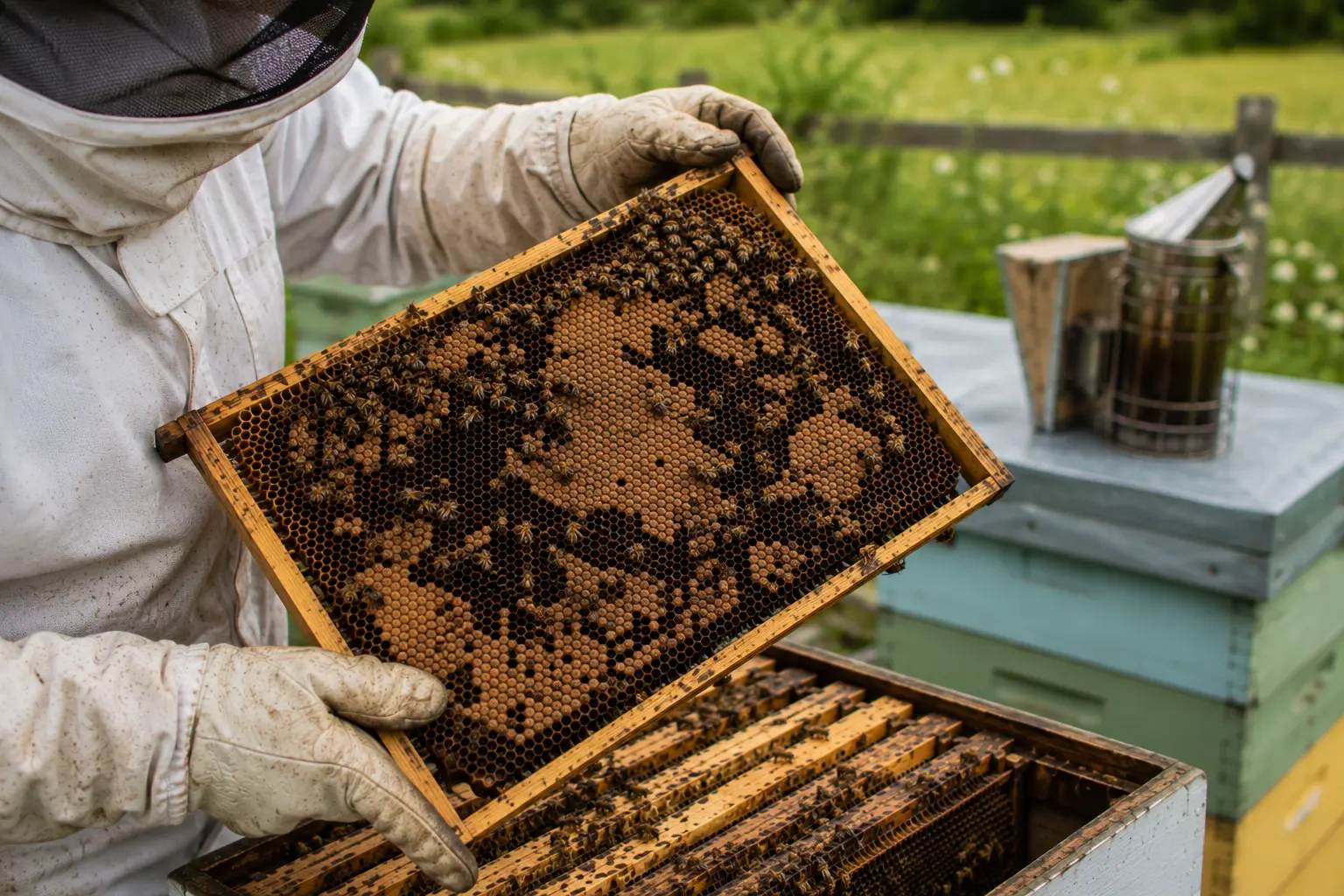
One of the most common signs is a brood pattern that becomes patchy or unreliable. Instead of a compact area of worker brood, the frame may show scattered sealed brood, many empty cells and uneven brood ages. If this repeats across inspections and the colony is not building up as expected, queen quality should be considered.
Reduced egg laying is another warning sign. A colony that should be expanding in suitable weather may remain small, slow or unbalanced. You may see fewer eggs and larvae than expected, and the worker population may not be replacing itself quickly enough.
More drone brood than usual can also point towards a poorly mated or failing queen, especially if drone brood appears in worker-sized cells. If most brood is drone brood, compare the signs with the drone-laying queen guide before deciding what to do.
Supersedure cells are another clue. Bees sometimes recognise queen failure before the beekeeper does and begin replacing her quietly. If you see one or two supersedure-style cells with the old queen still present, read supersedure explained before interfering.
What a healthy brood pattern should suggest
A good laying queen usually produces a reasonably compact worker brood pattern during the active season. You would expect to see eggs, young larvae and sealed brood in a pattern that broadly makes sense, with relatively few unexplained empty cells in the main brood area.
No colony is perfect. Some gaps are normal because workers clean cells, remove unsuitable brood or make space for stores. The concern is when the pattern is consistently poor, colony growth is weak, and there is no obvious seasonal or management reason.
A queen should not be judged from one frame on one inspection unless the signs are very clear. Compare multiple brood frames, check for eggs and larvae, and look again at the colony history before making a final decision.
Why queens fail
Queens can fail because of age, poor mating, injury, disease pressure, genetics or stress within the colony. Older queens may run out of stored sperm or reduce laying performance. Younger queens can also perform poorly if mating was incomplete or affected by poor weather.
Damage during inspections can also affect queen performance, particularly if a queen is rolled, trapped or injured. Stress from repeated disturbance, heavy varroa pressure, starvation risk, poor nutrition or disease can make a queen problem look worse, even when the original cause is not the queen alone.
Some queen issues are temporary or seasonal. A short brood break, poor weather, lack of forage or a recent swarm event can reduce laying without meaning the queen is permanently failing. This is why timing and colony context matter.
Failing queen, queenless colony or brood problem?
A failing queen often still produces some eggs, but the pattern may be poor and the colony may not build up properly. A queenless colony usually has no fresh eggs or very young larvae once the queen has been absent long enough. If you cannot find the queen but eggs are present, the queen was probably there recently.
Varroa and brood disease can also create patchy brood and a declining colony. If you see deformed wings, crawling bees, mite pressure, abnormal larvae, sunken cappings or suspicious brood smell, do not treat it as a queen problem alone. Use varroa collapse signs and brood problems in bees as checks.
If eggs are scattered, multiple eggs are in single cells or the brood is drone-only, compare with laying workers and drone-laying queen. These problems need different action from a simple failing queen.
What to do if your queen appears to be failing
Start by confirming the pattern over more than one observation where possible. Check egg presence, larval pattern, sealed brood, colony strength, stores, disease signs, varroa pressure and whether the bees are already raising supersedure cells.
If the colony is strong and appears to be superseding, it may be sensible to allow the bees to complete the replacement. If the season is suitable and you have access to a good queen, deliberate requeening may be faster and more predictable.
If the colony is weak, late in the season or declining quickly, combining with a stronger colony may be more practical than trying to rescue it as a separate unit. Use the queenless colony guide and weak colony guide to judge the wider situation.
When to intervene
Intervention becomes more likely when the colony is becoming too weak, there is no viable queen replacement, the brood pattern continues to decline, or the time of year makes natural recovery uncertain. A failing queen in spring gives you more options than a failing queen late in the season.
If the bees are already raising a suitable replacement queen and conditions are good, waiting may be reasonable. If the colony is heading towards collapse, or if a poor queen is preventing recovery, requeening or combining may be the better decision.
Avoid repeatedly opening the colony just to check whether the queen has improved. Keep inspections purposeful, record what you see, and decide based on the pattern over time.
How HiveTag can help
Tracking brood patterns over time makes it much easier to spot queen decline early. HiveTag lets you record brood quality, queen sightings, egg presence, queen events and colony strength so you can compare what you are seeing now with previous inspections.
If you record “patchy brood” once, it may simply be a note. If you record it repeatedly alongside weak build-up, fewer eggs and supersedure cells, it becomes a much clearer queen history.
Learn more about the HiveTag beekeeping app.
Queen Failing Signs FAQ
A genuinely failing queen is unlikely to improve. The colony may replace her naturally through supersedure, or the beekeeper may need to requeen or combine depending on timing and colony strength.
It depends on season, colony strength and whether the colony is already raising a replacement. In some cases allowing supersedure is sensible; in others requeening or combining may be better.
A colony may survive for a while with a failing queen, but it usually weakens over time because not enough healthy worker brood is being produced.
No. Patchy brood can also be linked to disease, chilled brood, varroa pressure, poor nutrition or brood removal by workers. Always check the wider colony picture.