
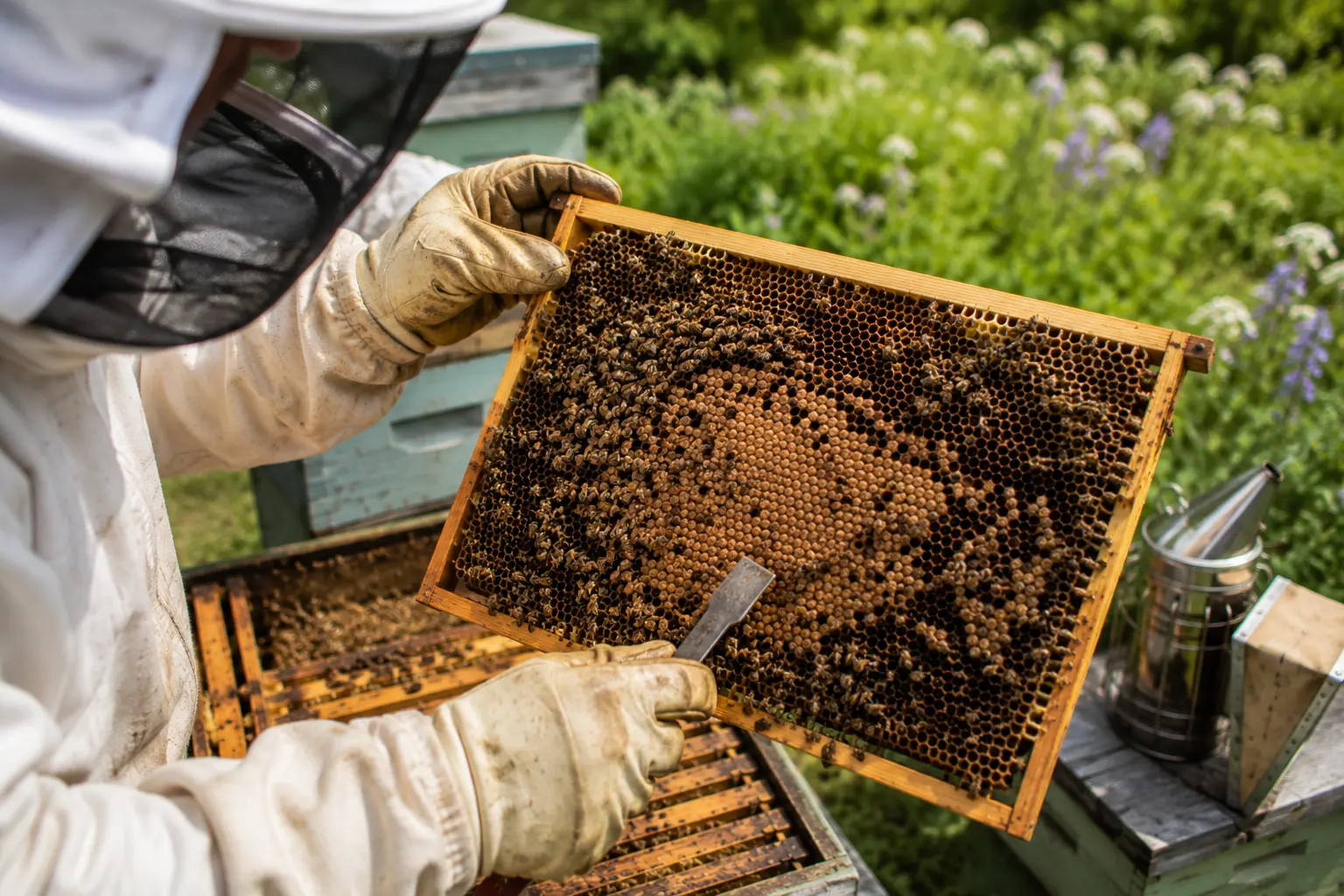
Queen status check
Missing Queen in the Hive – What To Check Before Panicking
Last updated: 15 August 2026
Not seeing the queen during an inspection does not automatically mean the colony is queenless. Queens can be difficult to spot in busy colonies, on dark comb, in large brood boxes or when the bees are moving quickly over the frame.
The better question is not “did I see the queen?” but “what evidence did I see?”. Fresh eggs, very young larvae, the age of sealed brood, queen cells, colony behaviour and recent swarm history all help you work out whether the queen is present, recently lost, newly emerged or failing.
This guide links closely with queenless colony decisions, virgin queen timing, supersedure, failing queens and brood problems.
Start with eggs, larvae and brood pattern
Fresh eggs are the first thing to look for. If you can see eggs standing upright or leaning in the base of cells, the queen was probably present very recently. You do not need to keep the hive open for a long search simply to prove she is there.
Young larvae also tell you the queen was laying recently, although they do not prove she is still present today. Sealed brood tells you the colony had a laying queen in the recent past, but if there are no eggs or young larvae, you need to look more closely at timing.
Brood pattern matters as well. A healthy laying queen usually produces a reasonably organised worker brood pattern. If eggs are present but the brood is very patchy, drone-heavy or irregular, compare the colony with queen failing signs and drone-laying queen.
If there are no eggs
No eggs does not always mean the colony is hopelessly queenless. The colony may have recently swarmed, a virgin queen may be present but not laying yet, supersedure may be underway, or the queen may have temporarily reduced laying because of conditions in the hive.
The next step is to connect the lack of eggs with the colony history. Think about the last inspection date, whether queen cells were seen, whether a swarm may have left, whether a split was made, whether the colony has a virgin queen and whether the weather has delayed mating flights.
If there are no eggs and no clear explanation, move to queenless colony: what to do and work through the decision carefully before adding a queen or combining colonies.
Check queen cells before taking action
Queen cells can explain why the queen is not seen. Several queen cells in a strong, crowded colony may point towards swarming. One or two well-positioned cells can suggest supersedure. Emergency cells drawn from worker larvae can suggest sudden queen loss.
Do not destroy queen cells until you understand why they are there. Removing the only viable queen cells from a colony that has already lost its queen can leave it with no route back to queenrightness.
For context, compare queen cells guide, supersedure explained, queenless or supersedure and what to do if you find queen cells.
Could there be a virgin queen?
Virgin queens are often harder to spot than mated laying queens. They can be smaller, quicker and more easily missed, especially if the colony is unsettled after a swarm, split or queen emergence.
A colony with a virgin queen may have no eggs for a while but may not behave exactly like a hopelessly queenless colony. There is normally a gap while the virgin queen matures, mates and starts laying. Poor weather can extend that gap.
Use the virgin queen timeline before deciding the colony has failed. Inspecting too often during this period can disturb the colony and may not give you a clearer answer.
Signs the colony may genuinely be queenless
A colony becomes more suspicious when there are no eggs or young larvae beyond the expected queen replacement window, no visible queen, no viable queen cells, no clear sign of a virgin queen and a restless or unsettled feel when opened.
Some beekeepers describe a queenless colony as having a different sound or a “roar” when opened. This can be useful experience, but it should not be used on its own. Combine behaviour with brood evidence, dates and queen cell context.
If the problem is left too long, laying workers may develop. Multiple eggs in cells, scattered egg placement and drone-only brood should be compared with laying workers in bees.
Common mistakes to avoid
The first mistake is assuming queenless simply because you did not see the queen. This can lead to unnecessary interference, accidental destruction of useful queen cells or the introduction of a new queen into a colony that already has one.
The second mistake is searching for too long. Long inspections can chill brood, disturb the colony and increase the chance of damaging a queen if she is present. If eggs and normal brood are present, close up and record what you found.
Another common mistake is adding a new queen while a virgin queen may already be present. Queen introduction is much less likely to succeed if the colony already contains an unmated or newly mated queen.
What to do next
If eggs are present and the brood pattern looks normal, the simplest answer is usually to close the hive and recheck at the next normal inspection. If no eggs are present but queen cells or a recent swarm history explain the gap, use the expected queen timeline before intervening.
If the colony is genuinely queenless, you may need to add a test frame of eggs and young larvae, introduce a queen, unite the colony or take other action depending on colony strength and season.
The next best page is usually queenless colony: what to do. If the issue looks more like poor laying than no queen, read queen failing signs instead.
How HiveTag can help
Queen status is much easier to judge when inspection dates are recorded. HiveTag lets you log egg presence, queen sightings, queen cells, brood pattern, swarm events and queen replacement notes so you can work out whether the colony is within a normal brood gap or genuinely queenless.
Learn more about the HiveTag beekeeping app.
Missing Queen FAQ
No. If eggs are present, the queen was probably in the colony recently even if she was not seen during the inspection.
There can be a normal gap while a virgin queen matures, mates and starts laying. Poor weather can extend this window, so use the queen timeline before deciding the colony has failed.
Usually no. Long inspections can disturb the colony. Eggs, larvae and brood pattern often tell you more than seeing the queen.
Be careful. If a virgin queen or unmated queen is already present, introducing another queen may fail. Check queen status, brood timing and queen cells first.