
Pests, robbing and weak colonies
Robbing Behaviour in Honey Bees
Last updated: 15 August 2026
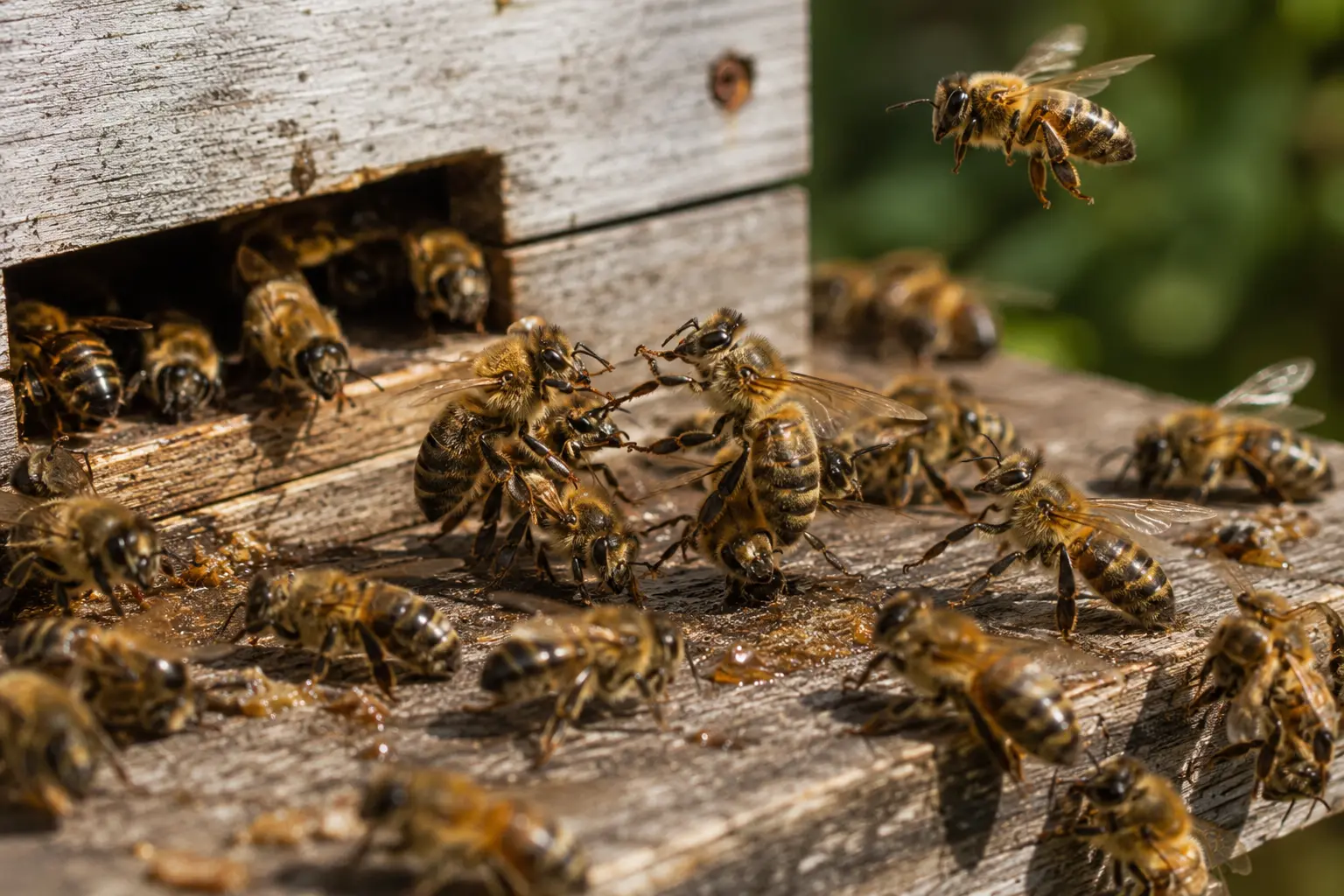
Robbing occurs when bees from one colony try to steal honey or syrup from another colony. It can start with a few bees testing a weak entrance, but it can quickly build into a chaotic attack where large numbers of bees fight, force their way inside and strip the hive of stores.
Weak colonies, small nucs, queenless colonies and hives with large entrances are most at risk. Robbing is also more likely during a nectar dearth, after careless feeding, when wet supers or frames are left exposed, or in late summer and autumn when wasp pressure may also increase.
This guide explains how to recognise robbing, how to tell it apart from normal activity, what causes it and how to protect a vulnerable colony.
Key signs of robbing
Robbing usually looks more frantic than normal foraging. Bees may fly in a fast, darting, zig-zag pattern around the entrance rather than landing directly. Some bees may hover around cracks, roof gaps or the back of the hive as they search for another way in.
At the entrance, you may see bees fighting, wrestling or rolling together on the landing board. Guard bees may appear overwhelmed. Dead or damaged bees may build up outside the hive, and you may find wax debris or torn cappings where robbers have forced open stored honey.
The colony being robbed may become defensive, noisy or disorganised. If the attack is severe, the entrance can look like a cloud of chaotic bees rather than normal controlled traffic.
What robbing looks like at the hive entrance
Robbing flight is different from ordinary foraging. Foragers usually leave and return with purpose. Robber bees tend to hover, dart, rush the entrance and test weak points. They may approach from the sides, underneath, behind the hive or through damaged equipment rather than using the entrance cleanly.
Fighting at the entrance is one of the clearest signs. Bees may lock together, fall to the ground, or be dragged away by guards. You may also see bees leaving with full honey stomachs and a strong smell of exposed honey if the hive has been opened or damaged.
In advanced robbing, the hive can be stripped quickly. Combs may be torn open, stores removed and the remaining colony left too weak to recover.
Common causes of robbing
Robbing is often triggered by opportunity. A weak colony with a large entrance may not have enough guard bees to defend itself. A queenless or diseased colony may also be less organised and easier to overpower. Once other bees discover exposed stores, the behaviour can spread quickly.
Feeding mistakes are another common cause. Spilled syrup, leaking feeders, open feeding near the apiary, wet supers, exposed frames and honey left in the open can all attract bees from nearby colonies. During a nectar dearth, even a small amount of exposed syrup can set off intense robbing.
Late summer and autumn are higher-risk periods because natural forage may be reduced, colonies are still strong enough to rob, and wasps may also be searching for easy food.
Robbing versus normal activity
Not every busy hive entrance is robbing. Orientation flights can look dramatic, with young bees hovering in front of the hive and facing the entrance as they learn its location. Heavy foraging can also produce lots of traffic, but the movement is usually purposeful and organised.
Robbing is more chaotic. Bees dart from side to side, try to force entry, investigate gaps and fight at the entrance. Orientation flights are usually calmer, often happen in warm settled conditions, and involve bees looping in front of the hive rather than wrestling with guards.
Compare with bee orientation flights, bearding behaviour and bees fanning at the entrance.
How to stop robbing
The first step is to make the colony easier to defend. Reduce the entrance immediately so guard bees have a smaller area to protect. Close any gaps, cracks or poorly fitting parts of the hive where robber bees are trying to enter.
Remove attractants. Stop feeding temporarily if syrup is encouraging robbing, clean up any spills, and do not leave wet frames, supers or comb exposed. Avoid opening the hive while robbing is active unless you have to act to protect it.
A robbing screen can help by confusing robber bees while allowing resident bees to reorientate to a different exit. Reducing internal space may also help a weak colony defend itself, especially if it is in a box that is too large for the number of bees.
Wasps and robbing
Wasps can attack hives in a similar way, especially in late summer and autumn. A few wasps may test the entrance, but persistent attacks can weaken small colonies and nucs. Wasps often focus on weak colonies, exposed food, damaged comb and hives that cannot defend a large entrance.
Wasp pressure and bee robbing can happen at the same time. A colony weakened by robbing may become more vulnerable to wasps, and careless feeding can attract both. Entrance reduction, careful feeding and keeping the apiary tidy are important for both problems.
Related guide: Wasps and beehives.
What to do if robbing is severe
If robbing is severe, act urgently but calmly. Reduce the entrance to the smallest practical opening and make sure ventilation is still adequate. In extreme cases, the colony may need to be shut in temporarily with ventilation, but this must be done carefully to avoid overheating or suffocation.
If the colony is too weak to defend itself, consider whether it should be combined with a stronger colony, moved, or reduced into a smaller box. A very weak colony with little chance of recovery may continue to attract robbers and put nearby hives at risk.
Do not keep opening the hive to check progress while the attack is happening. Watch the entrance, reduce attractants and give the colony the best chance to regain control.
What not to do during robbing
Do not leave frames, supers or scrapings exposed in the apiary. Do not open-feed syrup close to hives during a dearth. Do not leave a weak colony with a wide entrance, and do not ignore bees trying to enter through cracks or gaps.
Avoid long inspections while robbing is active. Opening the hive releases more scent and can make the situation worse. If you need to act, keep it short and focused.
Do not assume that a busy entrance is harmless. Check whether the flight is organised or chaotic, whether bees are fighting, and whether wax debris or dead bees are appearing outside the hive.
How HiveTag can help
HiveTag can help you record when robbing started, which colonies were affected, whether the entrance was reduced, whether feeding was involved, and whether wasps or weak colony signs were present. These records make it easier to spot repeated patterns between feeding, nectar gaps and robbing pressure.
If a colony is repeatedly targeted, your records may show that it is too weak, queenless, poorly defended or being fed in a way that attracts robbers. You can then adjust feeding, colony size and entrance management earlier next time.
Learn more: HiveTag.
Robbing FAQ
Robbing can overwhelm a weak colony very quickly, sometimes within hours once the entrance is under heavy attack and the colony can no longer defend its stores.
Feeding can trigger robbing if syrup is spilled, feeders leak, honey or wet frames are exposed, or colonies are fed carelessly during a nectar dearth.
Yes. Robbing is most common during nectar dearths, especially late summer and autumn when forage is reduced and wasp pressure may increase.
Strong colonies are less likely to be overwhelmed, but robbing can still occur if exposed honey, open supers, gaps or feeding mistakes encourage large numbers of robber bees.