
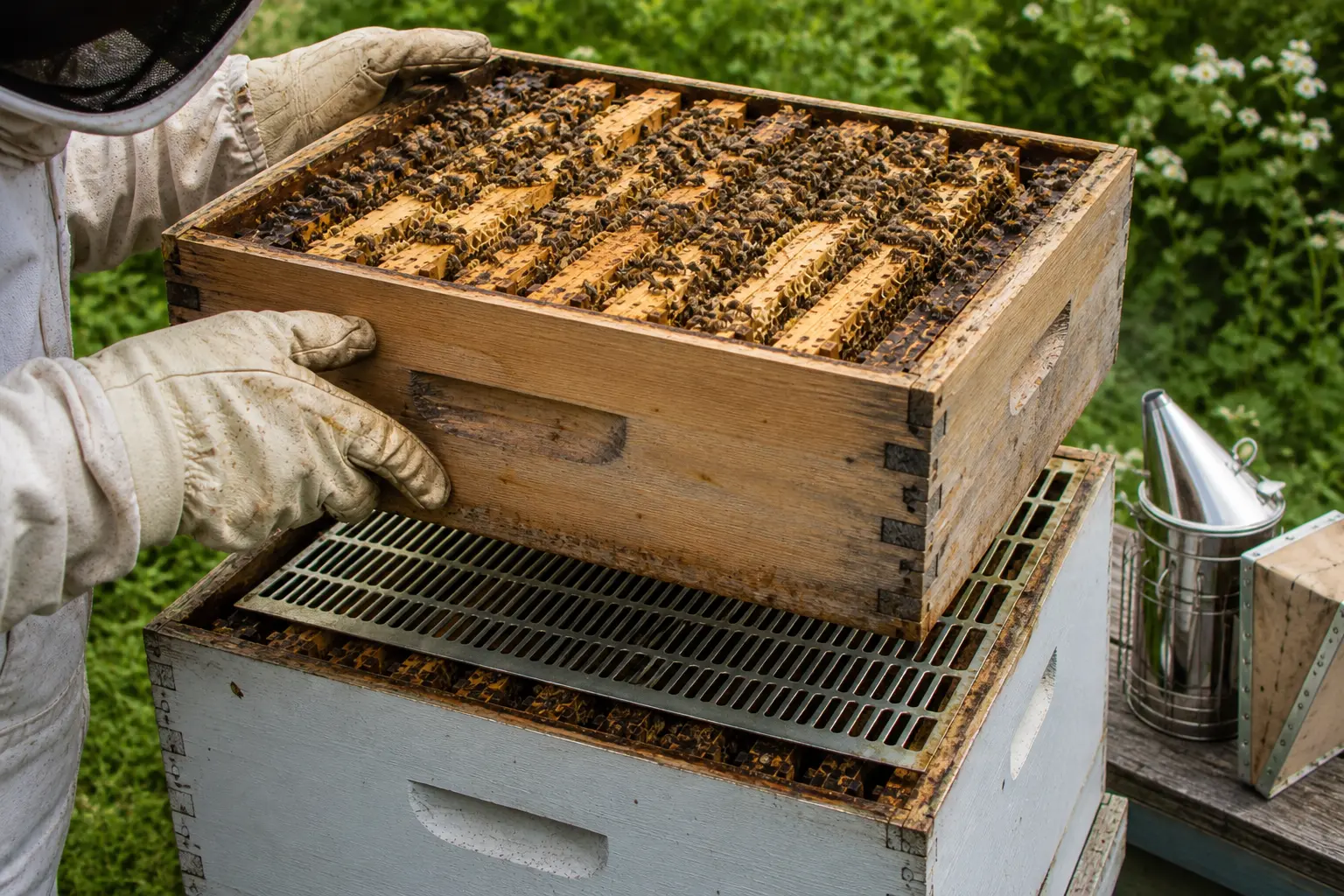
Hive management and supers
Queen Excluder Problems: Bees Not Going Through, Ignored Supers and What To Do
Last updated: 15 August 2026
A queen excluder is used to keep the queen in the brood box and prevent brood being laid in honey supers. When it works well, it keeps the honey crop cleaner and makes extraction simpler. When it causes confusion, bees may ignore the super, store honey below the excluder, build burr comb, or appear reluctant to move through it.
The excluder is not always the real problem. Bees usually move through a queen excluder when they have a strong reason to use the space above it. If the colony is not large enough, there is no nectar flow, the weather is poor, or the super contains only foundation, the bees may stay below even if the excluder is perfectly fine.
This guide explains the common queen excluder problems, how to decide whether the excluder is actually at fault, and what to do before removing it.
Problem signs around a queen excluder
Queen excluder problems usually show as a pattern rather than one isolated sign. The super may remain empty while the brood box becomes increasingly congested. Bees may store nectar below the excluder instead of moving it up, or they may build burr comb around the edges and through gaps. In other cases, bees cross the excluder but do not draw foundation or make meaningful use of the super.
A more serious problem is finding the queen above the excluder. This can happen if the excluder is damaged, badly fitted, has gaps around the edges, or if the queen was already above it when the excluder was put in place. Occasionally, a small virgin queen may pass through and later start laying above the excluder after mating.
Why bees may not go through the queen excluder
Bees usually cross a queen excluder when the space above is useful to them. If there is no strong nectar flow, they may not need the super. If the colony is still small, the bees may prefer to stay around the brood nest where warmth and nursing are the priority. If the super is only foundation, it may be much less attractive than drawn comb.
Timing is often the issue. A super added too early can sit unused for days or weeks, especially in cool weather. A colony that is still building up may not have the bee numbers to occupy extra space. Bees are more likely to move up when the brood box is well covered, the colony is expanding and nectar is coming in.
Equipment can also be a factor. A dirty, bent, warped or poorly fitted excluder can make movement harder or create awkward gaps where bees build comb. The excluder should sit flat, match the box size and allow bees to move through cleanly.
Related guide: Why bees are not drawing comb.
Super added too early
One of the most common reasons bees ignore a super is that the colony is not ready for it. If the brood box is not well covered with bees, the colony may stay below the excluder because the brood nest is where warmth, brood care and queen activity are concentrated.
Adding too much space too soon can slow progress. The bees have to heat, defend and manage more empty space, which may be unhelpful in cool spring weather or during a poor nectar flow. The result can look like a queen excluder problem when the real issue is timing.
A better sign that the colony is ready is a busy brood box with good bee coverage, active foraging and nectar coming in. If bees are already running out of space below, a super is more likely to be used.
Foundation above excluder
Bees can be reluctant to cross an excluder into a box of bare foundation. Drawn comb is usually more attractive because it gives the bees immediate storage space. Foundation requires energy, warmth and a nectar flow before the bees are strongly motivated to draw it.
If you have drawn super comb, placing it above the excluder can help bees move up. If you only have foundation, timing becomes more important. A strong colony during a good flow is far more likely to draw it than a smaller colony in cool or unsettled weather.
If the bees are ignoring foundation, avoid repeatedly disturbing the colony to check it. Instead, assess colony strength, weather, nectar flow and whether the super was added at the right time.
Honey below excluder
If bees store honey below the excluder instead of moving into the super, check whether the super is attractive and whether the colony is ready to use it. Foundation-only supers, poor weather, weak colonies or a lack of nectar flow can all lead to stores building up below.
Congestion below the excluder can become a problem if the brood nest is being crowded with nectar and the queen is running out of laying space. In a strong colony during swarm season, this can add to swarm pressure. The answer is usually to check space, timing and comb availability rather than simply blaming the excluder.
Related guides: adding supers and swarm prevention.
Burr comb
Burr comb around a queen excluder usually means the bees are filling awkward space. This may be caused by incorrect spacing, a warped excluder, poor fit, uneven boxes, damaged frame runners or gaps at the edges. It can make inspections messy and increase the risk of crushing bees.
During inspections, remove excess burr comb carefully and check why it is being built. The excluder should sit flat and the frames above and below should be spaced correctly. If the excluder is bent, cracked, warped or badly sized for the hive, replacing it is usually better than repeatedly fighting the same problem.
Related guide: Cross comb: how to fix it.
Queen above excluder
If the queen is found above the queen excluder, do not assume she squeezed through a normal, well-fitted excluder. First check whether there are damaged bars, bent wires, edge gaps, incorrect box alignment or a poorly seated excluder. Also consider whether the queen may already have been above the excluder when it was added.
If brood is present in the super, find the queen before moving frames. Once she is confirmed below, the excluder can be refitted properly. Any brood above the excluder can be allowed to emerge before the frame is used for honey extraction, depending on your management plan and timing.
In some cases, a small virgin queen may pass through an excluder and later begin laying after mating. This is less common, but it is worth remembering if the timing fits a queen event.
Removing the excluder
Some beekeepers temporarily remove the excluder to encourage bees into a super, then replace it once bees are working above. This can help in some situations, especially where the super contains foundation and the bees are slow to move up.
The risk is that the queen may move into the super and lay there. Before replacing the excluder, you must confirm the queen is below it. If brood appears in supers, honey extraction becomes more complicated and the supers may no longer be clean honey-only boxes.
Removing the excluder should be a deliberate short-term management choice, not an automatic fix. If the colony is weak, the weather is poor or there is no nectar flow, removing the excluder may not solve the underlying problem.
How to fix it
Start by checking colony strength. If the brood box is not well covered with bees, the super may simply be too early. If the colony is strong and nectar is coming in, check whether the super has drawn comb or only foundation. Drawn comb is more likely to encourage movement through the excluder.
Next, check the excluder itself. It should be clean, flat, correctly fitted and free from damage. Make sure there are no gaps around the edges and that the boxes above and below are sitting squarely. Remove burr comb carefully and check frame spacing.
Avoid adding too many supers at once before the bees need them. Give the colony enough space, but not so much cold empty space that it slows progress. If you do temporarily remove the excluder, make a note and check queen position before putting it back.
HiveTag help
HiveTag can help you track when supers were added, whether the colony was strong enough, whether the bees moved up, whether comb was drawn and whether the queen excluder caused repeated problems. These notes make it easier to spot patterns between timing, nectar flow, colony strength and super use.
If a colony repeatedly ignores supers, your records may show that supers were added before a flow, above foundation only, or before the colony had enough bees. That can help you adjust your timing next season.
Learn more: HiveTag.
Queen Excluder FAQ
Bees often avoid going through a queen excluder when the colony is not strong enough, there is no nectar flow, the super contains only foundation, the weather is too cold, or the super was added before the bees needed the space.
A properly fitted and undamaged queen excluder should stop a mated queen. If the queen is above it, check for gaps, damage, incorrect fitting, or whether she was already above the excluder when it was added.
Some beekeepers temporarily remove the excluder, but it carries risk because the queen may move up and lay in the super. If you do it, confirm the queen is below before replacing the excluder.
Not necessarily. Weak colonies, poor timing, lack of nectar flow, foundation-only supers and badly fitted equipment are often the real reasons supers are ignored.