
Pests, weak colonies and stored comb
Wax Moth in Beehives: Signs, Damage and How to Prevent It
Last updated: 15 August 2026
Wax moth is a common pest in UK beekeeping, but it is usually a sign that comb is not being properly protected by bees. Strong colonies normally keep wax moth under control by removing eggs and larvae before they become established.
The biggest problems occur in weak colonies, dead or abandoned hives, and stored frames. Old dark brood comb, pollen residues and warm storage conditions are especially attractive to wax moth larvae. Once established, they can tunnel through comb, leave webbing and frass, and destroy frames very quickly.
This guide explains what wax moth damage looks like, why it appears, how to protect stored frames and why wax moth is often a symptom of colony weakness rather than the first cause of loss.
Signs of wax moth in a hive
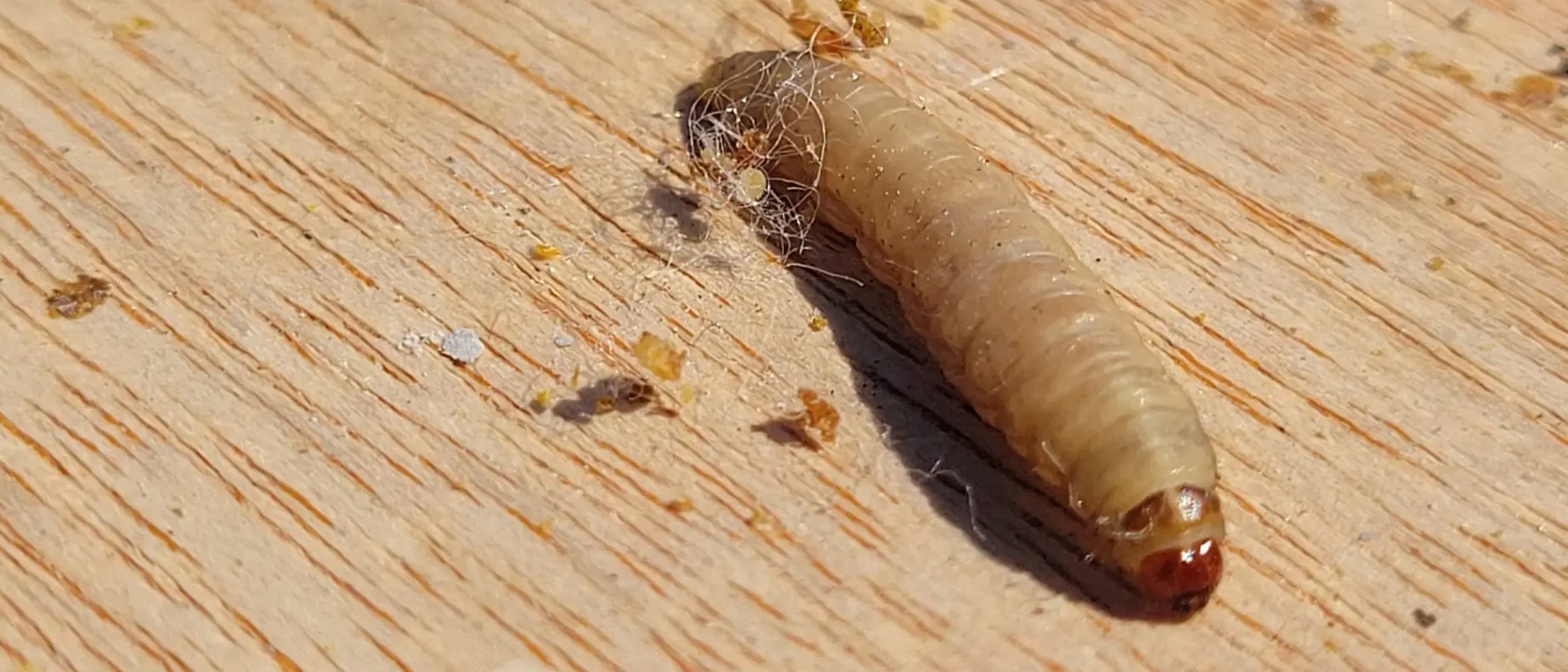
The most obvious sign is silky webbing running across comb or through damaged areas. You may also see tunnels through wax, white or grey larvae, small dark droppings known as frass, and comb that looks chewed, collapsed or no longer usable.
In severe cases, larvae can move through frames quickly and leave the comb full of webbing and debris. Old brood comb is often affected first because it contains residues and cocoons left from previous brood rearing.
If you find wax moth in a live colony, check the colony strength. A strong colony should normally keep wax moth under control, so visible damage may suggest the colony is weak, queenless, diseased, heavily affected by varroa or already declining.
What wax moth actually does
Wax moth larvae feed through comb, especially older brood comb that contains pollen residues, larval cocoons and other material left behind by developing bees. As they tunnel, they damage the wax structure and leave webbing behind.
The damage can make frames unusable. Comb may become distorted, webbed, weakened or destroyed. In stored equipment, wax moth can spread through boxes of frames if conditions are warm and the frames are not protected.
Wax moth does not usually attack a healthy, well-populated colony in the same way it attacks unprotected comb. The presence of heavy damage in an active hive should make you look for the underlying reason the bees failed to control it.
Why wax moth appears
Wax moth appears when comb is available and insufficiently defended. This often means a weak or failing colony, an empty hive, stored brood frames, abandoned equipment, or a dead colony that has been left for too long.
Warm weather can speed up the problem. Summer and early autumn are common times to find wax moth damage, especially in stored comb or colonies that have reduced in strength. Frames with pollen and old brood comb are more vulnerable than clean, light comb.
The important point is that wax moth is rarely the primary cause of a colony problem. It is usually taking advantage of a colony or comb that is already weak, unguarded or neglected.
Wax moth in active hives
In a strong colony, bees patrol the comb, remove larvae and keep wax moth from establishing. You might occasionally see minor signs, but widespread webbing or tunnelling should not be ignored.
If wax moth is damaging comb in an active hive, check colony strength, queen status, brood pattern, stores, disease signs and varroa pressure. The colony may be too small for the amount of comb it is occupying, or it may be declining for another reason.
Reducing the hive space to match the colony strength can help the bees defend the comb they have. However, if the colony is already collapsing, wax moth control alone will not solve the main problem.
Wax moth in stored frames
Stored frames are highly vulnerable because there are no bees to defend them. Dark brood comb, frames containing pollen and warm, poorly ventilated storage areas are especially risky. Wax moth can destroy stored comb before the beekeeper realises there is a problem.
Freezing frames before storage can help where practical. Good ventilation, regular checks and avoiding long-term storage of old dark brood comb also reduce risk. Boxes of drawn comb should not simply be stacked and forgotten through warm weather.
Stored supers with clean honey comb are generally less attractive than old brood comb, but they should still be protected and inspected.
How to prevent wax moth
Prevention starts with strong colonies. Make sure the bees have a space they can defend and avoid leaving weak colonies spread across too much comb. Reduce unnecessary space if a colony is small, and deal with queen failure, disease or varroa pressure promptly.
For stored frames, use clean, dry and well-ventilated storage. Avoid keeping old brood comb longer than necessary, freeze salvageable frames where possible, and inspect stored equipment regularly. Good hive hygiene and sensible comb replacement reduce the amount of attractive old material available.
Do not leave dead colonies, abandoned equipment or old frames open in the apiary. They can become a pest reservoir and may also attract robbing bees, wasps and other pests.
What to do if you find wax moth
If the damage is minor and the colony is otherwise strong, remove badly affected areas and check whether the bees are controlling the rest. If the colony is weak, reduce space and investigate why it cannot defend the comb.
Heavily damaged comb is usually best removed and destroyed. Salvageable frames may be frozen where appropriate and cleaned before reuse, but comb that is badly webbed, tunnelled or collapsing should not be put back into service.
If wax moth is found in a dead hive, carry out a post-mortem before assuming wax moth caused the death. Check for starvation, varroa collapse, queen failure, robbing, disease and how long the hive may have been dead.
Wax moth versus colony collapse
It is common to open a dead hive and find heavy wax moth damage. This does not mean wax moth killed the colony. In many cases, wax moth arrives after the colony has already weakened or died.
Wax moth can hide the original evidence by damaging comb after the event. That is why it is useful to check the position of dead bees, stores, brood signs, varroa history and recent colony records before deciding what happened.
If your colony has died, start with why did my hive die or hive post-mortem analysis.
How HiveTag can help
HiveTag can help you record wax moth signs, colony strength, queen status, stored frame checks and equipment actions. These notes make it easier to spot whether wax moth is linked to repeated weak colonies, poor storage or comb that needs replacing.
If you remove damaged comb, freeze frames or reduce the colony space, record the action so you know what was done and when to check again.
Learn more: HiveTag.
Wax Moth FAQ
Significant wax moth damage in an active hive usually suggests the colony is weak, declining or unable to police all of the comb. Strong colonies normally control wax moth.
Wax moth is rarely the original cause of colony death. It usually takes advantage of weak, dead or abandoned colonies, but heavy damage can make recovery harder.
Store frames in a clean, well-ventilated area, avoid leaving old dark brood comb exposed, freeze suitable frames before storage where possible, and check stored comb regularly.
Lightly affected frames may sometimes be cleaned or frozen and reused, but heavily webbed, tunnelled or collapsing comb is usually best removed and replaced.