
Comb management
Cross Comb in Beehives – How To Fix It and Prevent It
Last updated: 15 August 2026
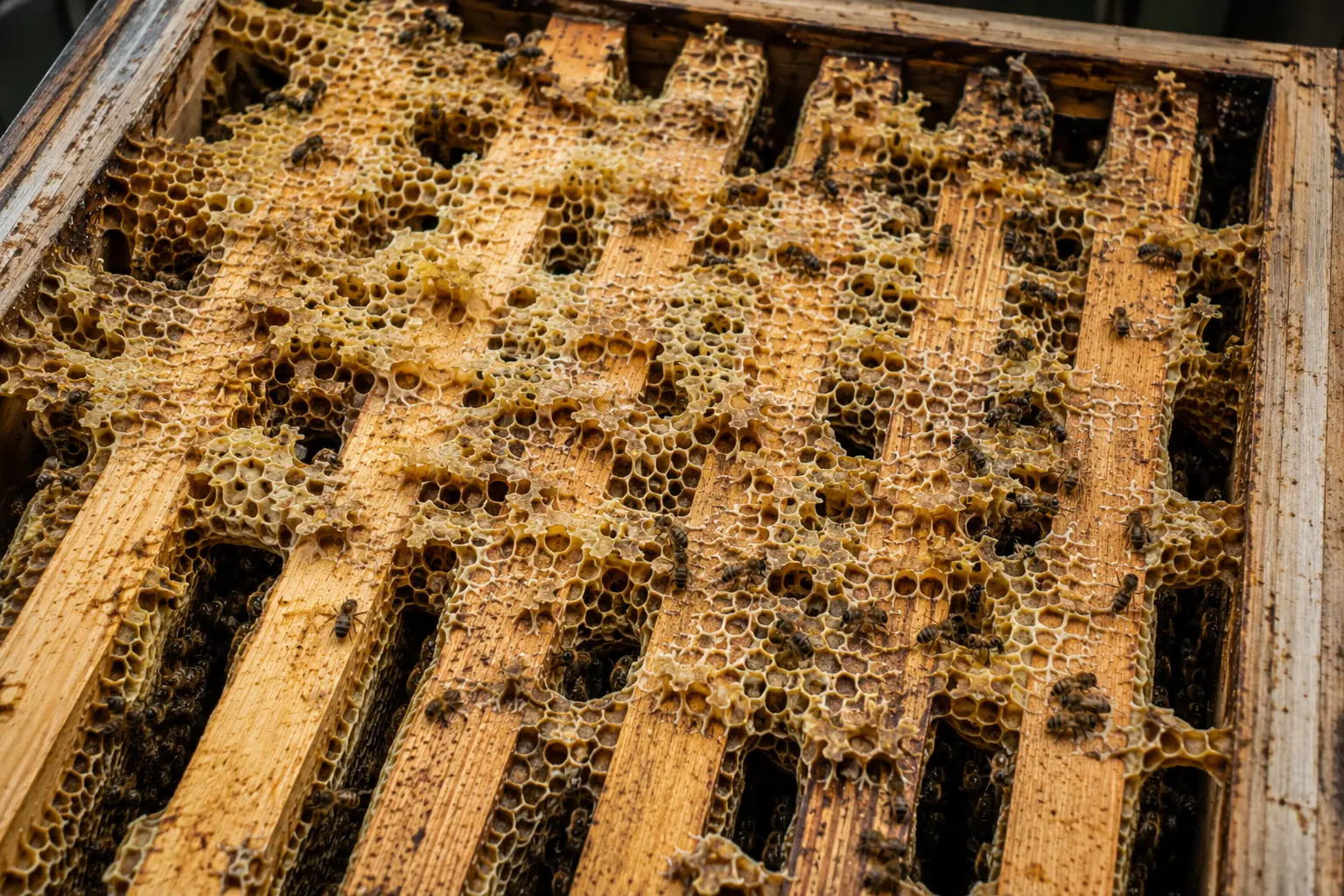
Cross comb is when bees build comb across frames instead of following the frame or foundation. At first it may only affect one small area, but if it is left, it can quickly make the hive difficult to inspect.
The problem is not simply that the comb looks messy. Cross comb can join frames together, tear brood during inspections, roll bees, trap the queen or make it difficult to check brood, stores and queen cells properly.
The sooner cross comb is corrected, the easier and safer it is to manage. This guide explains why it happens, how to fix it carefully and how to reduce the chances of it happening again.
What is cross comb?
Cross comb occurs when bees ignore the intended frame structure and build comb diagonally, sideways, between frames or across more than one frame. It is most common when bees do not have a clear guide to follow or when the spacing inside the hive gives them too much freedom to build in the wrong direction.
You may notice frames stuck together, comb tearing when you try to lift a frame, or a section of wax running at an angle across several frames.
Why bees build cross comb
Bees build comb according to their own sense of spacing, gravity and available space. If the hive is not level side-to-side, if frames are unevenly spaced, or if foundationless frames have poor starter guides, bees may begin building at an angle.
Fast nectar flows can make the problem worse because bees build quickly. Once one section is misaligned, the next section often follows it, creating a larger problem over time.
Cross comb is also more likely where there is too much empty space, missing frames, damaged foundation, warped frames or a weak colony that is not organising comb building evenly.
When cross comb is most likely
Cross comb is most likely in new colonies, newly housed swarms, foundationless setups and hives where bees are being asked to draw fresh comb quickly. It is also common during warm weather when nectar is coming in and the colony is expanding.
It can appear when frames are not pushed together tightly, when spacing is inconsistent, or when a beekeeper leaves a gap in the brood box or super.
Early inspections during comb building are important because a small correction early can prevent a major comb problem later.
How to fix cross comb safely
Fixing cross comb should be done slowly and carefully. Choose a suitable inspection day, use minimal smoke and make sure you know where the queen is before cutting or moving comb.
Carefully separate the affected frames with a hive tool. If comb is lightly attached, you may be able to ease it apart and straighten it. If comb is badly misaligned, cut away the problem section with a clean, sharp knife.
If the comb contains brood and can be saved, it may be possible to secure it back into a frame using elastic bands, string or a suitable frame support. If it is badly twisted, unstable or mainly honey comb, removal may be simpler and safer.
After correction, push frames tightly together, remove unnecessary gaps and give the bees a clear guide to rebuild from.
Can you save the comb?
Sometimes. Straight sections of brood comb may be worth saving, especially if they contain healthy brood. The comb must be secure enough for the bees to reattach it and for future inspections to be safe.
Honey comb is often easier to remove, especially if it is soft, heavy or likely to break. Badly twisted comb can cause more problems if forced back into a frame.
Before saving any comb, check carefully for the queen and avoid crushing bees.
What happens if you leave cross comb?
Cross comb usually gets worse if left alone. Once frames are joined together, every inspection becomes more difficult and more disruptive.
The risk of tearing brood, spilling honey, rolling bees or damaging the queen increases each time the hive is opened. It can also make swarm checks harder because queen cells may be hidden or damaged during inspections.
For that reason, it is usually better to correct cross comb early rather than wait until the whole box is difficult to manage.
How to prevent cross comb
Keep the hive level from side to side, use straight frames, push frames together tightly and avoid leaving large gaps inside the box. If you use foundation, make sure it is fitted properly and not warped.
If you use foundationless frames, provide strong starter strips, wax lines or comb guides. During the early comb-building phase, inspect often enough to correct small problems before they spread.
Placing new frames between well-drawn straight comb can help guide bees to build correctly. Giving too much empty space too soon can encourage messy comb.
Common mistakes
The biggest mistake is leaving cross comb too long. A small piece of misaligned comb may be easy to correct, but several joined frames can become a major job.
Another common mistake is cutting comb before finding or accounting for the queen. Always work carefully and assume the queen could be on or near the comb you are about to move.
Poor spacing, unlevel hives, too much empty space and weak starter guides are also common causes that can be avoided with careful setup.
Cross comb in foundationless hives
Foundationless beekeeping can work well, but it requires more attention during comb building. Bees need a reliable guide and the hive must be level side-to-side.
Early correction matters even more in foundationless setups because the bees are not being directed by full sheets of foundation. A small deviation can quickly become the pattern for several frames.
Regular checks, good guides and careful frame spacing are the key to keeping foundationless comb straight.
How HiveTag can help
Recording inspections in HiveTag helps you track when comb building starts and identify early signs of cross comb. This allows you to correct issues before they become difficult to manage.
You can also record whether the hive is drawing foundation, whether frames have been corrected, and whether a follow-up inspection is needed.
Learn more about HiveTag.
Cross Comb FAQ
Bees usually build cross comb when there is no clear guide, the hive is not level, frames are unevenly spaced, there is too much open space or the colony is building quickly during a nectar flow.
Only remove what is necessary. Straight brood comb may sometimes be saved and fixed back into a frame, but badly twisted or unstable comb is often better removed.
Cross comb can make inspections difficult, increase the risk of damaging brood, rolling bees or injuring the queen, and make routine hive management much harder.
Fix cross comb as early as possible, before it spreads across multiple frames. Early correction is usually far easier and less disruptive than waiting.