
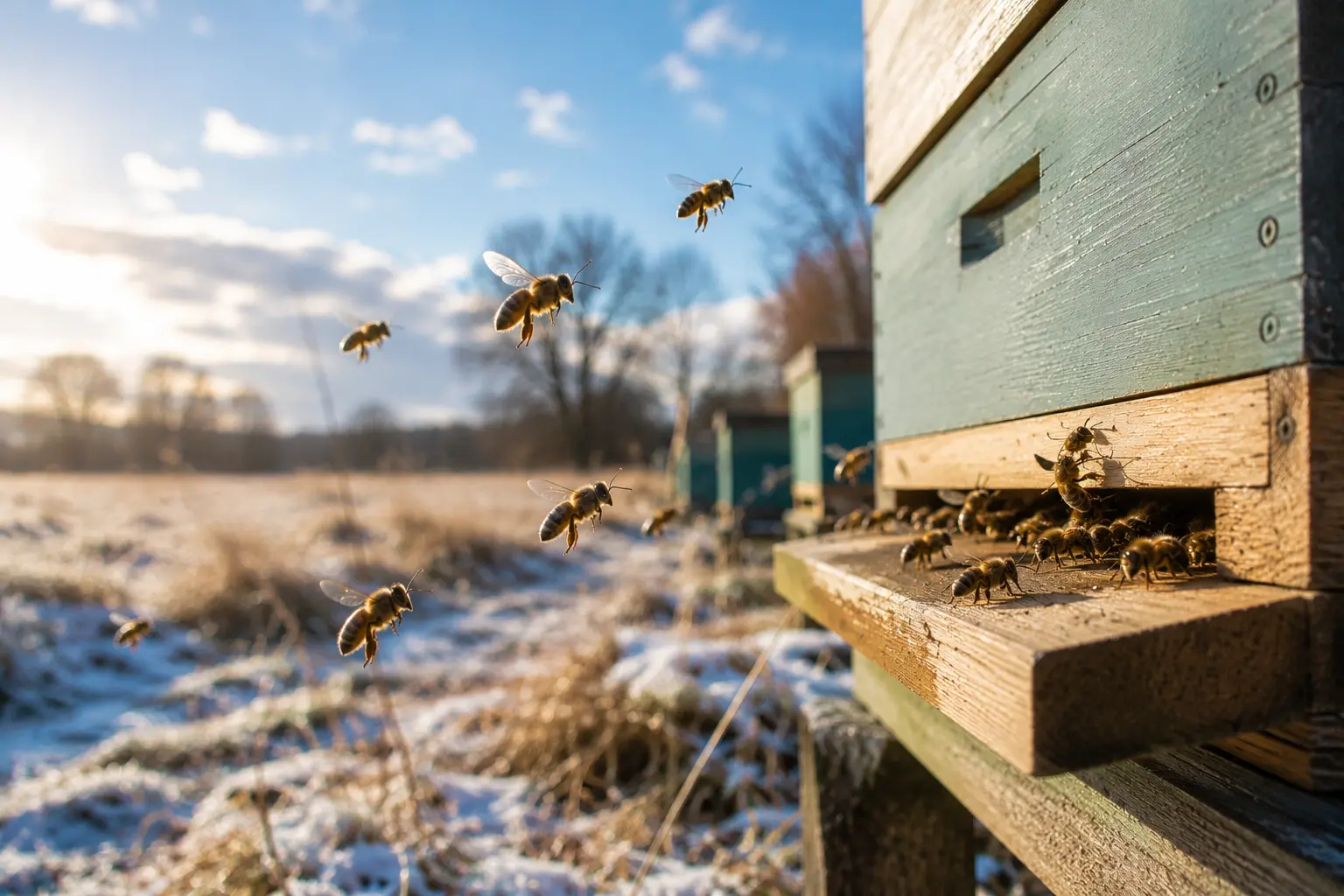
Normal winter behaviour
Cleansing Flights in Bees – Why Bees Fly on Mild Winter Days
Last updated: 15 August 2026
Cleansing flights are short flights made by honey bees so they can leave the hive and defecate outside after being confined by cold, wet or windy weather. Honey bees naturally try to keep the inside of the hive clean, so they avoid defecating within the colony whenever possible.
During long winter periods, bees may remain clustered inside the hive for days or even weeks at a time. While confined, they continue consuming stores and generating heat to maintain the winter cluster. Once conditions improve and temperatures rise enough for safe flight, many bees will leave the hive briefly to empty their digestive system before returning.
For new beekeepers, seeing sudden winter activity can be alarming. A hive that appeared completely inactive may suddenly produce dozens or even hundreds of flying bees on a mild winter afternoon. In most cases, this is completely normal and can actually be reassuring because it confirms the colony is alive and capable of flight.
Cleansing flights are only one part of the picture, though. A colony may still suffer from low stores, queen problems, heavy varroa pressure or disease despite appearing active during mild weather. Winter observations should always be considered alongside hive weight, weather conditions, dead bee levels, moisture, staining and overall colony history.
Understanding normal winter bee behaviour helps prevent unnecessary panic and reduces the temptation to open hives during unsuitable conditions. Many colonies are damaged more by excessive winter disturbance than by the cleansing flights themselves.
What are cleansing flights?
Cleansing flights are brief flights made by bees so they can defecate outside the hive after a period of confinement. Unlike mammals, bees do not normally foul the nest area. Worker bees are highly hygienic and instinctively avoid soiling combs, brood areas and stored food.
During winter, prolonged cold, rain, frost or strong winds may prevent bees from leaving the hive safely. While clustered inside, they continue digesting stored honey or sugar feed. Eventually they need an opportunity to empty their gut, which is why even a short mild spell can trigger sudden flight activity.
These flights are usually short and purposeful rather than prolonged foraging trips. Bees may circle close to the hive entrance, fly a short distance, then quickly return once they have relieved themselves.
Cleansing flights are a completely normal part of honey bee winter survival. In the UK they are especially common during breaks between cold spells from late autumn through to early spring.
They should not automatically be confused with robbing, swarming, absconding or orientation flights. Understanding the difference between these behaviours helps avoid unnecessary intervention during winter.
When cleansing flights happen
Cleansing flights most often happen after bees have been trapped inside by poor weather for several consecutive days. Cold temperatures, heavy rain, snow, frost and strong winds can all prevent safe flight conditions.
In the UK, cleansing flights commonly occur during mild breaks in winter weather when temperatures rise enough for short activity around the hive entrance. Even a relatively brief improvement in conditions may trigger a noticeable burst of flying bees.
Late winter and very early spring are especially common periods for cleansing flights because colonies are becoming more active internally. Brood rearing may begin increasing at this time, which also increases food consumption and waste production inside the cluster.
The timing varies depending on local climate, colony strength, exposure, wind direction and available sunshine. South-facing hives in sheltered apiaries often show activity sooner than colonies in colder or shaded positions.
Cleansing flights are usually concentrated during the warmest part of the day and may stop quickly once temperatures begin dropping again. Activity should normally appear temporary and local rather than continuous throughout the entire day.
What cleansing flights look like
Normal cleansing flights usually appear as a sudden burst of bees leaving the entrance, circling nearby and returning within a relatively short period. The movement often looks busy at first, but the activity usually settles down once bees have had the opportunity to fly briefly.
Bees involved in cleansing flights typically stay close to the hive rather than heading off in direct foraging lines. You may notice bees hovering, circling or looping around the apiary before returning to the entrance.
One of the most obvious signs is spotting on nearby surfaces. Yellow or brown marks may appear on hive roofs, vehicles, paving, washing lines, fencing, snow or vegetation close to the colony. Small amounts of spotting after a long confinement period can be completely normal.
Cleansing flights are generally calm behaviour. Bees should not appear highly aggressive, frantic or engaged in fighting. There should not normally be piles of fresh wax debris, large numbers of dead bees or chaotic attempts to force entry into neighbouring colonies.
The overall impression is usually of temporary release and movement rather than distress. Once bees have flown and conditions begin cooling again, the entrance often returns to quiet winter behaviour.
Are cleansing flights a good sign?
In most situations, yes. Cleansing flights are generally reassuring because they confirm that at least part of the colony is alive, mobile and capable of responding to improving weather conditions.
After long winter periods with little visible movement, seeing bees flying naturally can provide confidence that the colony has survived cold weather so far. Stronger colonies may produce surprisingly large numbers of flying bees during suitable conditions.
However, cleansing flights should not be treated as proof that everything inside the hive is healthy. A colony may still suffer from starvation risk, queen failure, heavy varroa loads, moisture problems or disease despite showing normal winter flight behaviour.
This is why winter monitoring should involve several clues rather than relying on one observation alone. Hive weight, entrance activity, dead bee levels, moisture, weather history and colony temperament all contribute to the wider picture.
A colony making cleansing flights but feeling extremely light when hefted may still require emergency feeding. Likewise, heavy staining combined with weak crawling bees may suggest something more serious than normal winter behaviour.
Cleansing flights vs robbing
Cleansing flights are usually calm and temporary. Bees leave, fly briefly and return. Robbing is much more frantic, with bees trying to force entry, fighting at the entrance and sometimes leaving wax debris from torn stores.
Robbing is less likely in cold winter weather but can happen during mild spells, especially around weak colonies or exposed feed. If the activity looks aggressive or chaotic, compare it with robbing behaviour in bees.
Cleansing flights vs orientation flights
Cleansing flights and orientation flights can both involve bees flying close to the hive, but they happen for different reasons. Cleansing flights are mainly about bees leaving the hive to defecate after confinement.
Bee orientation flights are learning flights made by young bees as they memorise the hive entrance and surrounding landmarks. These are more common in active periods when young bees are emerging.
When to worry
Most cleansing flights are completely normal, but certain signs should prompt closer observation. Large numbers of crawling bees unable to fly properly, heavy staining across the hive front or large piles of dead bees outside the entrance are not typical cleansing flight behaviour.
Persistent staining around the hive entrance may suggest dysentery, poor-quality stores, damp conditions, stress or gut-related problems such as Nosema. A few spots after confinement are common, but extensive staining deserves more attention.
Bees flying in very poor weather conditions can also indicate stress. Colonies normally avoid unnecessary flight in cold rain, strong winds or freezing temperatures because flying under these conditions is risky and energetically expensive.
Very light hives are another concern. Bees may appear active during mild weather while still being dangerously short of food. Starvation can occur quickly towards the end of winter when brood rearing increases food demand inside the cluster.
If the colony appears weak, disorganised or unusually noisy, further assessment may eventually be needed when weather conditions improve enough for safe inspection. Until then, external observations and careful hefting are often safer than opening the hive unnecessarily.
If bees are weak or crawling, see why bees are crawling on the ground. If there are many dead bees, see dead bees outside the hive.
Cleansing flights and dysentery
One reason cleansing flights sometimes alarm beekeepers is because they involve visible spotting outside the hive. Small amounts of yellow or brown staining can be completely normal after bees have been confined for extended periods.
The important point is the scale and pattern of the staining. A few scattered spots on nearby objects are very different from heavy streaking across the front of the hive, around the entrance or inside the colony itself.
Excessive staining may suggest dysentery, stress, poor-quality stores, fermentation problems, damp conditions or gut-related disease. Nosema is one condition commonly associated with digestive problems and abnormal defecation behaviour in honey bees.
Colonies weakened by moisture, poor ventilation, starvation stress or prolonged confinement may also struggle more during winter. This is why winter management is not just about temperature — colony condition, food quality and ventilation all matter.
Heavy staining should always be considered alongside other signs such as crawling bees, weak flight, dead bee levels, damp equipment, poor spring build-up or repeated colony decline.
If repeated staining is occurring alongside a weak colony, compare the symptoms with Nosema in bees.
What should you do?
In most cases, the best response to normal cleansing flights is simply calm observation. Bees flying briefly on a mild winter day usually do not require intervention, and opening the hive unnecessarily can do more harm than good during cold conditions.
Watch the entrance activity from a distance and look for signs that the behaviour settles naturally. Temporary local flying with returning bees is usually reassuring.
If you are concerned about stores, heft the hive carefully rather than opening it immediately. A very light hive may indicate the need for emergency feeding, particularly towards the end of winter or during prolonged poor weather.
Avoid blocking the entrance or disturbing bees during flight activity. Winter colonies still need ventilation and access to fly when conditions allow.
Recording winter observations is extremely useful because patterns often become clearer over time. Notes about weather, cleansing flights, hive weight, dead bee levels and spring build-up can help you compare colonies and identify recurring seasonal problems.
Most importantly, resist the temptation to panic simply because bees are active in winter. Honey bees remain responsive to weather changes throughout the colder months, and cleansing flights are a natural part of colony survival.
How HiveTag can help
Recording winter activity, cleansing flights, hive weight checks and weather notes in HiveTag can help you see patterns without disturbing the colony unnecessarily.
This is especially useful in winter, when opening the hive too often can cause more harm than good.
Learn more about HiveTag.
Cleansing Flights FAQ
Yes. Cleansing flights are normal behaviour when bees leave the hive briefly to defecate outside after being confined by cold, wet or windy weather.
Bees may fly on mild winter days for cleansing flights. This is usually normal if they return to the hive and the activity settles down.
They are a positive sign that bees are alive and active, but they do not confirm food stores, queen status, disease levels or varroa pressure.
Not usually. Avoid opening the hive in cold weather unless there is a clear reason and conditions are suitable. Hefting is usually safer if you are checking stores.