
Adult bee disease guide
Nosema in Honey Bees
Last updated: 15 August 2026
Nosema is a microscopic gut infection affecting adult honey bees. It is often linked with stress, poor weather, long periods of confinement, damp conditions, poor nutrition and colonies that are already weak or under pressure. Because it affects adult bees rather than sealed brood, the signs can be less obvious than many brood diseases.
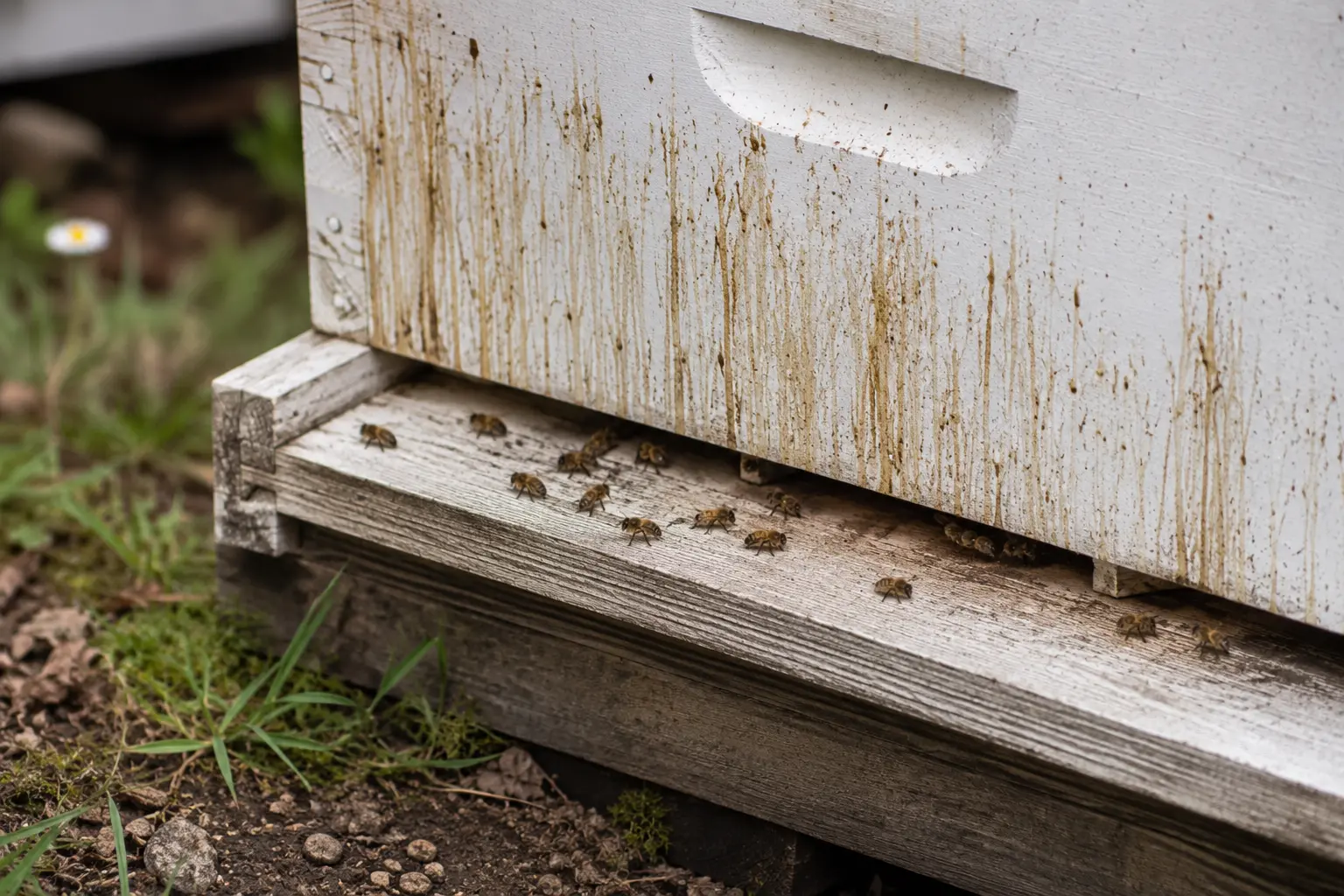
The most visible sign often associated with Nosema is dysentery, which appears as brown streaking or spotting on frames, hive walls, comb or around the entrance. However, this can be misleading because not all dysentery is Nosema, and Nosema can sometimes be present without obvious staining. The wider colony picture matters more than one symptom on its own.
This guide explains the common signs, how Nosema differs from simple dysentery, why it tends to appear in stressed colonies and what UK beekeepers can do to improve colony conditions.
Key signs of Nosema
Nosema is often suspected when a colony fails to build up normally in spring or appears weaker than expected despite having a queen and some stores. The colony may dwindle gradually, show poor adult bee strength, or seem unable to expand at the same rate as neighbouring colonies.
Brown streaks or spotting on frames, hive walls, comb or the entrance can raise suspicion, especially after a period of confinement. You may also see crawling bees, bees that appear unable to fly properly, poor spring build-up, reduced adult bee lifespan, or a colony that seems to lose bees faster than it replaces them.
These signs are not proof on their own. Nosema overlaps with other problems, including starvation, poor nutrition, varroa-related weakness, queen problems, damp conditions and general winter stress.
What does Nosema look like?
Nosema itself cannot be confirmed just by looking at the outside of a hive. The disease is caused by microscopic spores inside the bee's gut, so visible symptoms are indirect. This is why it can be difficult for a beekeeper to separate Nosema from other causes of weakness without a more detailed assessment.
The signs a beekeeper may notice include brown streaking, poor spring build-up, adult bee weakness, crawling bees or a colony that dwindles while neighbouring colonies improve. These signs should be treated as clues rather than proof.
A useful approach is to compare affected and unaffected colonies in the same apiary. If one colony is weak, dirty and slow to expand while nearby colonies are clean and building well, Nosema may be one possibility. If several colonies show similar symptoms, weather, feed quality, forage shortage or wider management conditions may also be involved.
What causes Nosema?
Nosema is caused by microsporidian parasites, including Nosema apis and Nosema ceranae. They affect the adult bee gut and can reduce bee lifespan and colony performance. The condition is often more noticeable when colonies are already stressed, because stressed bees have less resilience and the colony has less ability to replace losses quickly.
Cold, damp conditions, long periods of confinement, poor nutrition, lack of forage, old comb and poor hive hygiene can all make gut-related problems more likely. Varroa pressure, winter stress and weak colony size can also overlap, making the colony appear to decline from several pressures at once.
Nosema is therefore best understood as part of a wider colony health picture rather than a single isolated problem. Improving the colony environment, reducing damp and strengthening the colony often matter as much as identifying the disease itself.
Is it serious?
Nosema can be serious, but it often weakens colonies gradually rather than causing sudden visible collapse. It is most noticeable when colonies fail to build up properly after winter or appear to dwindle during periods of stress.
A strong colony in good conditions may recover as weather improves and new healthy bees replace older infected bees. A weak colony with poor food, damp, varroa pressure or failing queen performance may struggle for longer.
The seriousness depends on the colony's overall condition. A small or already weakened colony has less margin for adult bee loss, while a larger, well-fed, dry and queenright colony is often better able to recover.
Nosema vs dysentery
Dysentery means bees are passing faeces where they normally would not, often on the hive front, frames or comb. It can be linked with Nosema, but it can also happen because of poor-quality stores, fermented feed, prolonged confinement, stress or digestive upset.
For that reason, brown streaking should not be treated as a confirmed Nosema diagnosis on its own. Look at the wider pattern: colony strength, weather, stores, ventilation, hygiene, varroa pressure and whether neighbouring colonies are behaving normally.
If dysentery appears after a long period of poor weather, it may reflect confinement and feed quality rather than Nosema alone. If it is combined with dwindling, poor spring growth and adult bee weakness, Nosema becomes a stronger possibility.
What to do if you suspect Nosema
Start by improving the conditions around the colony. Reduce damp, improve ventilation where appropriate, check that stores are sound and remove suspect or fermented feed if it appears to be causing problems. Make sure the colony has access to good nutrition when weather and forage allow.
Old or contaminated comb should be replaced as part of normal brood comb management. Good hive hygiene, clean equipment and avoiding unnecessary stress all help support recovery. If the colony is small, make sure it is not spread across more space than it can occupy and keep warm.
Review the colony's varroa history, queen performance and previous inspection notes. Nosema often appears alongside other stress factors, so solving only one issue may not be enough if the colony is also under pressure from mites, poor food, cold or queen failure.
What not to do
Do not assume all dysentery is Nosema. Brown staining is a warning sign, but it is not a full diagnosis. Do not ignore ongoing colony weakness, poor spring build-up, crawling bees or repeated failure to expand, because these signs may point to a wider health problem.
Do not keep colonies in damp, poorly ventilated conditions if the hive setup can be improved. Damp and stress make adult bee problems worse. At the same time, avoid over-inspecting a weak colony in cold weather, because repeated disturbance can make recovery harder.
Do not overlook other causes of crawling bees or dwindling colonies. Varroa, deformed wing virus, starvation, queen failure, poisoning and poor nutrition can all create symptoms that overlap with Nosema.
Nosema FAQ
No. Nosema is not a notifiable disease in the UK.
Strong colonies in good conditions may recover, especially when stress factors are removed and healthy young bees replace older infected bees.
No. Dysentery can occur for other reasons, and Nosema can be present without obvious external streaking.
It is often suspected in late winter or early spring when colonies are stressed, confined, damp or failing to build up properly.