Feeding, stores and colony loss
Starvation in Bees: Signs, Causes and What To Do
Last updated: 15 August 2026
Starvation is one of the most preventable causes of colony loss, but it can still catch beekeepers out. A hive may feel heavy earlier in the season and then become critically light after a long winter, poor spring weather, brood rearing, robbing, wasp pressure or a gap in forage.
Starvation does not always mean there is no food anywhere in the hive. A colony can die with honey or syrup still present if the cluster cannot reach it. This is especially important in cold weather, when bees may be unable to break cluster and move across the hive.
This guide explains the main signs of starvation, why bees may die with their heads in cells, how isolation starvation happens, and how to decide whether starvation or another problem is more likely.
Quick signs of starvation in bees
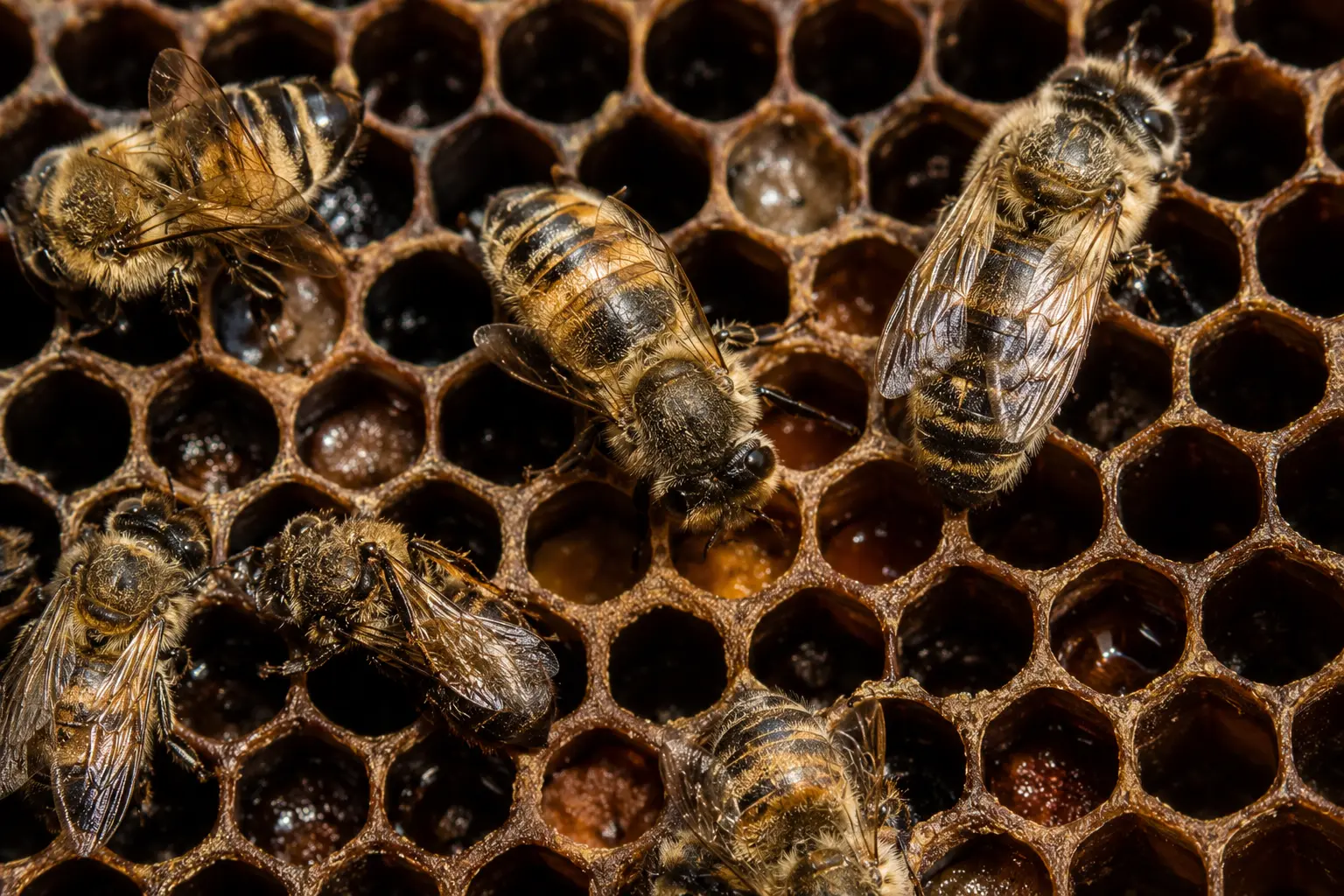
The classic sign is dead bees with their heads deep inside cells, often around the last area where food was available. This is most concerning when there are little or no stores on the same frame or adjacent frames. A very light hive when hefted is another strong warning sign.
Other signs include a tight dead cluster on the comb, weak or slow bees near the entrance, a colony that is unusually quiet for the weather, and a small cluster that cannot cover brood or reach food. In early spring, starvation risk can rise quickly once brood rearing starts because the colony needs more food to maintain warmth and feed larvae.
Starvation should be judged from the pattern, not from one sign alone. Check stores, bee position, weather, colony size and recent feeding history before deciding what happened.
The classic sign: bees with heads in cells
Dead bees with their heads pushed into cells are one of the strongest signs of starvation. It usually suggests the bees were searching for the last available food in the cells around them. If the surrounding comb is empty and the hive is light, starvation becomes very likely.
This sign is especially important when the dead bees are clustered tightly and there are no accessible stores close by. However, it should still be checked against the whole hive. If stores are present only several frames away, the issue may be isolation starvation rather than complete absence of food.
Take photographs before disturbing the cluster if the colony has died. The position of the bees and the location of any remaining stores are useful clues during a hive post-mortem.
Can bees starve even with food in the hive?
Yes. This is often called isolation starvation. It happens when stores are present but the cluster cannot reach them. In cold weather, bees need to stay clustered to maintain warmth. If food is above, to the side or separated by empty comb, a small or chilled cluster may be unable to move onto it.
Isolation starvation is more likely in small colonies, colonies that entered winter weak, colonies that moved away from stores, or colonies with poorly positioned food. It can also happen during a cold snap after brood rearing has started, because the bees may be reluctant to leave brood even when food is nearby.
Related guide: Isolation starvation in bees.
When starvation is most likely
In the UK, starvation risk is often highest in late winter and early spring. Colonies may have used much of their winter food, but reliable forage has not yet returned. Once brood rearing increases, food demand rises sharply, and poor weather can stop bees from flying.
Starvation can also occur during long wet or windy spells, cold snaps, the June gap, late summer nectar shortages, or after robbing and wasp pressure have stripped stores. Weak colonies and small nucs are more vulnerable because they have fewer bees to defend stores, gather food and maintain warmth.
A colony that was fed in autumn can still run short if it went into winter large, had poor weather, started brood rearing early, or was robbed. Hefting and quick store checks are important because earlier feeding does not guarantee the colony is safe months later.
What to do if bees are at risk of starvation
If the hive is critically light or stores are not accessible, act quickly. In cold weather, keep the check brief and avoid chilling the colony. Heft the hive if opening is not suitable. If you do open it, look for the position of the cluster and place food where the bees can reach it.
Fondant is often the safer emergency option in cold weather because bees may not be able to process thin syrup properly. Syrup is more suitable when temperatures and colony conditions allow bees to take, process and store it. The right choice depends on season, weather and colony condition.
Food should be placed close to the cluster, not simply somewhere in the hive. A weak or cold cluster may not cross empty comb to reach it. Reduce unnecessary space around weak colonies where appropriate, and check again after feeding to confirm the bees have access.
For wider feeding options, read Feeding bees in the UK and when to feed fondant to bees.
What not to do
Do not assume that visible stores elsewhere in the hive are reachable. If the food is not close to the cluster during cold weather, it may not save the colony. Do not open colonies for long in cold conditions, especially if the cluster is small.
Do not give thin syrup during cold weather when bees cannot process it properly. Do not wait several days if the hive is critically light. Do not ignore robbing or wasp pressure if stores are disappearing quickly.
Avoid overcorrecting without understanding the cause. If a colony repeatedly runs short, review autumn feeding, colony size, hive setup, robbing pressure and your winter checks.
Starvation or something else?
Starvation can overlap with other problems. Crawling bees, dead bees outside the hive and weak colonies may also be linked to varroa, poisoning, chilling, robbing or disease. A colony may also starve because another problem weakened it first.
Varroa collapse can leave a very small cluster that cannot manage stores properly. Robbing can remove stores and leave a colony light. Queen failure can reduce the worker population until the colony is too weak to survive cold weather. A hive post-mortem helps separate the immediate cause from the underlying cause.
Related checks: dead bees outside the hive, bees crawling on the ground, pesticide poisoning in bees and varroa symptoms in bees.
How HiveTag can help
HiveTag records can help you spot patterns before a colony becomes critical. Log hive weight, feeding, stores, weather, queen status and colony strength so you can see whether stores are falling faster than expected.
If a colony needs emergency feeding, record what was given, when it was given and whether the bees were able to access it. Over time, these records can show whether a colony regularly runs short, whether autumn feeding was enough, or whether a particular apiary has a recurring forage gap.
You can also use the Bee Health Checker if you are unsure whether the signs point to starvation, disease, poisoning or another issue.
Starvation FAQ
Dead bees with their heads inside cells, combined with little or no accessible stores near the cluster, is one of the clearest signs of starvation.
Yes. If the cluster cannot reach the stores during cold weather, the colony can die even though food is present elsewhere in the hive. This is often called isolation starvation.
In cold weather, fondant is usually more suitable because bees may not be able to process syrup properly. Syrup is generally used when temperatures and colony conditions allow bees to take and use it.
Yes. Bees short of energy may become weak, slow or unable to fly, but crawling bees can also be linked to varroa, poisoning, chilling or disease.