
Common brood problem
Chalkbrood in Honey Bees (UK Guide)
Last updated: 15 August 2026
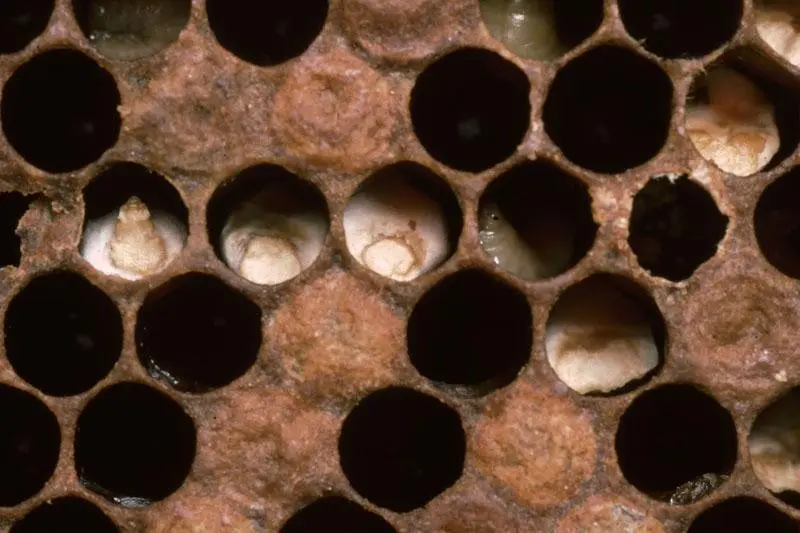
Chalkbrood is a common fungal brood condition affecting developing honey bee larvae. It is caused by Ascosphaera apis and is most often noticed when white, grey or black mummified larvae appear in the comb, on the floor, or outside the hive entrance.
Unlike American foulbrood and European foulbrood, chalkbrood is not normally a notifiable disease in the UK. However, it can still weaken a colony if it becomes persistent, especially where the colony is small, chilled, damp or under stress.
This guide explains what chalkbrood looks like, why it appears, how to manage the conditions that encourage it, and how to avoid confusing it with more serious brood diseases.
Key signs of chalkbrood
The clearest sign of chalkbrood is the appearance of dead larvae that have dried into hard, chalk-like mummies. These are often white or pale grey at first, but they can become darker grey or black as the fungal growth develops.
You may see the mummified larvae inside brood cells, loose on the floor of the hive, or outside the entrance after worker bees have removed them. In stronger colonies the bees may clear many of the affected larvae before you notice much inside the comb.
The brood pattern may also look patchy, especially if a noticeable number of larvae have died. However, chalkbrood usually looks quite different from foulbrood because the dead larvae become dry and chalky rather than sticky, sunken or ropy.
What does chalkbrood look like?
Infected larvae die and dry out into hard, chalk-like bodies known as mummies. They are often white at first and may turn grey or black over time. Bees often remove them from cells, so the first visible clue may be mummies on the hive floor, landing board or ground in front of the entrance.
Chalkbrood is usually dry and firm rather than wet or sticky. That dry, chalky appearance is one of the main differences between chalkbrood and more serious brood disease signs such as ropy larval remains, sunken cappings or a strong unpleasant smell.
What causes chalkbrood?
Chalkbrood is caused by the fungus Ascosphaera apis. The spores can be present in colonies without causing a major problem, but the disease is more likely to show when brood is stressed, chilled or poorly covered by nurse bees.
Damp conditions, poor ventilation, cold weather, weak colonies and brood that is not well covered can all encourage chalkbrood to appear. It is often seen in spring or early summer when colonies are expanding but the weather is still changeable.
Some colonies also seem more prone to chalkbrood than others. If the same colony shows persistent chalkbrood despite improved conditions, the queen line may be part of the problem and requeening may be worth considering.
Is chalkbrood serious?
Chalkbrood is usually less serious than American foulbrood or European foulbrood, and it is not normally a notifiable disease in the UK. Many colonies recover once the weather improves, the colony strengthens and damp or stress factors are reduced.
That said, it should not be ignored if it keeps returning or affects a large amount of brood. Persistent chalkbrood can slow colony build-up, weaken a small colony and make it harder for the bees to reach full strength during the season.
What to do if you see chalkbrood
Start by looking at the condition of the colony and the hive. A small colony in a large box may struggle to keep brood warm, so reducing excess space can help the bees cover the brood more effectively.
Check whether the hive is damp, shaded or poorly ventilated. Improving airflow, keeping the hive dry and making sure the colony has enough food and enough bees to cover the brood can often reduce the problem.
Old or heavily affected comb can be replaced gradually as part of normal brood comb management. If chalkbrood continues despite better conditions, requeening may help because some colonies appear more genetically prone to the problem.
What not to do
Do not assume every patchy brood pattern is chalkbrood. If you see sunken cappings, ropy larval remains, a strong unpleasant smell or suspicious diseased brood, compare the signs with the foulbrood pages and seek advice if you are unsure.
Do not leave a weak colony struggling in too much space, especially during cold or damp weather. Chalkbrood often improves when the colony is stronger, drier and better able to keep the brood nest warm.
Similar problems
Chalkbrood FAQ
Yes, the spores are present in many hives, but disease usually appears when colonies are stressed or conditions are poor.
Often yes. Strong colonies in good conditions can recover without intervention.
It often indicates stress or weakness, but not always. Environmental factors play a big role.
No. Chalkbrood is not a notifiable disease, but if you are unsure, you can still seek advice.
Image credits
Disease reference images on this page are courtesy of The Animal and Plant Health Agency (APHA), Crown Copyright.