
Last updated: 8 November 2026
When the whole apiary goes quiet
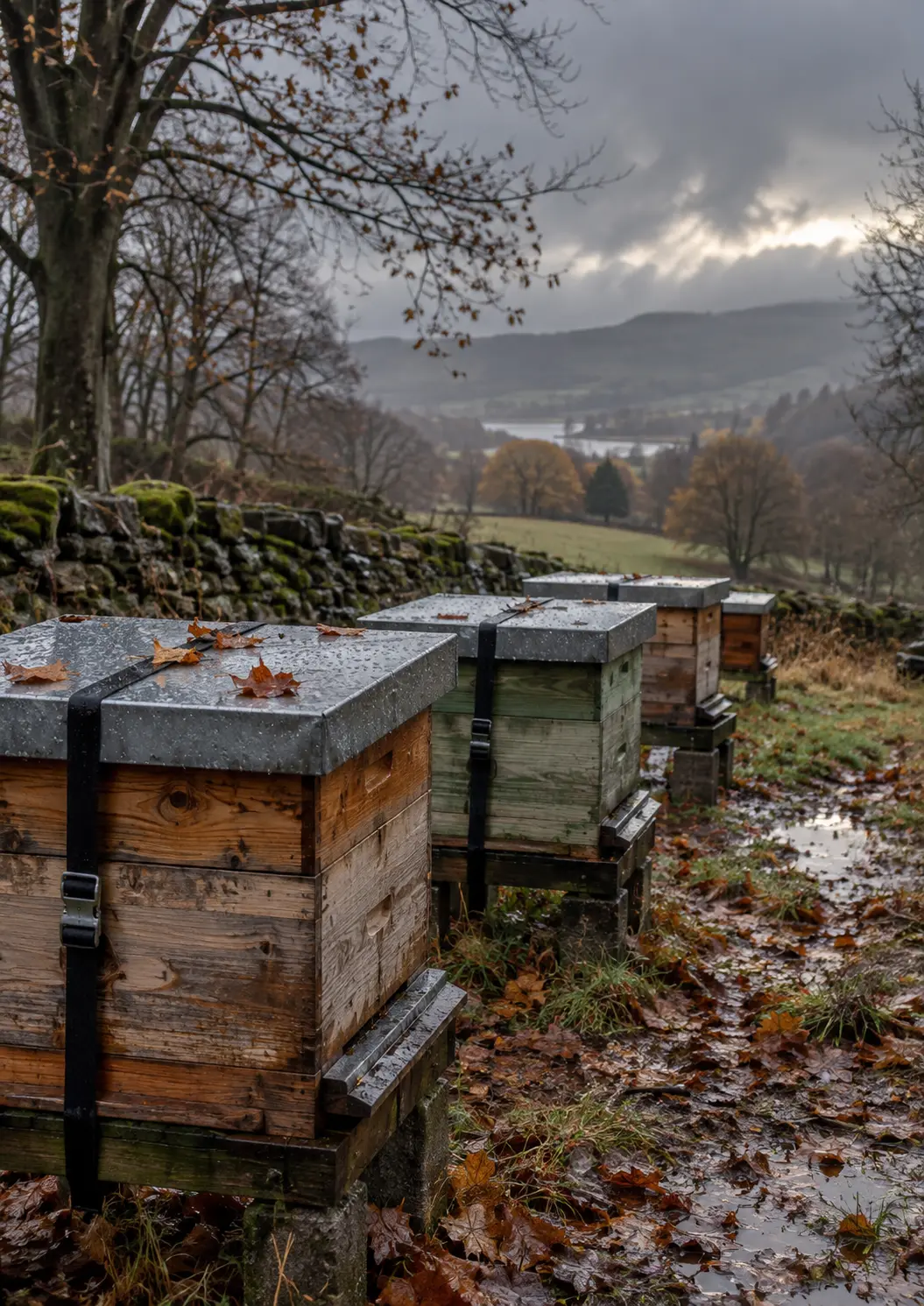
By December, my apiaries here in South Wales are usually very different from the busy places they were in summer. Regular inspections have finished, the hives are secured against bad weather and I can sometimes stand by an entrance without seeing a single bee.
I understand why that can be unsettling, especially if it is your first winter keeping bees. You have spent months looking after a colony and naturally want to know whether it is still alive.
But an empty-looking entrance doesn't mean an empty hive. I don't judge a colony's survival from a few minutes of silence on a cold day. Instead, I look at the weather, the signs around the hive and what I already know about that colony.
Why a living colony may be silent
Honeybees don't hibernate. In cold weather they gather in a winter cluster, generating heat and conserving energy. There may be little activity at the entrance, particularly through a spell of rain, wind or low temperatures.
From outside, a living colony can appear completely still. That is why I wouldn't expect to see flight every time I visit during December or January. A cold morning is a poor time to decide a hive is dead simply because nothing is coming and going.
Even if another hive nearby is showing activity, it doesn't mean a quiet colony is in trouble. Shelter, sunshine, colony strength and conditions at the entrance can all influence what you see.
Can I listen for bees inside the hive?
Listening close to the outside of a hive may reveal a low hum or rustle from the bees. If I can hear them, that gives me useful evidence that there is activity inside.
But a tightly clustered colony can be very quiet. Wind, traffic, the material of the hive and how far the cluster sits from the wall can make the sound difficult to detect. Not hearing a buzz doesn't confirm that the colony is dead.
Some beekeepers tap the hive to provoke a brief response. I don't think repeatedly knocking on a winter hive simply to satisfy my curiosity is helpful. I'd rather put the observation alongside other clues and avoid disturbing the cluster without good reason.
What I look for around the entrance
I check that the entrance is clear and look at the landing board and the ground immediately in front of it. A few dead bees can be part of normal winter losses, so their presence alone isn't proof of a serious problem.
Fresh wax cappings or debris on a monitoring board may suggest that stores are being uncapped, but such signs are not a reliable test of whether bees are currently alive. Equally, there might be very little to see.
Large numbers of dead bees, extensive faecal staining, obvious damage or bees crawling and unable to fly would make me investigate further. The possible causes are covered in my dead bees outside the hive guide and article about bees crawling on the ground, rather than repeating all that advice here.
What a mild winter flying day tells me
After a quiet spell, a little sunshine may bring workers out for short flights. Seeing bees leave and return to their own hive confirms that at least some bees are alive at that moment.
That's reassuring, but it doesn't tell me whether the colony has sufficient food, whether the queen is laying or whether it will survive until spring. And if a colony doesn't fly on the same day, that absence is not evidence of death.
I've looked at the reasons for winter flight in Why Are My Bees Flying in November or December?. The question here is different: what can I conclude if the entrance remains completely quiet?
A heavy hive isn't proof that the bees are alive
Hefting is one of the checks I continue to make in winter, but I use it to assess weight and possible food reserves, not to confirm life.
A hive can still feel heavy if its colony has died and stores remain. A living colony, on the other hand, may feel dangerously light because it is running short of food.
If I notice a marked reduction in weight, I take that seriously, particularly when combined with what I know about the colony's preparation for winter. I've explained the technique in my blog about hefting hives and winter stores. The detailed feeding decisions belong in my winter feeding guide.
What I would do if I saw and heard nothing
Imagine I visit a hive in mid-December and find no bees flying, no sound I can detect and nothing obvious on the landing board. I wouldn't remove the brood frames on that evidence alone.
First, I'd consider whether the weather had been suitable for flying. Then I'd think back to autumn: was the colony reasonably strong, had I assessed its stores, and were there any concerns about Varroa, queen status or disease? My inspection notes help put a silent entrance into context.
I'd check whether the hive feels markedly lighter and whether there are fresh signs of trouble or damage. If there is no reason to suspect an urgent problem, I would generally leave it undisturbed and check again when conditions are more favourable.
When I wouldn't simply wait for spring
There is a difference between leaving a healthy winter cluster alone and ignoring a colony that may need help. A hive that feels alarmingly light, evidence of damage or convincing signs of illness would change my approach.
If starvation seems likely, delaying until warmer weather could be worse than a brief, carefully managed intervention. Emergency fondant may be appropriate if it can be placed where the bees can reach it, with the minimum disturbance necessary. I wouldn't use an unnecessary full frame inspection as my first response.
Where there are concerning signs but the cause is unclear, I'd seek advice from an experienced local beekeeper or the appropriate bee-health service. If a colony is confirmed dead, I would investigate the cause before reusing equipment; my winter colony loss guide deals with that separately.
Would I lift the crown board to check?
Ordinarily I try to avoid opening a hive in cold weather just to confirm whether bees are present. Where I have a clear crown board, a brief look may sometimes reveal bees near the top, without pulling frames out of the brood box.
However, bees may be clustered further down, so seeing nothing through the crown board still doesn't prove the colony is dead. I would also be mindful that removing a roof or insulation can cause unnecessary heat loss and disturbance.
There isn't a blanket rule that every hive must remain unopened until spring. A genuine welfare concern may justify a targeted check. My aim is to have a reason for intervening and to keep any disturbance proportionate.
My final thoughts
Winter beekeeping asks us to accept that much of what happens inside the hive is hidden. In summer I can learn a great deal from a busy entrance and a regular inspection. In winter, the absence of activity is much harder to interpret.
I can listen, look around the entrance, assess weight and review a colony's history, but no single external clue gives me a complete answer.
So when someone asks me how to tell whether their bees are alive in winter, my answer is that a silent hive is not automatically a dead hive. If there is no sign of an urgent problem, observation and patience are usually more useful than opening it out of worry. If the evidence points towards starvation or another serious issue, I wouldn't ignore it.
For the wider seasonal routine, my winter beekeeping guide and December jobs guide cover the checks I make throughout the colder months.
Frequently Asked Questions
Yes. A living winter cluster can produce very little audible sound, and failing to hear bees from outside does not establish that they have died.
Some beekeepers use tapping, but it deliberately disturbs the colony and the result may be inconclusive. I prefer quiet observation and other evidence first.
Honeybees may remain inside for weeks when conditions are unsuitable. The length depends on weather and colony circumstances.
No. A dead colony can leave heavy stores behind. Hefting helps assess food reserves, not confirm whether bees are alive.
Not just because the hive is silent. Consider the weather, weight, colony history and warning signs. Suspected starvation or another urgent concern may justify a brief targeted intervention.
Join the Conversation
Beekeeping is all about learning from one another. Follow BeezKnees for more practical UK beekeeping guides, seasonal observations and equipment explainers.
Follow the BeezKnees Facebook Page